Описание
Страна: США
Год: 1919
Летающая лодка
P.Bowers Boeing Aircraft since 1916 (Putnam)
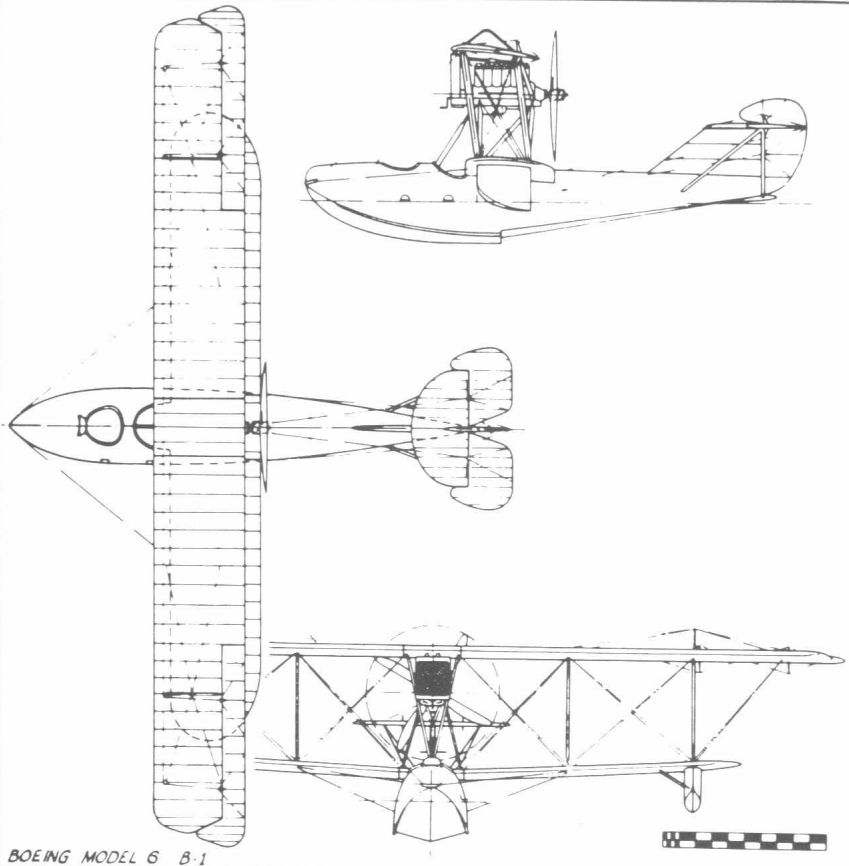
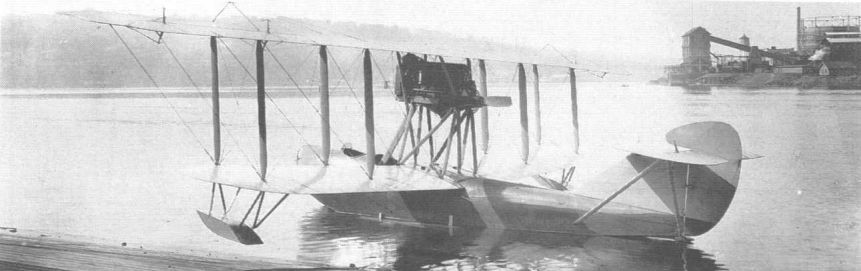
MODEL 6 (B-1) - The B-1, which first flew on December 27, 1919, was a conventional pusher flying-boat with laminated veneer hull. The design drew heavily on Boeing's experience with the wartime Curtiss HS-2Ls but the size was greatly reduced to make the machine easier to operate and maintain. Since this was the first commercial design of the Boeing Airplane Company, it was given the logical designation of B-1 for sales purposes. The fact that it did not sell was no reflection on the design. Cheap war-surplus military models flooded the market and costly new models could not compete.
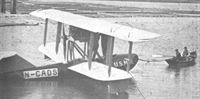
The single B-1 was sold to Edward Hubbard in 1920 and was used continuously for eight years on his Seattle-Victoria air mail route. The original power plant was a 200 hp Hall-Scott L-6, so designated because it was a 6-cylinder version of the famous wartime Liberty, but this was replaced by the standard 400 hp 12-cylinder Liberty. Because of the Canadian registration requirement, the B-1 was registered as G-CADS for operation in Canada. This was replaced by N-CADS and later by N-ABNA when an unofficial US registration scheme was set up by the National Board of Fire Underwriters in 1923 (N had been assigned as the identifying letter for US aircraft at the International Convention of 1919, but the US did not adopt the standardized scheme used by the other powers. When official US registration was adopted in 1927, the B-1 became 4985 and then 1974, which was later modified to NC-1974. Although not qualifying for either an Approved Type Certificate or a Memo Approval, the B-1 was licensed for commercial operation after 1927 as a Category-III aeroplane.
The B-1 remained in use throughout the 1920s. It was eventually obtained by the Seattle Historical Society and set up as an outdoor display on Boeing Field in 1934. Weather and small boys took their toll, and the B-1 was dismantled, crated, and stored by Boeing until after WW-II, when it was rebuilt and put on permanent indoor display in the Seattle Museum of History and Industry in 1954.
Note: Two production aeroplane models, the B-1D and B-1E were built under this model number in 1928-29, but are described in Chapter 4 because of their much later design.
TECHNICAL DATA - B-1
Type: Mail/passenger flying-boat
Accommodation: 1 pilot in front cockpit, 2 passengers in rear cockpit
Power plant: Hall-Scott L-6, 200 hp; Liberty, 400 hp
Span: 50 ft 3 in
Length: 31 ft 3 in
Height: 13 ft 4 in
Wing area: 492 sq ft
Empty weight: 2,400 lb (L-6)
Gross weight: 3,850 lb (L-6)
Max speed: 90 mph (L-6)
Cruising speed: 80 mph (L-6)
Service ceiling: 13,300 ft
Range: 400 miles (L-6)
C/n: 86
Registrations: G-CADS, N-CADS, N-ABNA, 4985, 1974
Описание:
- P.Bowers Boeing Aircraft since 1916 (Putnam)
- R.Davies Airlines of the United States since 1914 (Putnam)
Фотографии
-
P.Bowers - Boeing Aircraft since 1916 /Putnam/
Original form of the B-1 (Model 6) flying-boat with six-cylinder Hall-Scott L-6 engine and small strut-mounted wingtip floats.
-
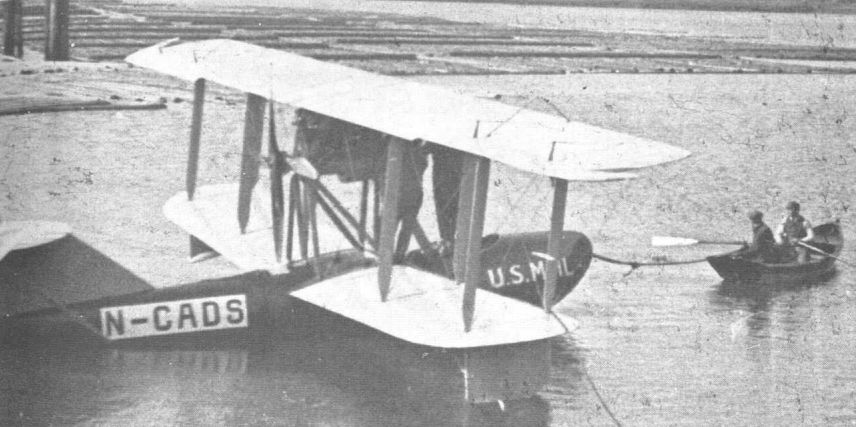
P.Bowers - Boeing Aircraft since 1916 /Putnam/
The B-1 operated into Canada from 1920 to 1923 with the letter N to identify United States ownership but with letters CA indicating Canadian registration. Note that the four-blade propeller is built up from two two-blade units, not built in one piece.
-
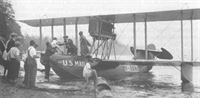
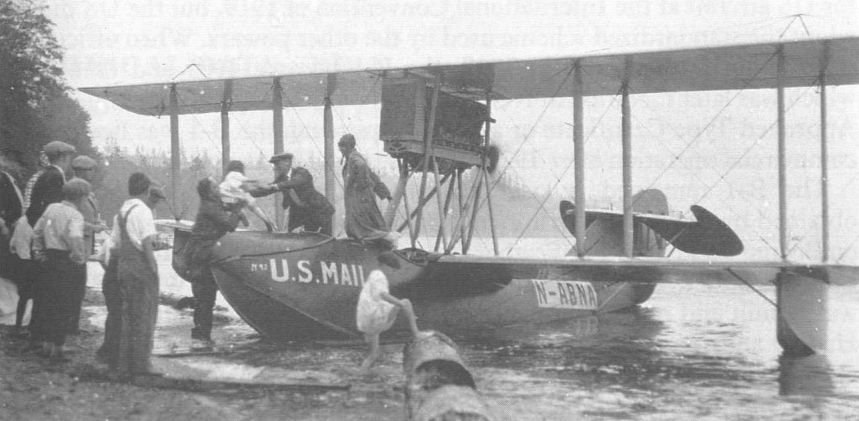
P.Bowers - Boeing Aircraft since 1916 /Putnam/
Final form of B-1 with enlarged wingtip floats and Liberty engine, seen hopping passengers at a 1924 Boeing company picnic. Registration N-ABNA was used from 1923 to 1927.
-
P.Bowers - Boeing Aircraft since 1916 /Putnam/
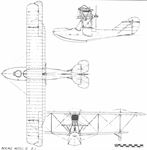
BOEING MODEL 6 / B-1