Описание
Страна: Германия
Год: 1919
J.Stroud European Transport Aircraft since 1910 (Putnam)
Sablatnig P III
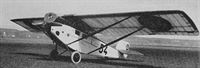
After the end of the 1914-18 war Sablatnig Flugzeugbau turned its attention to commercial aviation. After producing the P I four-passenger conversion of its N I bomber, the company’s chief designer, Dr Hans Seehaase, designed a single-engine high-wing strut-braced monoplane with accommodation for six passengers. This was the P III, which first appeared in June 1919.
The P III was originally designed to take either a 200/220 hp Benz Bz IV or 260 hp Maybach Mb IVa engine, and to be easily assembled and repaired, to provide the maximum safety for its occupants, and to have short take-off and landing runs. It was of wooden construction with ply-covered fuselage and fabric-covered wings. The wings could be folded flat against the fuselage, the tailplane and elevators folded upward and the entire aircraft stowed in one standard German railway wagon. The inboard sections of the elevators could be locked at a pre-set angle for trim and also acted as air brakes. A crew of two could be carried in a large open cockpit aft of the wing.
In June 1919 Lloyd-Luftverkehr Sablatnig was founded by Sablatnig Flugzeugbau and Norddeutscher Lloyd and in the following month opened a Berlin - Stralsund service, the route being extended to Copenhagen in September. A Berlin - Bremen service was also operated. Luftverkehr Sablatnig also flew holiday services to Norderney and Wangerooge. When the first P III appeared it bore the words Luftverkehr-Sablatnig on its fuselage. At September 1921 the airline had a mixed fleet of 17 aircraft and at least three of these, D-50, D-143 and D-171, were Sablatnig P IIIs.
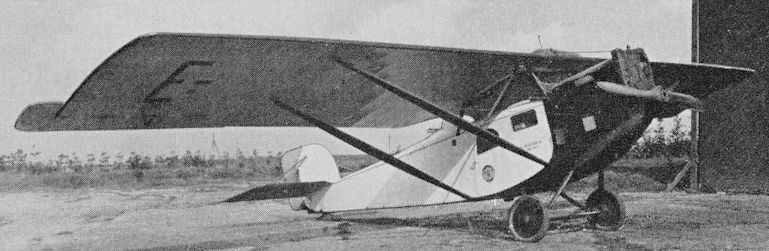
Six P IIIs, with balanced ailerons, were used from 1923 by Aeronaut A/S on Esthonian domestic services and on the Tallinn - Riga route. These aircraft are believed to have been registered E-6 to E-11 and have been reported as Esthonian-built. In 1924 Aeronaut exchanged its Sablatnigs for Junkers-F 13s at the rate of two Sablatnigs for one Junkers.
Deutsche Lufthansa acquired nine or ten P IIIs in 1926, and three of them were ex-Aeronaut aircraft. These Lufthansa aircraft were powered by a variety of engines, including the 240 hp Armstrong Siddeley Puma, the 220 hp BMW IV and 195/230 hp Junkers-L 2. During the summer of 1928 they were used on the Munich-Regensburg-Nuremberg and Cologne-Krefeld services, but do not appear to have been used after that September. Six are known to have been dismantled by early in 1932, although one was in existence in 1936.
One P III was fitted with a ski undercarriage in the winter 1920-21.
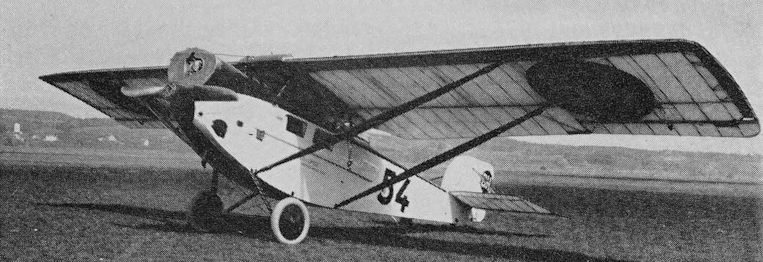
In Switzerland Alfred Comte’s flying school owned a Maybach-powered P III. It had clear-doped wings and was registered CH 54. This P III had been bought to operate a Zurich - Constance service, which never took place, and was sold in 1921, probably to Germany.
Span 16 m (52 ft 6 in); length 8:94 m (29 ft 4 in); wing area 44:9 sq m (483-29 sq ft).
With Benz engine. Empty weight 1,334 kg (2,941 lb); payload 450 kg (992 Ib); loaded weight 2,184 kg (4,815 lb); cruising speed 150 km/h (93-2 mph); endurance 3 1/2 hr.
With Maybach engine. Empty weight 1,400 kg (3,086 Ib); payload 450 kg (992 Ib); loaded weight 2,250 kg (4,960 Ib). Cruising speed 150 km/h (93:2 mph); take-off run 170 m (557 ft); landing run 110 m (360 ft); endurance 54 hr.
Lufthansa P IIIs
D-2 c/n 386 Hornisse (Hornet)
D-143 152 Biene (Bee)
D-171 262 Hummel (Humble-bee)
D-395 266 Wespe (Wasp)
D-451 268 Filiege (Fly)
D-581 E-10* Libelle (Dragonfly)
D-770 270 =Muicke (Gnat)
D-962 E-11* Moskito (Mosquito)
D-984 E-8*
*ex-Aeronaut aircraft. Registrations appear to have served as c/ns.
- J.Stroud European Transport Aircraft since 1910 (Putnam)
Фотографии
-
J.Stroud - European Transport Aircraft since 1910 /Putnam/
Aeronaut’s Benz-powered Sablatnig P III E-9 photographed at Tallinn in 1923 or 1924.
-
J.Stroud - European Transport Aircraft since 1910 /Putnam/
CH 54 was the Maybach-powered Sablatnig P III bought by the Alfred Comte Ortfliegerschule for a Zurich - Constance service. This example has unbalanced ailerons and clear-doped wing and tailplane.
-

M.Dusing - German Aviation Industry in WWI. Volume 2 /Centennial Perspective/ (85)
Postwar production of a Sab P.III passenger aeroplane.
-
R.Gentilli - Italian Aviation Units in the First World War. Vol.5 /Aeronaut/ (5)
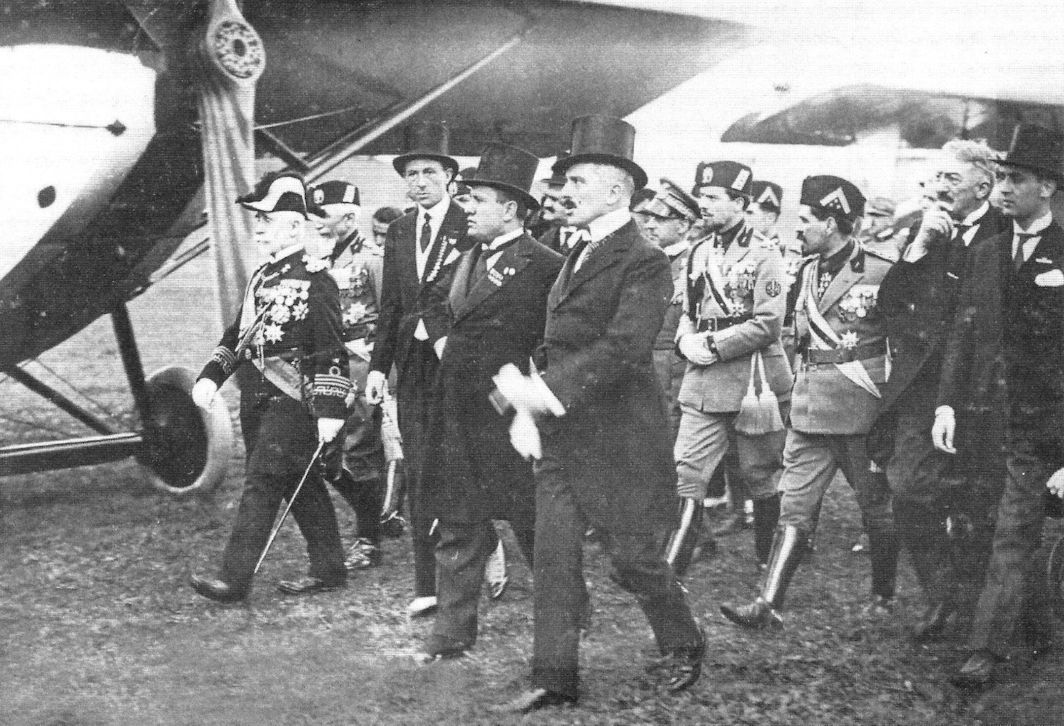
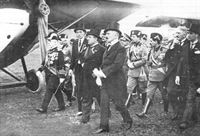
On 4 November 1923, authorities walk during the first parade of the newly born Regia Aeronautica. From the left: Admiral Thaon di Revel, Gen. De Bono, a fascist leader, Finzi, Mussolini, Arturo Mercanti, chief of civil aviation, behind them Italo Balbo. The airplane is a German Sablatnig P.3.