Описание
Страна: Австро-Венгрия
Год: 1918
Истребитель
В.Кондратьев Самолеты первой мировой войны
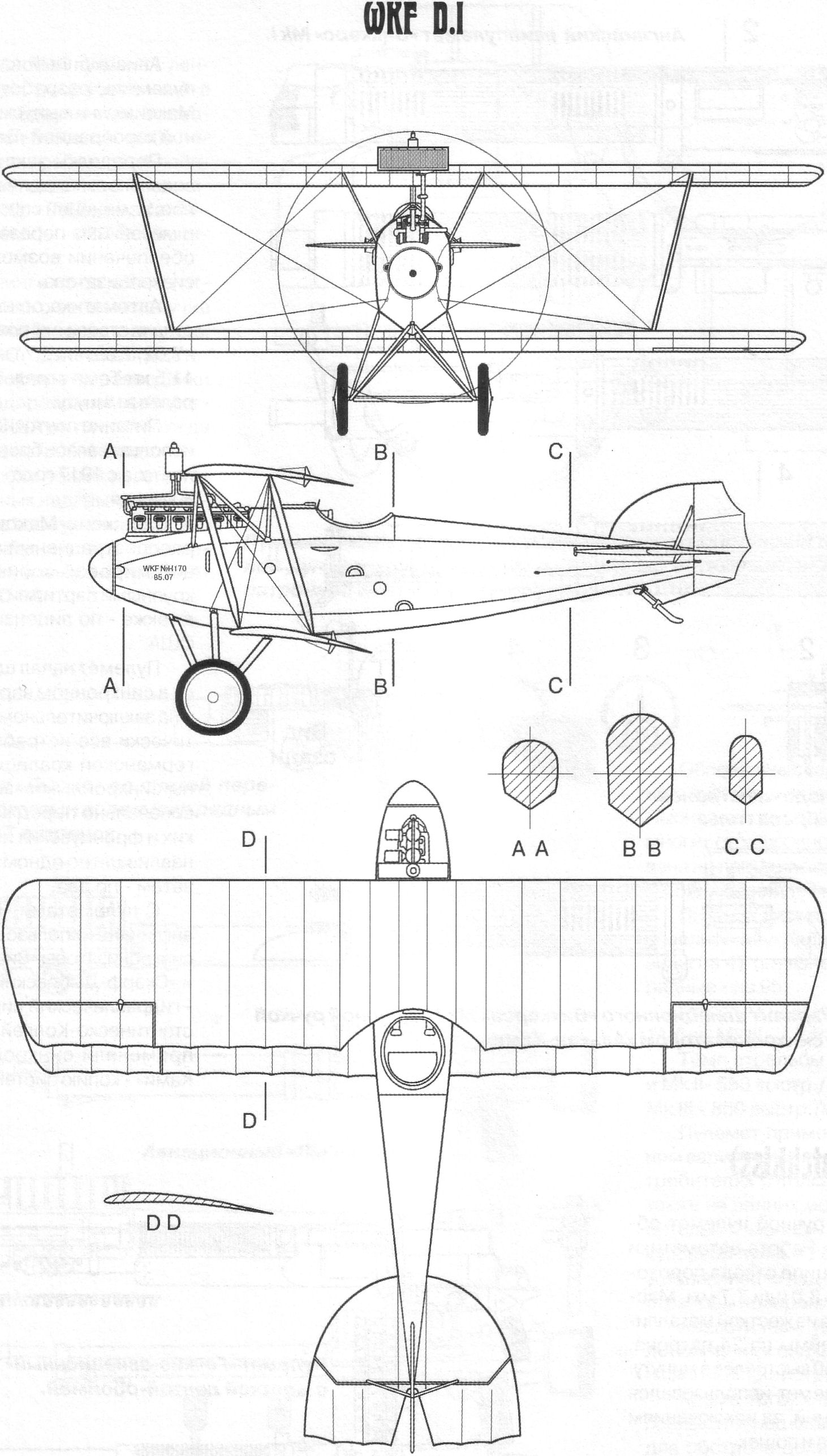
Весной 1918 года на небольшом венском авиазаводе "Винер Кароссерие Флюгцойгфабрик" (WKF), строившем по лицензии истребители "Оэффаг", был разработан истребитель собственной конструкции под 230-сильный мотор "Иеронимус".
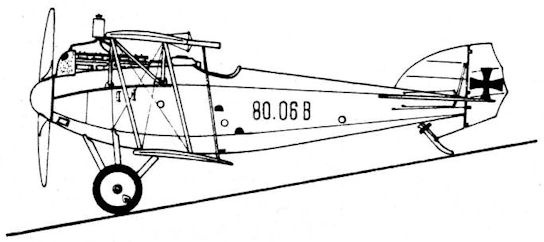
Конструкция машины аналогична "Альбатросу", но в ней была применена более технологичная форма фюзеляжа граненого сечения, новая схема тележки шасси и крылья с обычными парными деревянными стойками, вместо металлических V-образных. Самолет получил заводской индекс 80.06В. Он показал неплохие характеристики, был прост и дешев в производстве.
Согласно проекту, истребитель имел ряд интересных особенностей. В частности, на нем предполагалась установка радиостанции, а в качестве вооружения - оригинальный двуствольный пулемет "Гебауэр", автоматика которого работала за счет отбора мощности от карданного вала двигателя. .
Таким образом, устранялась необходимость в синхронизаторе и риск прострела лопастей винта при его отказе. Однако при уменьшении числа оборотов мотора, соответственно, снижалась и скорострельность пулемета. У меня нет данных, ставились ли такие пулеметы на серийные машины или же они были оснащены "стандартной" спаркой пулеметов "Шварцлозе".
В сентябре австрийское авиационное командование заказало постройку 48 экземпляров истребителей под обозначением WKF D.I. Серийные машины отличались от прототипа увеличенным размером стабилизатора и межкрыльевыми стойками, установленными с развалом наружу.
Из-за слабых производственных возможностей завода WKF, до начала ноября, когда Австро-Венгрия вышла из войны и распалась на отдельные государства, предприятие успело построить и сдать только два самолета из 48. Еще 20 машин построили к концу декабря, остальные - в январе 1919 года (согласно другим данным, к концу января были готовы лишь 25 WKF D.I, а остальные так и остались недоделанными).
Последний истребитель австрийской конструкции, разработанный в годы Первой мировой войны, так и не успел попасть на фронт и не участвовал ни в каких боевых действиях. Несколько таких машин планировали закупить поляки, но во время демонстрационного полета самолет потерпел аварию, и покупатели отказались от сделки.
Дальнейшая судьба истребителей не выяснена. Скорее всего, они были уничтожены по требованию держав-победителей, как и остальные боевые самолеты бывшей Австро-Венгерской империи.
ЛЕТНО-ТЕХНИЧЕСКИЕ ХАРАКТЕРИСТИКИ
Размах, м 8,8
Длина, м 7,10
Сухой вес, кг 732
Взлетный вес, кг 1005
Скорость максимальная, км/ч 195
Время набора высоты
2000 м, мин. 5,2
Потолок, м 6500
Описание:
- В.Кондратьев Самолеты первой мировой войны
- R.Keimel Osterreichs Luftfahrzeuge (Weishaupt Verlag)
- W.Green, G.Swanborough The Complete Book of Fighters
- P.Grosz, G.Haddow, P.Shiemer Austro-Hungarian Army Aircraft of World War One (Flying Machines)
- E.Hauke, W.Schroeder, B.Totschinger Die Flugzeuge der k.u.k. Luftfahrtruppe und Seeflieger 1914-1918
Фотографии

-

E.Hauke, W.Schroeder, B.Totschinger - Die Flugzeuge der k.u.k. Luftfahrtruppe und Seeflieger 1914-1918
Регистрационный номер: 80.06 [6] W.K.F. D-Prototyp
-

E.Hauke, W.Schroeder, B.Totschinger - Die Flugzeuge der k.u.k. Luftfahrtruppe und Seeflieger 1914-1918
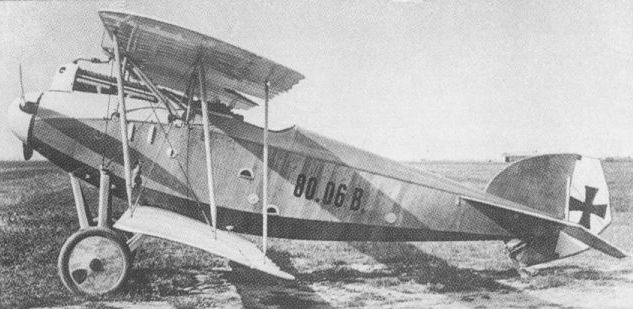
Регистрационный номер: 80.06B [5] W.K.F. D-Prototyp
-

P.Grosz, G.Haddow, P.Schiemer - Austro-Hungarian Army Aircraft of World War One /Flying Machines/
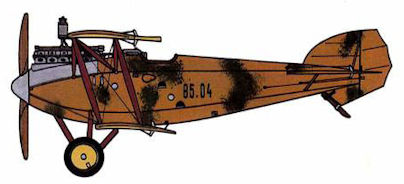
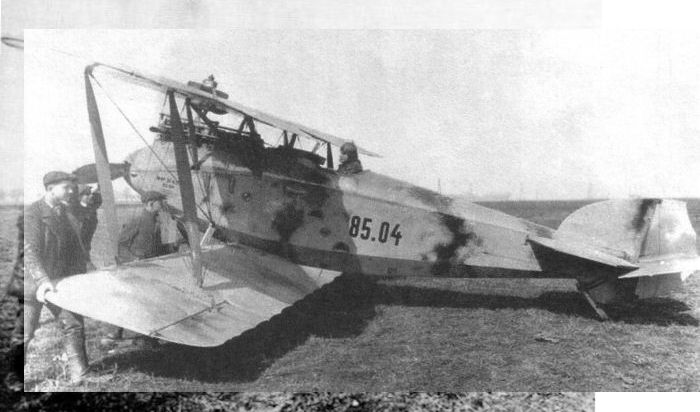
Регистрационный номер: 85.04 [6] WKF D.I 85.04
-

В.Кондратьев - Самолеты первой мировой войны
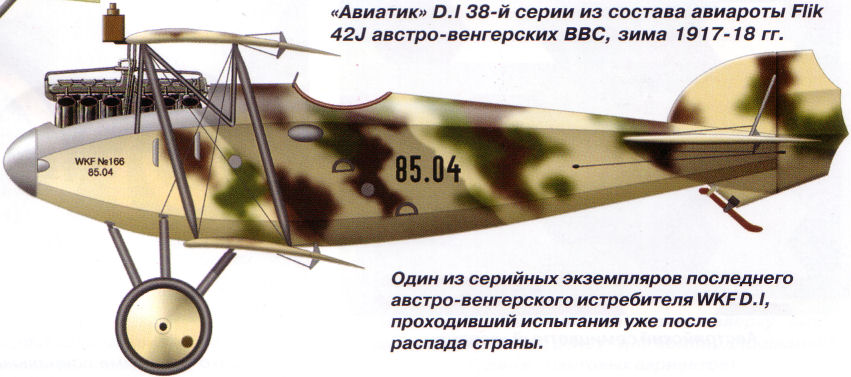
Регистрационный номер: 85.04 [6] Один из серийных экземпляров последнего австро-венгерского истребителя WKF D.I, проходивший испытания уже после распада страны.
-

E.Hauke, W.Schroeder, B.Totschinger - Die Flugzeuge der k.u.k. Luftfahrtruppe und Seeflieger 1914-1918
Регистрационный номер: 85.04 [6] WKF D I 85.04 Hennersdorf Herbst 1918
-

E.Hauke, W.Schroeder, B.Totschinger - Die Flugzeuge der k.u.k. Luftfahrtruppe und Seeflieger 1914-1918
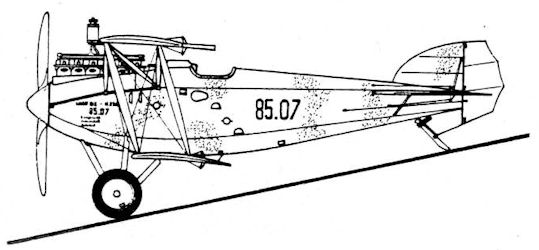
Регистрационный номер: 85.07 W.K.F. D.I

-

P.Grosz, G.Haddow, P.Schiemer - Austro-Hungarian Army Aircraft of World War One /Flying Machines/
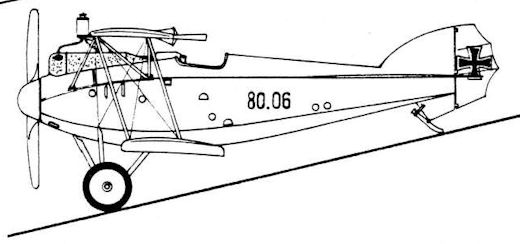
Регистрационный номер: 80.06 [6] Опытный истребитель 80.06В - прототип WKF D.I.
WKF 80.06. The multifold stringers of the veneer-wing construction made it impossible to install an airfoil radiator, while a nose radiator would have hampered the pilot’s forward vision. -

P.Grosz, G.Haddow, P.Schiemer - Austro-Hungarian Army Aircraft of World War One /Flying Machines/
Регистрационный номер: 80.06 [6] The WKF 80.06 fighter prototype prior to full military-load trials at Aspern. The twin Schwarzlose machine guns are mounted within easy reach of the pilot, the position preferred by most pilots.
-

E.Hauke, W.Schroeder, B.Totschinger - Die Flugzeuge der k.u.k. Luftfahrtruppe und Seeflieger 1914-1918
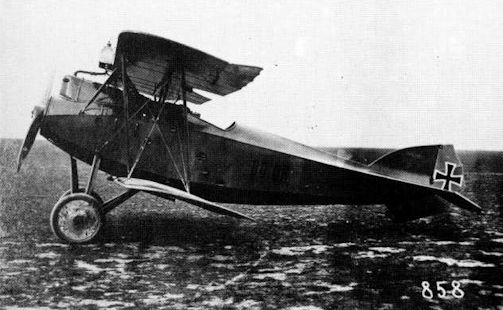
Регистрационный номер: 80.06 [6] WKF-Jagdeinsitzer-Prototyp. Flugzeugnummer 80.06. April 1918
-

P.Grosz, G.Haddow, P.Schiemer - Austro-Hungarian Army Aircraft of World War One /Flying Machines/
Регистрационный номер: 80.06B [5] As a result of the excellent performance achieved by the WKF 80.06B at the Fighter Evaluation in July 1918, the type was chosen for production as the WKF D.I.
-

W.Green, G.Swanborough - The Complete Book of Fighters
Регистрационный номер: 80.06B [5] The W.K.F. 80.06 was officially tested at Aspern, but crashed and was written off.
-

P.Grosz, G.Haddow, P.Schiemer - Austro-Hungarian Army Aircraft of World War One /Flying Machines/
Регистрационный номер: 80.06B [5] Front view of the WKF 80.06B. The fabric-covered wings were easier to manufacture and weighed less than veneer-covered ones. From a design standpoint, the 80.06B was as modern as any fighter built in the last months of the war.
-

P.Grosz, G.Haddow, P.Schiemer - Austro-Hungarian Army Aircraft of World War One /Flying Machines/
Регистрационный номер: 80.06B [5] The replacement WKF 80.06B at Aspern with fabric-covered wings, dual ailerons, reduced gap, and other modifications.
WKF-Jagdeinsitzer-Prototyp, Flugzeugnummer 80.06B., Ersatzbau für den abgestürzten Prototyp 80.06. Prototyp für die Serie 85. Flugfeld Hennersdorf
Одноместный прототип WKF, номер 80.06B., Замена разбившемуся прототипу 80.06. Опытный образец серии 85. Аэродром Хеннерсдорф -

P.Grosz, G.Haddow, P.Schiemer - Austro-Hungarian Army Aircraft of World War One /Flying Machines/
Регистрационный номер: 85.04 [6] Серийный экземпляр WKF D.I №85.04 на испытаниях.
WKF D.I 85.04 demonstrating its clean and purposeful lines. The buried controls actuating the ailerons and tail surfaces show the great emphasis on drag reduction.
WKF-Jagdeinsitzer D.I, Flugzeugnummer 85.04, Herbst 1918. Werkflugplatz Hennersdorf -

P.Grosz, G.Haddow, P.Schiemer - Austro-Hungarian Army Aircraft of World War One /Flying Machines/
Регистрационный номер: 85.04 [6] WKF D.I 85.04 with Dr. Richard von Mises in the cockpit preparatory to postwar evaluation at the Hennersdorf airfield.
-

E.Hauke, W.Schroeder, B.Totschinger - Die Flugzeuge der k.u.k. Luftfahrtruppe und Seeflieger 1914-1918
Регистрационный номер: 85.04 [6] Серийный экземпляр WKF D.I №85.04 на испытаниях.
WKF D.I, Flugzeugnummer 85.04, im Cockpit Dr. Richard von Mises -

P.Grosz, G.Haddow, P.Schiemer - Austro-Hungarian Army Aircraft of World War One /Flying Machines/
Регистрационный номер: 80.06 [6] The cockpit of the WKF 80.06 fighter prototype showing the accessible Schwarzlose M 16 machine guns. In the center is the tachometer that was used by the pilot to monitor firing the machine guns within the proper rpm limits. From left to right can be seen a clock dial, a bank indicator, an altimeter, two manometers with on-off cocks below, and a fuel gauge. The twin firing levers are mounted between the control stick handles.





-

P.Grosz, G.Haddow, P.Schiemer - Austro-Hungarian Army Aircraft of World War One /Flying Machines/
Регистрационный номер: 80.06 [6] The end of the WKF 80.06 prototype. Although both wing tips were torn off by the severity of the crash, the veneer wing cellule remained intact. The undercarriage appears to have given way as Gassner intended.