Описание
Страна: США
Год: 1919
Летающая лодка
Варианты
- Curtiss - H America - 1914 - США
- Curtiss - H.7 / H.10 Super America - 1915 - США
- Felixstowe - F.1 - 1916 - Великобритания
- Curtiss - H.12 Large America - 1917 - США
- Curtiss - H.16 Large America / F-5-L - 1917 - США
- Curtiss - HS - 1917 - США
- Felixstowe - F.2 - F.5 - 1917 - Великобритания
- Aeromarine - Aeromarine 75 - 1919 - США
- R.Davies Airlines of the United States since 1914 (Putnam)
- J.Bruce British Aeroplanes 1914-1918 (Putnam)
- C.Owers The Fighting America Flying Boats of WWI Vol.2 (A Centennial Perspective on Great War Airplanes 23)
-
C.Owers - The Fighting America Flying Boats of WWI Vol.2 /Centennial Perspective/ (23)
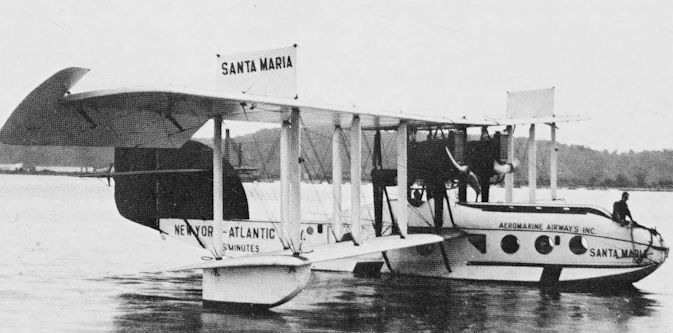
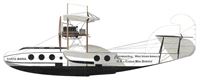
Aeromarine 75 Santa Maria of the Aeromarine West Indies Airways, circa 1921.
-
C.Owers - The Fighting America Flying Boats of WWI Vol.2 /Centennial Perspective/ (23)
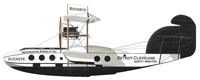
Aeromarine 75 Buckeye of Aeromarine Airways Inc., summer 1922.
-
C.Owers - The Fighting America Flying Boats of WWI Vol.2 /Centennial Perspective/ (23)
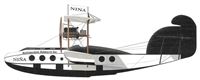
Aeromarine 75 Nina of Aeromarine Airways Inc., 1922-1924.
-
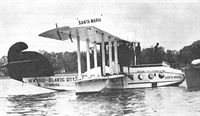
C.Owers - The Fighting America Flying Boats of WWI Vol.2 /Centennial Perspective/ (23)
Santa Maria has the route and time proudly displayed on the hull.
-
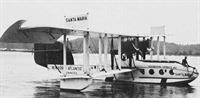
R.Davies - Airlines of the United States since 1914 /Putnam/
Aeromarine Airways’ Curtiss Type 75 flying-boat Santa Maria used on New York - Atlantic City and U.S. - Cuba services in 1921. This type was a 14-seat conversion of the military F-5L.
-
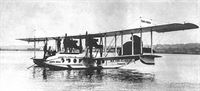
C.Owers - The Fighting America Flying Boats of WWI Vol.2 /Centennial Perspective/ (23)
Another view of Santa Maria with the route and travel time proudly displayed on the hull.
-
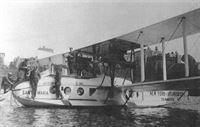
C.Owers - The Fighting America Flying Boats of WWI Vol.2 /Centennial Perspective/ (23)
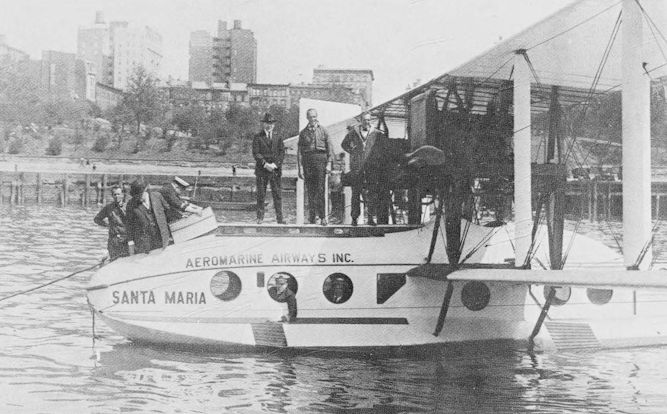
The Santa Maria was, according to the original caption, "the largest commercial flying boat in America arrives here (New York) from a record flight from Havana. The Santa Maria holds the record for continuous flights." Cmdr J. McAtes is releasing carrier pigeons with messages for Secretary Denby on their arrival.
-
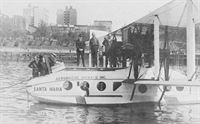
R.Davies - Airlines of the United States since 1914 /Putnam/
Close-up of the Curtiss 75 Santa Maria showing bow entrance hatch and walkway above the forward cabin.
-
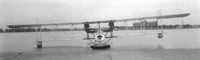
C.Owers - The Fighting America Flying Boats of WWI Vol.2 /Centennial Perspective/ (23)
Front view of the Santa Maria.
-
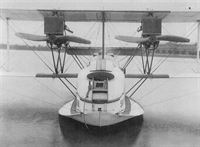
C.Owers - The Fighting America Flying Boats of WWI Vol.2 /Centennial Perspective/ (23)
Close-up of Santa Maria. The boats were kept in good condition and must have been an impressive sight in the air.
-
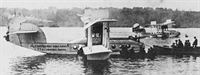
R.Davies - Airlines of the United States since 1914 /Putnam/
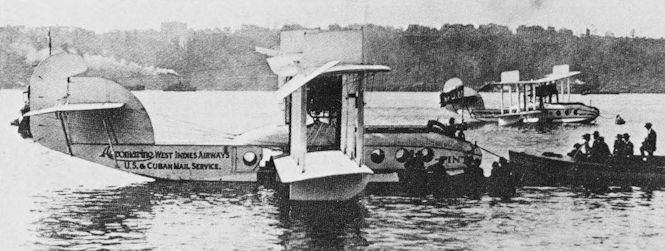
The Aeromarine West Indies Airways Curtiss 75s Pinta (nearest) and Santa Maria, used on the U.S. & Cuban Mail Service. This was the first international air mail service by a US airline, and presumably the original FAM-1 Post Office contract.
-
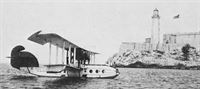
R.Davies - Airlines of the United States since 1914 /Putnam/
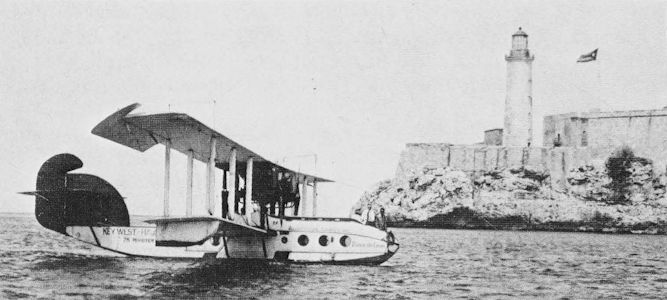
The Aeromarine Airways’ Curtiss 75 Ponce de Leon in Cuban waters in 1921. Painted on the hull are the words Key West - Havana 75 minutes.
-

C.Owers - The Fighting America Flying Boats of WWI Vol.2 /Centennial Perspective/ (23)
Santa Maria in another colour scheme. The raised pilot's cockpit under the wing and the doors at what was the side gun positions are readily seen in these photographs.
-
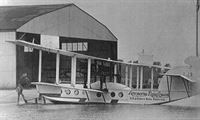
-
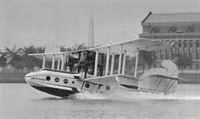
C.Owers - The Fighting America Flying Boats of WWI Vol.2 /Centennial Perspective/ (23)
Santa Maria powering to get up onto the step.
-

G.Loening - Takeoff into Greatness /Putnam/
The Aeromarine flying boat developed from the Navy F5L.
-
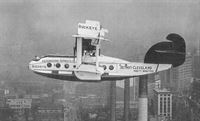
C.Owers - The Fighting America Flying Boats of WWI Vol.2 /Centennial Perspective/ (23)
Buckeye low over a smog and fog covered Cleveland in the summer of 1922.
-
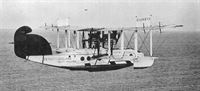
C.Owers - The Fighting America Flying Boats of WWI Vol.2 /Centennial Perspective/ (23)
Buckeye in flight. The colour scheme is black and white.
-
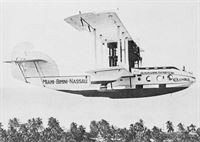
R.Davies - Airlines of the United States since 1914 /Putnam/
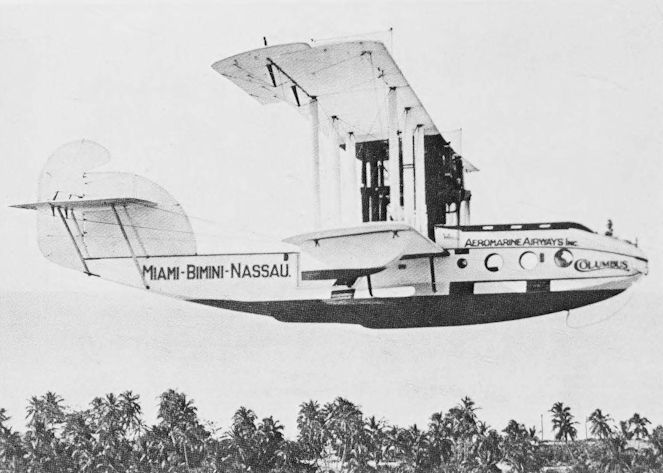
The route is boldly displayed on the hull of Aeromarine Airways’ Curtiss 75 Columbus.
-
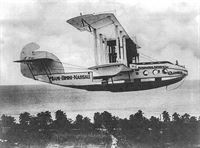
C.Owers - The Fighting America Flying Boats of WWI Vol.2 /Centennial Perspective/ (23)
Columbus in flight over Bimini in the Bahamas, late 1921.
-
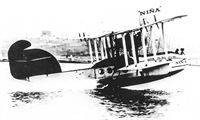
C.Owers - The Fighting America Flying Boats of WWI Vol.2 /Centennial Perspective/ (23)
Nina carries a cine-cameraman in the front cockpit.
-
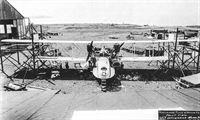
C.Owers - The Fighting America Flying Boats of WWI Vol.2 /Centennial Perspective/ (23)
Modifying an F-5-L at the Aeromarine works 06.11.1920.
-
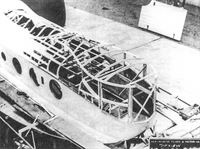
C.Owers - The Fighting America Flying Boats of WWI Vol.2 /Centennial Perspective/ (23)
View of one of the cabin modifications used by Aeromarine for the F-5-L. This appears to be an early modification as most had a more rounded bow.
-
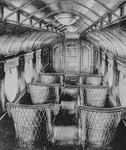
C.Owers - The Fighting America Flying Boats of WWI Vol.2 /Centennial Perspective/ (23)
Interior of an Aeromarine 75 showing the passenger accommodations.
R.Davies Airlines of the United States since 1914 (Putnam)
The First Steps
Aeromarine
<...>
During the winter of 1920-21, Florida West Indies Airways (known later as Aeromarine West Indies Airways) began a successful experimental air mail service between Key West and Havana, having received a government Foreign Air Mail contract on 15 October, 1920. Aeromarine absorbed this operation, carrying passengers as a bonus, at $75 each. By this time the fleet had been augmented by some Curtiss F-5L flying-boats, big rugged dependable twin-engined biplanes, weighing seven tons fully loaded, and even when the payload was increased by Aeromarine’s 14-seat conversion - called Type 75 - had a cruising radius of four hours. Another carrier in this region was the America Trans Oceanic Company, which started service from Miami to the British island of South Bimini on 20 December, 1919, and operated one round trip daily for two full winter seasons, charging $25 return for the 50-mile flight.
<...>
The flight gave Aeromarine such a boost that it was able to establish, at the end of September, the High Ball Express service from New York to Havana, via Atlantic City, Beaufort (South Carolina), Miami, and Key West. F-5Ls were used, fitted with eight seats in the forward cabin and four in the rear. The journey took two days, compared with four days by rail and boat.
Then on 1 November, 1921, two regular daily services were inaugurated, from Key West to Havana and from Miami to Nassau. The Havana trip took 14-2 hr for the 105 miles, and cost $50 single, compared with $19 by steamer; the Nassau trip took 24-3 hr for 185 miles, and cost $85 single ($150 round trip), compared with $25 by steamer. These services operated throughout the winter and terminated on 1 May the following year.
Aeromarine then instituted a commendable scheduling practice, neatly mitigating the effect of the highly seasonal nature of the Florida traffic. The fleet was flown north and, on 1 June, 1922, began a Detroit - Cleveland service, providing a short cut across Lake Erie to avoid the circuitous surface journey via Toledo. The Ninety Minute Line, as it was called, maintained two round trips daily, taking 14 hr for the 95 miles, carrying passengers and baggage only, as Aeromarine had no mail contract for this route. The single fare was $25, compared with $9 by rail and $5 by steamer, both of which were much slower. The Cleveland - Detroit service ended on 1 October, when the fleet made its migration once again to the south.
During 1922 services were expanded and Aeromarine boasted three operating divisions: Southern: Key West - Havana, Miami - Nassau, Miami - Bimini, with special flights from New York to Havana; New York: New York - Atlantic City, New York - points in New England, New York aerial sightseeing; and Great Lakes: Cleveland - Detroit, sightseeing over Lake Erie and Lake St Clair, and special flights New York - Detroit, via Albany, Montreal, Buffalo, and Cleveland.
With this increased activity, however, Aeromarine appears to have over-reached itself, for in September 1923, after three years of regular scheduled service, it ceased operations. In spite of carrying some 17,000 passengers on scheduled services, and probably as many on sightseeing trips, with a perfect safety record, the company could not pay its way. Early in 1924 it was reorganized, with new capital, changing its name to Aeromarine Airways Corporation; but there is no record of systematic airline service from then on.
The Foreign Air Mail contract, from Key West to Havana - which the U.S. Post Office presumably designated FAM-1 at the time - lapsed with the demise of Aeromarine.
Описание: