
Книги
Aeronaut
M.Kabatek, Fr.R.Kulczynski
German Aircraft in Polish Service. Volume 2
132
M.Kabatek, Fr.R.Kulczynski - German Aircraft in Polish Service. Volume 2 /Aeronaut/
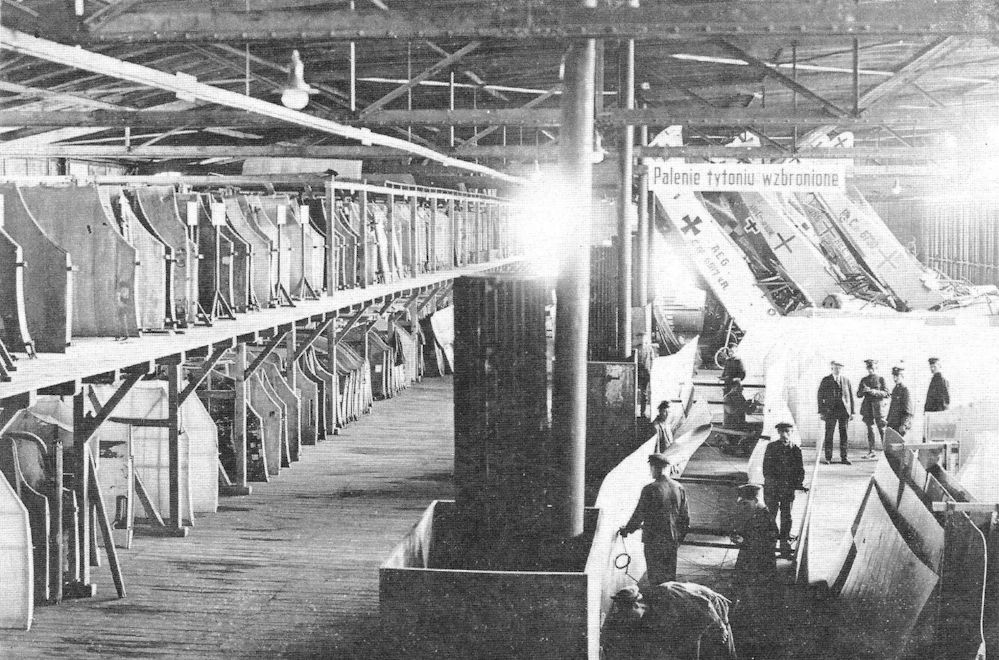
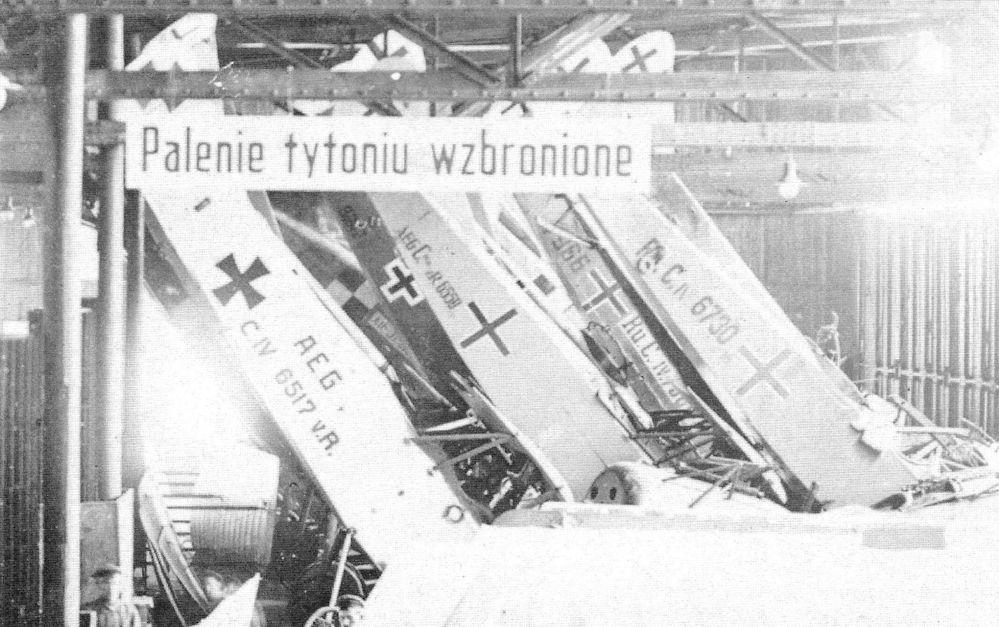
Interior of the storage building at Lawica, August 1919. Among the various aircraft types is Albatros J.I 628/18 - the only one in the photo to display a Polish checkerboard insignia. A sign reading Palenie tytoniu wzbronione ("Smoking prohibited") is visible on a roof beam, highlighting the fire hazard posed by wooden structures, plywood, and fabric used in aircraft construction. (Tomasz J. Kopanski)
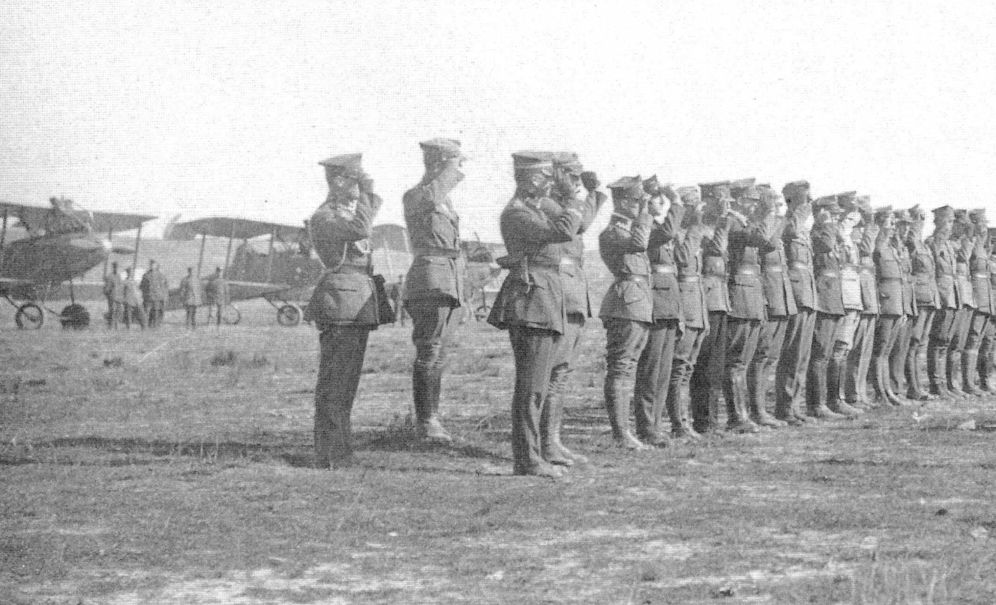
During a ceremony held in Lviv on 2 October 1920, gen. por. Stanislaw Haller (third from left) decorated the most distinguished airmen of III Dywizjon Lotniczy with the Virtuti Militari - Poland's highest military award for valor in the face of the enemy. In the background are two Albatros C.XV aircraft and an Albatros B.II, all belonging to 21. Eskadra Niszczycielska. The aircraft in the center is likely Albatros C.XV (“417"). The two-finger salute seen in the photograph is a distinctive tradition of the Polish military, setting it apart from the customs of other armies. (The Polish Aviation Museum in Krakow)
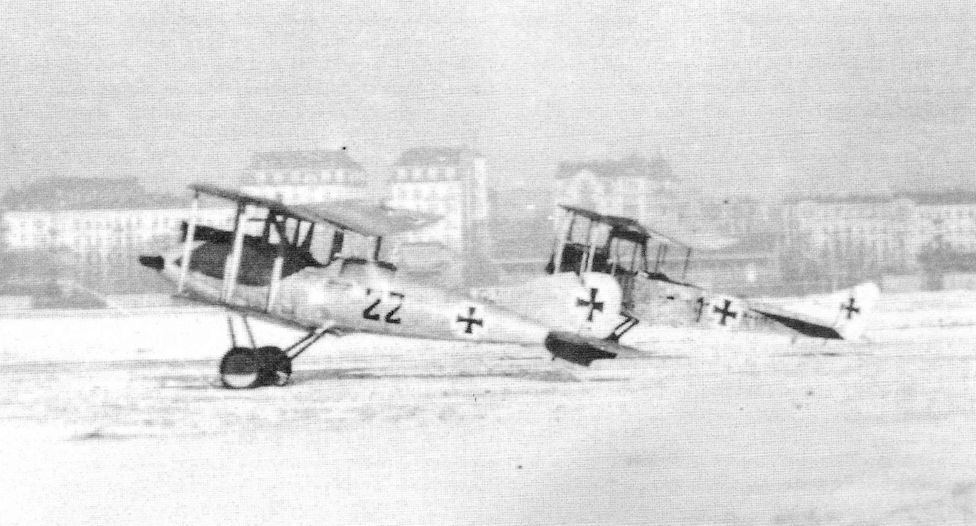
Albatros C.XII and Albatros C.I aircraft of Flieger-Beobachterschule Warschau, photographed in Warsaw, probably in early 1918. Although widely distributed to both Western and Eastern Front units, the Albatros C.XII was gradually withdrawn from combat roles by late 1917 and reassigned to training duties. (The Polish Air Force Museum in Deblin)
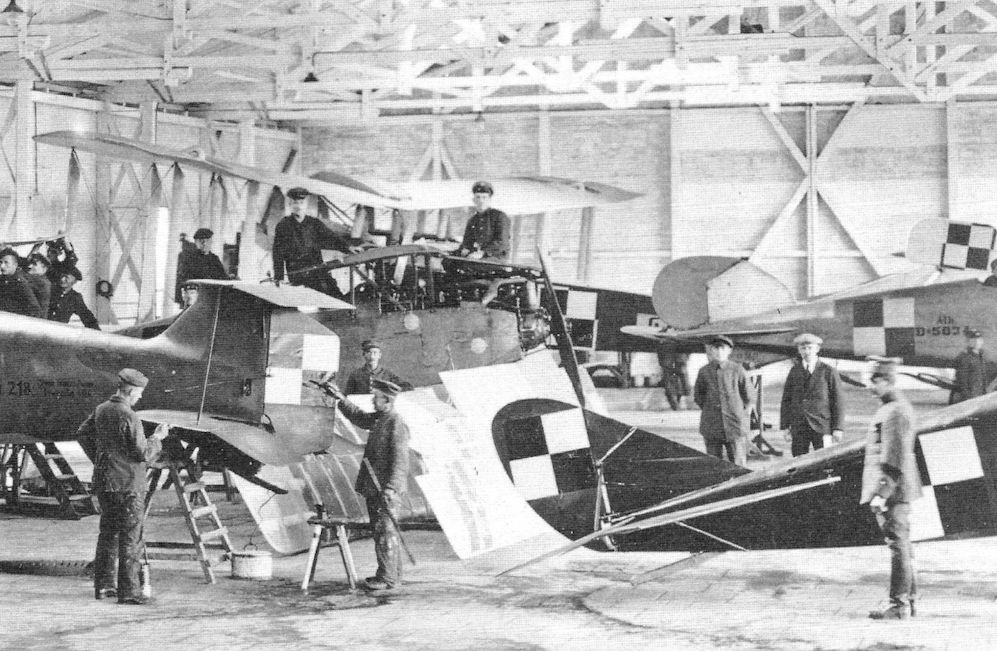
A rare view inside the maintenance hangar of Stacja Lotnicza Lawica, August 1919. At the far end of a row of aircraft stands Gotha G.IV (SSW) 213/17, accompanied by Hannover Cl.IIIa 13214/17, Halberstadt Cl.IIa (Bay) 2869/18, and Albatros D.III (OAW) 5034/17. (Wojciech Sankowski)
Chapter 1: The Albatros C.XII
In December 1916, Albatros Werke GmbH began developing a new long-range reconnaissance aircraft, the Albatros C.XII. As part of the company's evolutionary approach to aircraft design, the C.XII was based largely on the earlier C.X, with changes aimed at improving performance and correcting handling deficiencies. The most notable innovation was a new oval-section fuselage, intended to reduce aerodynamic drag and lower weight compared to the slab-sided design used in the C.V, C.VII, and C.X. This semi-monocoque airframe was entirely skinned in varnished birch plywood. The fuselage concept was based in part on the Albatros C.VIIIN night bomber, which had been developed shortly beforehand. A similar approach was used to develop the Albatros D.V fighter from the earlier D.III in the same period.
The wing assembly remained nearly identical to that of the C.X, with no major structural changes. A larger vertical stabilizer and rudder, as well as an extended elevator, improved lateral stability and handling. A ventral fin was added, into which the tailskid was mounted. The undercarriage was lengthened and the wheel track widened from 1.95 to 2.20 m to reduce the aircraft's tendency to ground loop. Other changes included an updated cabane strut layout and improvements to the aileron control system to enhance roll responsiveness. While the aircraft shared the same 260 hp Mercedes D.IVa engine as its predecessor, the empty weight was reduced by about 70 kg.
The C.XII was armed with a forward-firing LMG 08/15 machine gun for the pilot and a flexible machine gun for the observer. It could also carry a light bomb load, typically consisting of 12.5 kg PuW bombs. The aircraft could be fitted with a wireless transmitter and a retractable antenna for artillery spotting, as well as photographic equipment for reconnaissance missions.
Deliveries to frontline units began in May 1917, just four months after an initial production order for 300 aircraft was placed - remarkably,before extensive type testing had been completed. Despite its elegant design and advanced aerodynamic refinements, the C.XII offered only modest improvements in climb rate and ceiling compared to the C.X, while remaining noticeably inferior to the Rumpler C.IV in speed, agility, and survivability. Although widely distributed to both Western and Eastern Front units, the Albatros C.XII was gradually withdrawn from combat roles by late 1917 and reassigned to training duties. Ultimately, no more than 433 were delivered, as the aircraft's disappointing performance failed to justify further production. By 30 April 1918, only 36 aircraft remained on the Frontbestand list, and it is likely that none of them were still flying operational missions - except perhaps for low-risk sorties not requiring deep penetration over the lines.
A total of 18 Albatros C.XII aircraft entered the inventory of the Polish air service. Nine of them were captured in Warsaw on 15 November 1918, when Polish forces took control - without firing a shot - of an air station previously used by Flieger-Beobachterschule Warschau, following four days of negotiations with German personnel. These aircraft had been built under license by Bayerische Flugzeug-Werke AG and had seen intensive use as training aircraft. Despite that, their condition was good enough that, after minor inspection and servicing at the newly established Centralne Warsztaty Lotnicze (Central Aviation Workshops), they were assigned to combat units. From February to July 1919, they participated in fighting against Ukrainian forces. Those that survived the battles over Eastern Galicia were later used in the Polish-Soviet War, with the last one still flying combat missions as late as July 1920. At various times, the aircraft served with 1. Eskadra Lacznikowa (1st Liaison Squadron), 2., 6., 7., and 8. Eskadra Lotnicza (2nd, 6th, 7th, and 8th Air Squadrons), 11. (4.) Eskadra Niszczycielska (11th/4th Bombardment Squadron), II Szkola Pilotow (2nd Pilot School), and the Oddzial Lotny Szefostwa Lotnictwa 1. Armii (Flying Detachment of the Air Service Command of the 1st Army).
In Polish service, the Albatros C.XII was not used in its original role as a long-range reconnaissance aircraft. Instead, it proved highly effective in ground-attack and close air support roles - largely because the enemy lacked fighter cover. It was also employed in liaison and frontline reconnaissance missions. All operational Polish C.XII aircraft had their LMG 08/15 machine guns removed, following their earlier use by Flieger-Beobachterschule Warschau. During combat missions, they carried only the observer's machine gun. Depending on ammunition availability, crews used Schwarzlose M.07/12, Parabellum LMG 14, or Lewis guns interchangeably. Observers also carried up to 60 kg of Austro-Hungarian or German-made bombs in the cockpit. Because of their poor maneuverability, Polish crews often referred to the C.XII as krowa ("cow"). Still, the aircraft was generally well-liked and praised for being relatively fast given its size.
In addition to the aircraft captured in Warsaw, nine more Albatros C.XII were delivered to Poland by the Allies in early 1921 as part of war reparations. However, all of them were in poor condition - damaged and incomplete. They were missing cockpit equipment, engines or their components, and even major airframe parts such as the horizontal stabilizer, elevator, or wings. Surviving records do not explain why the decision was made to deliver the aircraft or why they were accepted, especially since their shipping cost by sea likely exceeded their actual value. Moreover, by early 1921, the Polish air service was steadily growing through purchases of new British, French, and Italian aircraft, while obsolete German designs were being withdrawn from use. None of the nine Albatros C.XII received through reparations were returned to flying condition - not even repair attempts were made - and all were ultimately scrapped in the spring of 1921.
Albatros C.XII 1051/17
The aircraft was handed over by the Allies as part of war reparations. It arrived in Poland by sea and was stored at the Lawica depots from January 1921.The Polish acceptance commission reported: it has a Mercedes 260 hp engine, No. 28663. The fuselage is damaged. Missing: interplane struts, bracing wire, control cables, rudder, seat cushions, pilot's seatbelt, tail fin, elevator, pilot's seat, compass, ring mount, fuel pump, gravity fuel tank, hub fixing bolts, starter, oil pressure gauge, oil level gauge. The propeller is damaged. The engine is missing one spark plug and two contact breakers.
Albatros C.XII 1094/17
One of nine Albatros C.XII aircraft delivered as war reparations, it was stored at the Lawica depots from January 1921. The Polish acceptance commission reported: no engine, missing: interplane struts, bracing wire, horizontal stabilizer, seat cushions, Cellon windshield, pressure gauge, oil tank, tachometer, radiator, pilot's seat, compass,fuel pump, gravity fuel tank, muffler, oil pressure gauge, starter, and oil level gauge.
Albatros C.XII (OAW) 1223/17
Another aircraft from the same batch of war reparations, it was stored at the Lawica depots from January 1921. The Polish acceptance commission reported: it has a Mercedes 260 hp engine, No. 28715. The fuselage is damaged. Missing: interplane struts, horizontal stabilizer, elevator, seat cushions, propeller, tachometer, pilot's seat, compass, ring mount, fuel pump, gravity fuel tank, starter, oil pressure gauge, and oil level gauge. The upper and lower wings are damaged,and the engine is missing one magneto.
Albatros C.XII (OAW) 1226/17
Delivered as part of the same Allied reparation shipment, the aircraft was stored at the Lawica depots from January 1921. The Polish acceptance commission reported: no engine. The fuselage is damaged. Missing: interplane struts, horizontal stabilizer, seat cushions, fuel tank, radiator, rudder, pilot's seat, compass, fuel pump, gravity fuel tank, oil pressure gauge, and oil level gauge.
Albatros C.XII (OAW) 1229/17
The aircraft was handed over by the Allies as part of war reparations. It was stored at the Lawica depots from January 1921. The Polish acceptance commission reported: no engine. Missing: interplane struts, bracing wire, horizontal stabilizer, rudder, seat cushions, pressure gauge, radiator, compass, fuel pump, gravity fuel tank, starter, oil pressure gauge, and oil level gauge.
Albatros C.XII (OAW) 1266/17
One of nine Albatros C.XII aircraft delivered as war reparations, it was stored at the Lawica depots from January 1921. The Polish acceptance commission reported: it has a Mercedes 260 hp engine, No. 26863. The fuselage is damaged. Missing: interplane struts, bracing wire, horizontal stabilizer, seat cushions, upper and lower wings, pilot's seat, observer's seatbelt, compass, ring mount,fuel pump, gravity fuel tank, hub fixing bolts, starter, oil pressure gauge, and oil level gauge. The propeller is damaged. The engine is missing two contact breakers and one spark plug.
Albatros C.XII (Bay) 1811/17
Another aircraft from the same batch of war reparations, it was stored at the Lawica depots from January 1921. The Polish acceptance commission reported: no engine. Missing: interplane struts, elevator, seat cushions, pilot's seat, compass, fuel pump, gravity fuel tank, muffler, starter, oil pressure gauge, and oil level gauge.
Albatros C.XII (Bay) 1818/17
Delivered as part of the same Allied reparation shipment, the aircraft was stored at the Lawica depots from January 1921. The Polish acceptance commission reported: no engine. Missing: interplane struts, bracing wire, seat cushions, elevator, pilot's seat, compass, ring mount, fuel pump, gravity fuel tank, muffler, starter, oil pressure gauge, and oil level gauge.
Albatros C.XII (Bay) 1832/17
The aircraft was captured on 15 November 1918 in Warsaw. In the following weeks, it was transferred to CWL for inspection and maintenance. After the work was completed, it was delivered to III Park Lotn. in Lviv. On 7 February 1919, it was assigned to 6. EL, which was stationed at the same airfield. At the time, the squadron was engaged in heavy fighting against Ukrainian forces surrounding the city, carrying out reconnaissance missions and ground attacks.
During a combat flight on 24 February 1919, the aircraft, crewed by sierz. pil. Jozef Cagasek and pchor. obs. Stanislaw Pietruski, was unexpectedly attacked by a Nieuport 23 (N3374) piloted by sotnik Fyodor Alelyukhin. The encounter ended with the Ukrainian fighter being shot down - marking the first aerial victory in the history of the Polish air service. Pietruski recalled the mission in his memoirs:
I was flying with Cagasek in what we called the "cow," the C.XII - a German machine, fast enough but heavy and sluggish, like a cow. It was a clear, frosty day. We were flying a full circuit around Lviv, freezing cold (we had no flight suits - I was wearing a long coat), and we were finishing the flight, heading back from the High Castle. We were at about 900 to 1,000 meters, with the airfield already beneath us. I was huddled up in the cockpit, freezing, just waiting to land and warm up. Suddenly, I heard the chatter of a machine gun behind me. I turned around and saw a Ukrainian Nieuport on our tail, pouring rounds into us. I nearly jumped out of my seat - no one even knew the Ukrainians had planes.
I threw myself at the machine gun, tore off my gloves, and started firing back at him from maybe 60 meters. The enemy pilot, hit square in the face with a fullburst, didn't dive away instead, he tried to outfly us. When Cagasek began turning left, the Nieuport followed. But because he was faster and could only shoot straight ahead through the propeller arc, he ended up flying parallel to us, just 20 meters off our wing. That's when I had the perfect shot - firing burst after burst - and I couldn't believe he was still flying. I was hitting him from close range, dead broadside. We only had standard rounds, no incendiary or tracer ammo, but I knew I was landing solid hits.
The Nieuport sped ahead of us and began to turn, setting up to come at us again from the left. I grabbed the machine gun to swing it over to the other side - but the whole thing fell apart in my hands. All I had left was the grip; the entire bolt dropped to the floor. I was completely defenseless. I showed the pilot the broken grip and braced myself - I figured we were sitting ducks.
I leaned back against Cagasek, shoved my hands in my pockets, and kept my eyes on the Ukrainian. To my surprise, he didn't come back around. Instead, he veered off and headed toward Ukrainian lines, back in the direction of the High Castle. That's when it hit me - I must have hit his fuel tank, and he was gliding back before going down.
When we landed, my buddies gave me a hero's welcome - they'd seen the whole dogfight. After the inspection, we counted 16 bullet holes in our tail controls.
A brief mission report was also included in the operational summary of III GL:
A reconnaissance aircraft was attacked over the airfield at an altitude of about 400 meters and forced into a dogfight with an enemy Nieuport fighter. Our aircraft took several hits to the fuselage and wings. After a second pass, the enemy aircraft broke off the engagement.
On 6 March 1919, after the plywood skin was repaired and a new machine gun installed, Albatros C.XII (Bay) 1832/17 was scheduled for another combat sortie. However, the aircraft crashed during takeoff, sustaining serious damage. The crew, por.pil. Franciszek Peter and pchor. obs. Stanislaw Pietruski, suffered minor injuries. Pietruski later described the incident:
Around that time, I had a crash. I was flying with Peter, and right after takeoff, the engine quit. We were about 20 meters up, flying over a small grove near our airfield. The pilot could've landed on the trees, but that would've wrecked the aircraft for sure. So he tried to turn back, even as the engine kept cutting in and out. He managed to complete the turn, but we lost speed and dropped from about 20 meters straight into the ground. We hit wing-first, which absorbed most of the impact.
I got smacked in the gut by a bomb and was thrown out of the aircraft, unconscious, just like Peter. When I came to, some of our guys were already standing over us. The hit from the bomb made me nauseous, and I threw up. Bastyr came running over when he heard about the crash. He asked how I felt. I said I was okay. "Good," he said. "Then get in another machine and go fly." It was psychological - he didn't want me to develop a fear of flying after the crash.
The damaged aircraft was returned to III Park Lotn., where it remained until 20 April 1919. It was later sent to CSL, and at the end of July, transferred to CWL. After undergoing repairs, it was assigned to 2. EL in Rivne. It reentered service on 19 August 1919, but due to the poor condition of its newly installed engine, it was not considered operational.
In early September 1919, repairs began at II RPL in Volodymyr. However, ongoing engine problems led to the aircraft being returned to CWL in mid-March 1920. The work was never completed, and the aircraft was likely scrapped in August 1920.
Albatros C.XII (Bay) 1833/17
The aircraft was captured on 15 November 1918 in Warsaw. In the following weeks, it was transferred to CWL for inspection and maintenance. On 29 January 1919, immediately after the work was completed, it was assigned to 2. EL in Lublin. At the end of April, as part of preparations for an offensive aimed against Ukrainian forces in Volhynia and Eastern Galicia, the squadron relocated to Volodymyr, approximately 130 km to the southeast. During operations in May and June 1919, the aircraft carried out liaison flights to maintain communication with forward Polish units:
- 19 May 1919 - Takeoff: 5:10, landing: 6:10. Crew: sierz. pil. Jan Kauba and por. obs. Kazimierz Olechnowicz. Summary: liaison flight from Volodymyr to Lutsk (the aircraft carried orders issued by the commander of the Volhynian Front).
- 20 May 1919 - Takeoff: 8:45, landing: 10:00. Crew: sierz. pil. Jan Kauba and por. obs. Kazimierz Olechnowicz. Summary: return flight from Lutsk to Volodymyr. The mission was carried out despite poor weather conditions along the route, including strong winds and hail.
- 22 May 1919 - Takeoff: 8:00, landing: 11:30. Crew: sierz. pil. Jan Kauba and por. pil. Wojciech Woyna. Summary: liaison flight from Volodymyr to Lutsk (the aircraft carried orders issued by the commander of the Volhynian Front).
- 23 May 1919 - Takeoff: 9:05, landing: 9:50. Crew: sierz. pil. Jan Kauba and a mechanic. Summary: liaison flight from Volodymyr to Lutsk (the aircraft carried orders issued by the commander of the Volhynian Front).
- 23 May 1919 - Takeoff: 15:00, landing: 15:50. Crew: sierz. pil. Jan Kauba and a mechanic. Summary: return flight from Lutsk to Volodymyr.
- 2 June 1919 - Takeoff: 8:20, landing: 9:00. Crew: sierz. pil. Jan Kauba and ppor. obs. Stefan Zajkowski. Summary: liaison flight from Volodymyr to Lutsk (the aircraft carried orders issued by the commander of the Volhynian Front).
- 10 June 1919 - Takeoff: 6:00, landing: 6:40. Crew: sierz. pil. Jan Kauba and por. pil. Wiktor Robotycki. Summary: liaison flight from Volodymyr to Lutsk (the aircraft carried orders issued by the commander of the Volhynian Front).
- 10 June 1919 - Takeoff: 14:00, landing: 15:00. Crew: sierz. pil. Jan Kauba and por. pil. Wiktor Robotycki. Summary: return flight from Lutsk to Volodymyr.
In mid-June 1919, Albatros C.XII (Bay) 1833/17 suffered an engine bearing failure due to the use of low-quality oil. The aircraft was sent to CWL for repairs. On 8 July 1919, it was loaded onto a railway platform for delivery to 2. EL. As the train set off, the ropes securing the fuselage snapped, causing the aircraft to roll off and suffer severe damage.
Repairs to Albatros C.XII (Bay) 1833/17 were not completed until early June 1920. Afterward, it was assigned to 11. (4.) EN stationed in Dunilavichy. It joined the unit on 25 June after a delivery flight from Warsaw lasting four hours.The very next day, the squadron relocated to Dokshytsy, from where the aircraft performed its first combat sortie against Soviet forces:
- 5 July 1920 - Takeoff: 14:15, landing: 15:00. Crew: sierz. pil. Karol Biel and st. szer. obs. Bogdan Butkiewicz. Summary: reconnaissance mission over the Pustosiele - Berezina River - Chernitsa - Myadzyel Lake area. The mission was aborted due to heavy rainfall. The observer dropped a report over Vileyka with information on enemy unit positions. Despite harsh weather conditions the crew successfully returned to Maladzyechna.
On 9 July 1920, Oddzial Lotny Szefostwa Lotnictwa 1. Armii was established in Maladzyechna. Among its aircraft was Albatros C.XII (Bay) 1833/17, which was transferred to Lida along with the unit. In the following days, it participated in three combat missions:
- 13 July 1920 - Takeoff: 18:00, landing: 21:25. Crew: sierz. pil. Antoni Katarzynski and ppor. obs. Tadeusz Uszynski. Summary: reconnaissance mission over the front line near Maladzyechna. Mission report: significant movement of supply columns likely linked to troop movements from Maladzyechna toward Lida along the railway line. No movement toward Minsk or Vilnius. Maladzyechna station was empty, with no troops in the town. Vileyka station was also deserted, with no troops or railcars present, and no movement observed in the town.
- 14 July 1920 - Takeoff: 18:20, landing: 21:45. Crew: sierz. pil. Antoni Katarzynski and ppor. obs. Tadeusz Uszynski. Summary: reconnaissance mission north of the Salos-Smarhon railway line, between the Vilija and Losha rivers.
- 15 July 1920 - Crew: sierz. pil. Karol Biel and ppor. obs. Czeslaw Niekraszewicz. Summary: reconnaissance mission over the Bahdanaw-Ashmyany-Slobodka-Salos-Smarhon area. During the flight, the engine suffered a serious failure. Flight time: 2 hours 10 minutes.
Due to the advance of the Red Army, Oddzial Lotny Szefostwa Lotnictwa 1. Armii was forced to withdraw to Bialystok. Meanwhile, 11. (4.) EN departed to Torun for reorganization and re-equipment. Albatros C.XII (Bay) 1833/17 was transferred to CWL, where it was eventually scrapped in August 1920.
Albatros C.XII (Bay) 1849/17
The aircraft was captured on 15 November 1918 in Warsaw. In the following weeks, it was transferred to CWL for inspection and servicing. On 5 March 1919, immediately after the work was completed, it was assigned to 2. EL in Lublin. Surviving records indicate that the aircraft was soon used on its first operational sortie:
- 20 March 1919 - Takeoff: 11:20. Crew: ppor. pil. Wilczynski and ppor. obs. Waclaw Koscianowski. Summary: combat mission. Shortly after takeoff, the aircraft began to lose stability, likely due to weather-related damage sustained while it had been stored outside the hangar. During the final phase of the landing, the pilot was unable to regain full control, and the aircraft flipped over, damaging the upper wing, rudder, and propeller.
In April and early May, the aircraft underwent repairs at CSL and CWL. On 10 May 1919, it arrived at III Park Lotn. and was soon assigned to 6. EL, which was also stationed in Lviv. By 20 June, the engine had logged 12 hours of flight time. In that period, the aircraft sustained minor damage on a combat sortie flown by por. pil. Franciszek Peter and pchor. obs. Stanislaw Pietruski (both from 7. EL). In his memoirs, pchor. Pietruski recounted the mission as follows:
Around 20 June, Franek [short for Franciszek - author's note] returned from the hospital. He was still limping, but eager to fly again. I flew with him in the "cow" (Albatros C.XII), and once again, Franek couldn't help himself - whenever he saw Ukrainians, he attacked them, and naturally, it nearly ended in disaster. We attacked Ukrainian positions dug in on a riverbank. As usual, we dropped to about 5-6 meters. The entire trench opened fire as we skimmed just above the ground. Suddenly, we heard a strange rattle in the engine. Franek reacted instantly. It turned out that the metal spinner covering the propeller hub had come loose - one of its two fasteners had been shot off, and the metal was striking the propeller, threatening to slice through it. Franek cut the engine and landed about 200–300 meters behind enemy lines, just beyond the trenches. Franek was truly a remarkable pilot - he put the aircraft down smoothly, with a dead prop, on a field full of holes and brush. To this day, I have no idea how he pulled it off. I jumped out, ran to the propeller, tore off the metal spinner in one motion, gave the prop a couple of turns to prime the engine, and climbed back into the cockpit. I saw a group of Ukrainians running toward us, shouting "Surrender!" I jumped back in. Franek started the engine and took off while I let loose a long burst from the machine gun to cool their enthusiasm - they thought they had us. The takeoff was a success. We gained altitude and crossed the Ukrainian lines at 500 meters, heading home. I told Franek we had more luck than sense. He nodded, but smiled.
The damage turned out to be minor, and after a brief inspection, the aircraft returned to service. On 28 August 1919, Albatros C.XII (Bay) 1849/17 was transferred to 9. EL in Dubno. The first flight after delivery to the unit was performed on 1 October 1919 by ppor. pil. Antoni Poznanski. Just 15 minutes after takeoff, the engine failed. During the emergency landing, the aircraft sank into soft ground, breaking the propeller and damaging the fuselage. Repairs took several months and were carried out by the personnel of II RPL and CWL. On 6 July 1920, the aircraft was assigned to 11. (4.) EN. It was received by sierz. pil. Antoni Katarzynski, who conducted a delivery flight from Warsaw to Maladzyechna the following day. The aircraft was lost on its first mission:
- 8 July 1920 - Crew: sierz. pil. Antoni Katarzynski and ppor. obs. Tadeusz Uszynski. Summary: reconnaissance mission to establish contact with the operational group under gen.ppor. Lucjan zeligowski. Near Vidzy, the crew spotted a Soviet cavalry unit and decided to attack. The pilot descended, allowing the observer to open fire with a machine gun. The Soviets immediately returned fire, and one of the bullets hit the engine. The crew made an emergency landing. Soviet troops tried to capture the Polish airmen, but ppor. Uszynski repelled the advancing cavalry with machine gun fire. The crew then set the aircraft on fire and broke through to the positions of 13. Pulk Ulanow Wilenskich (13th Regiment of Wilno Uhlans).
Albatros C.XII (Bay) 1869/17
The aircraft was captured on 15 November 1918 in Warsaw. In the following weeks, it was transferred to CWL for inspection and maintenance. On 14 January 1919, Boleslaw Skraba and por. obs. Julian Jurkiewicz carried out four maintenance check flights, totaling 1 hour and 5 minutes. The aircraft was then disassembled and transported by rail to III Park Lotn. in Lviv. On 3 February 1919, Albatros C.XII (Bay) 1869/17 was assigned to 7. EL, stationed at the same location. Just a few days later, it was sent back to III Park Lotn. for an engine repair. It rejoined 7. EL more than month later and soon took part in its first combat mission against Ukrainian forces:
- 11 April 1919 - Crew: kpt. pil. Stefan Bastyr and por. obs. Wladyslaw Torun. Summary: bombing mission against the railway station and the palace in Khodoriv, which served as the headquarters of General Mykhailo Omelianovych-Pavlenko. Over the target area, the observer dropped three 10-kg bombs. Flight time: 2 hours.
On 19 April 1919, the aircraft was assigned to 6. EL in Lviv. Just two weeks later, on 3 May, it was damaged in a landing accident.The crew, ppor.pil. Ludwik Idzikowski and ppor. obs. Ryszard Hesse, sustained only minor injuries. On 15 July 1919, the repaired fuselage was delivered to 6. EL, which at the time was stationed in Ternopil.
On 14 September 1919, Albatros C.XII (Bay) 1869/17 was sent back to III Park Lotn. due to engine wear after 46 hours of operation. The aircraft was likely sent to CSL in January 1920 and scrapped.
Albatros C.XII (Bay) 1871/17
The aircraft was captured on 15 November 1918 in Warsaw. In the following weeks, it was transferred to CWL for inspection and maintenance. On 1 February 1919, the aircraft was delivered to III Park Lotn. in Lviv, where it remained awaiting assignment to a combat unit. Before the end of the month, it was ultimately handed over to 6. EL, which was stationed at the same airfield. By 10 March 1919,
it had logged a total of two flight hours.
On 12 March 1919, kpt. pil. Camillo Perini, then commanding III GL, was tasked with transporting gen. por. Wladyslaw Rozwadowski, commander of the Armia "Wschod" (Army "East"), from Lviv to Przemysl. He carried out the mission in Albatros C.XII (Bay) 1871/17. After returning, kpt. Perini handed the aircraft over to a ground crewman. While the crewman was taxiing it, the aircraft became stuck in soft terrain, causing the spinning propeller to strike the surface. The damaged propeller was replaced later that day, and the aircraft took off for a maintenance check flight with por. pil. Franciszek Peter and ppor. obs. Ryszard Hesse on board. During the approach to land,the engine failed. Upon touchdown, the aircraft flipped over and was transferred to III Park Lotn. It remained there at least until 20 April 1919. About a month later, it was sent to CSL, where it was approved for repairs. On 12 June, it was assigned to II Szkola Pilotow in Warsaw.
On 19 August 1919, ppor. pil. Jozef Krzyczkowski of 3. EL received orders to travel to Vilnius to organize an airmail connection for transporting diplomatic mail, including intelligence materials, between Vilnius and Riga. Albatros C.XII (Bay) 1871/17 was placed at his disposal. Over the following days, the aircraft completed three flights.
- 20 August 1919 - Takeoff: 8:40, landing: 11:15. Crew: ppor. pil.Jozef Krzyczkowski and por. obs. Jozef Godlewski. Summary: ferry flight from Warsaw to Vilnius.
- 26 August 1919 - Takeoff: 16:00, landing: 18:25. Crew: ppor. pil. Jozef Krzyczkowski and por. obs. Jozef Godlewski. Summary: diplomatic mail flight from Vilnius to Riga. The return leg was significantly delayed due to difficulties obtaining fuel. After much effort, the crew managed to purchase it from a pharmacy warehouse, while the oil was supplied by British troops stationed in Riga.
- 30 August 1919 - Takeoff: 9:30. Crew: ppor. pil. Jozef Krzyczkowski and por. obs. Jozef Godlewski. Summary: diplomatic mail flight from Riga to Vilnius. While en route, the engine failed - likely due to poor-quality fuel. The pilot made a successful emergency landing in a forest clearing only 100 m long. During the rollout, however, the aircraft ran into a ditch that was not visible from the air. Local peasants were assigned to guard the aircraft, while the crew rode on horseback to the nearest town.There, they found the headquarters of 1. Brygada Piechoty Legionow (1st Legions Infantry Brigade) and requested assistance in reaching Vilnius. Although the unit had both a car and a train at its disposal, permission to use them was denied. Instead, a group of armed soldiers was sent to the landing site. After further efforts, the crew managed to contact the headquarters of 1. Dywizja Piechoty Legionow (1st Legions Infantry Division) by telephone. The division's chief of staff explained that no support could be provided due to the poor condition of the unit's vehicles. In response, por. Godlewski asked that military intelligence officers be urgently informed of the incident. Ultimately, the mail reached Vilnius within 30 hours. The heavily damaged aircraft was sent to CWL and scrapped.
Albatros C.XII (Bay) 1905/17
The aircraft was captured on 15 November 1918 in Warsaw. In the following weeks, it was transferred to CWL for inspection and maintenance. On 22 January 1919, it was officially assigned to 1. El in Warsaw. However, it remained at CWL, where it underwent minor modifications: it was fitted with an additional gravity fuel tank and a new engine.
In mid-March, the aircraft was assigned to 8. EL. On April 1919, the crew of ppor. pil. Kazimierz Jesionowski and sierz. obs. Bilinski performed a 20-minute maintenance check flight. Due to engine problems, it was decided to return the aircraft to CWL.
By late May 1919, the aircraft was transferred to Szkola Mechanikow (Aircraft Mechanics School) in Warsaw as a training aid. Just a few days later, it was transferred to 2. EL in Volodymyr. By the end of June, the aircraft had carried out two flights:
- 12 June 1919 - Crew: sierz. pil. Stefan Niewitecki and observer. Summary: bombing mission.About 30 minutes after takeoff, the engine caught fire. The crew made an emergency landing and immediately began fighting the flames. Fortunately, they managed to bring the fire under control before it could spread to the fuel tank or the bombs in the observer's cockpit.The aircraft remained airworthy, as the damage turned out to be minimal.
- 30 June 1919 - Landing: 18:45. Crew: sierz. pil. Jan Kauba and ppor. obs. Stefan Zajkowski. Summary: ferry flight from Volodymyr to Kovel. During the landing, the wheel rim broke. As a result of the collision with the ground, the propeller, radiator, undercarriage, fuselage, wings, and tailplane were damaged.
For nearly a year, the aircraft was stored at CWL and CSL. By June 1920, it was ultimately decided not to return it to flying condition, and it was scrapped.
Albatros C.XII (Bay) 1907/17
The aircraft was captured on 15 November 1918 in Warsaw. In the following weeks, it was transferred to CWL for inspection and maintenance. By 20 March 1919, it had been assigned to 8. EL. At the time, the squadron was stationed in Warsaw, but on 7 April it relocated to Brest, closer to the front lines. During its service with the unit, the aircraft performed two flights:
- 3 April 1919 - Crew: ppor. pil. Kazimierz Jesionowski and plut. Michalak. Summary: maintenance check flight. Flight time: 30 minutes.
- 27 April 1919 - Crew: ppor. pil. Zygmunt Herget and sierz. obs. Bilinski. Summary: ferry flight from Brest to Janow Podlaski. About 50 minutes after takeoff, the engine failed. The pilot made a safe landing near Drohiczyn.
On 2 May 1919, the aircraft was sent to CWL, and by the end of the month it was transferred to III Park Lotn. in Lviv. It arrived there on 2 June and, three days later, was assigned to 6. EL. By 10 July,it had logged 16 hours of flight time. After sustaining damage on 12 July, Albatros C.XII (Bay) 1907/17 was sent to III Park Lotn. and rejoined 6. EL in mid-September, by which time the squadron had relocated to Ternopil.
The aircraft was seriously damaged during a combat flight on 24 September 1919. Due to a fuel line leak and the resulting fire hazard, the pilot made an emergency landing near Rosokhuvatets, which ended with the destruction of the airframe. The crew, por. pil. Kazimierz Swoszowski and ppor. obs. Feliks Blaszkiewicz, escaped without injury. The wreck was transported to III Park Lotn. Due to the extent of the damage, it was not repaired and was scrapped.
Albatros C.XII (Bay) 1909/17
The aircraft was captured on 15 November 1918 in Warsaw. In the following weeks, it was transferred to CWL for inspection and maintenance. On 28 January 1919, it was assigned to 1. EL in Warsaw, but in early February, likely due to an engine failure, it had to be returned to CWL. The aircraft rejoined the squadron on 24 February. However, by mid-March 1919, it was temporarily placed in storage at CSL. On 19 May 1919,ppor. pil. Jozef Krzyczkowski delivered Albatros C.XII (Bay) 1909/17 to Kovel, where it officially entered service with 3. EL:
- 20 May 1919 - Crew: ppor. pil. Jozef Krzyczkowski and por. obs. Jozef Godlewski. Summary: liaison flight from Kovel to Lutsk and back.
- 30 May 1919 - Takeoff: 5:00, landing: 5:50. Crew: ppor. pil. Jozef Krzyczkowski and ppor. obs. Tadeusz Antonowicz. Summary: reconnaissance mission in the Kovel-Perespa-Dubno-Kovel area. The mission was aborted due to heavy rain and a low cloud ceiling.
- 1 June 1919 - Takeoff: 5:20, landing: 7:15. Crew: ppor. pil. Jozef Krzyczkowski and por. obs. Jozef Godlewski. Summary: reconnaissance mission in the Kovel-Rozhyshche-Kolky-Klevan-Olyka-Kivertsi-Kovel area. Due to a low cloud ceiling - dropping to 100 m - the mission was aborted over Trostianets.
- 1 June 1919 - Takeoff: 17:05, landing: 19:55. Crew: ppor. pil. Jozef Krzyczkowski and por. obs. Jozef Godlewski. Summary: reconnaissance mission in the Kovel-Rozhyshche-Kolky-Klevan-Olyka-Kivertsi-Kovel area.
On 7 June 1919, 3. EL relocated to Warsaw and transferred Albatros C.XII (Bay) 1909/17 to CWL. A month later, the aircraft was assigned to 2. EL in Volodymyr. During its service with the unit, the following flights were recorded:
-7 July 1919 - Takeoff: 8:00, landing: 8:25. Crew: sierz. pil. Stefan Niewitecki and pchor. obs. Tomasz Bierzynski. Summary: maintenance check flight.
- 9 July 1919 - Takeoff: 7:00, landing: 8:00. Crew: sierz. pil. Jan Kauba and pchor. obs. Tomasz Bierzynski. Summary: maintenance check flight.
- 15 July 1919 - Takeoff: 6:15, landing: 7:00. Crew: sierz. pil. Jan Kauba and pchor. obs. Tomasz Bierzynski. Summary: ferry flight from Volodymyr to Lutsk.
-15 July 1919 - Takeoff: 12:30, landing: 14:15. Crew: sierz. pil. Jan Kauba and pchor. obs. Tomasz Bierzynski. Summary: reconnaissance mission in the Kolky-Polonne-Sarny area.
- 15 July 1919 - Takeoff: 18:20, landing: 19:00. Crew: sierz. pil.Jan Kauba and pchor. obs. Tomasz Bierzynski. Summary: ferry flight from Lutsk to Volodymyr.
-16 July 1919 - Takeoff: 6:30, landing: 7:15. Crew: sierz. pil. Jan Kauba and por. pil. Wiktor Robotycki. Summary: ferry flight from Volodymyr to Lutsk.
- 16 July 1919 - Takeoff: 16:30, landing: 17:00. Crew: sierz. pil. Jan Kauba and por.pil. Wiktor Robotycki. Summary: reconnaissance mission in the Sarny area. The mission was aborted due to a thunderstorm.
- 16 July 1919 - Takeoff: 20:30, landing: 21:15. Crew: sierz. pil. Jan Kauba and por. pil. Wiktor Robotycki. Summary: transfer flight from Lutsk to Volodymyr.
-17 July 1919 - Takeoff: 8:15, landing: 11:05. Crew: sierz. pil. Jan Kauba and pchor. obs. Tomasz Bierzynski. Summary: reconnaissance mission in the Rozhyshche-Kolky-Polonne-Rafalivka-Zholudsk-Antonivka-Sarny-Zholudsk-Rafalivka-Polonne-Kolky-Styr River-Lutsk area.
-17 July 1919 - Takeoff: 15:30, landing: 16:15. Crew: sierz. pil. Jan Kauba and pchor. obs. Tomasz Bierzynski. Summary: ferry flight from Lutsk to Volodymyr.
- 18 July 1919 - Takeoff: 9:30, landing: 10:15. Crew: sierz. pil. Jan Kauba and por. pil. Wiktor Robotycki. Summary: ferry flight from Volodymyr to Lviv.
-18 July 1919 - Takeoff: 17:00, landing: 17:50. Crew: sierz. pil. Jan Kauba and por. pil. Wiktor Robotycki. Summary: ferry flight from Lviv to Volodymyr.
- 21 July 1919 - Takeoff: 9:15, landing: 9:50. Crew: sierz. pil. Jan Kauba and por. pil. Wiktor Robotycki. Summary: ferry flight from Volodymyr to Lviv. The aircraft returned to the airfield for repairs due to a damaged propeller.
- 28 July 1919 - Takeoff: 7:30, landing: 7:45. Crew: sierz. pil. Jan Kauba and a mechanic. Summary: maintenance check flight.
- 28 July 1919 - Takeoff: 17:30, landing: 17:35. Crew: sierz. pil. Jan Kauba and a mechanic. Summary: maintenance check flight. The flight was cut short due to a clogged fuel line. Additionally, an inspection revealed that the propeller needed to be replaced.
- 30 July 1919 - Takeoff: 6:55, landing: 7:10. Crew: sierz. pil. Jan Kauba and a mechanic. Summary: maintenance check flight.
- 7 August 1919 - Takeoff: 7:00, landing: 8:00. Crew: sierz. pil. Jan Kauba and a mechanic. Summary: maintenance check flight.
- 7 August 1919 - Takeoff: 8:05, landing: 9:05. Crew: sierz. pil. Jan Kauba and a mechanic. Summary: maintenance check flight.
- 7 August 1919 - Takeoff: 5:30, landing: 7:00. Crew: sierz. pil. Jan Kauba and pchor. obs. Tomasz Bierzynski. Summary: liaison flight from Volodymyr to Lavriv.
- 8 August 1919 - Takeoff: 15:00, landing: 16:00. Crew: sierz. pil. Stefan Niewitecki and pchor. obs. Tomasz Bierzynski. Summary: liaison flight from Volodymyr to Lutsk.
- 8 August 1919 - Takeoff: 18:00, landing: 18:30. Crew: pilot and observer. Summary: maintenance check flight. The flight was interrupted due to an engine failure.
- 9 August 1919 - Takeoff: 16:00, landing: 16:30. Crew: pilot and observer. Summary: maintenance check flight. During the flight, the fuselage sustained severe damage.
The aircraft was sent to II RPL in Volodymyr for repairs, which included replacing structural elements of the fuselage and its plywood skin, as well as repairing one of the wings. The overhaul continued until 30 January 1920. In early March, the aircraft was transferred to CSL, where it was ultimately scrapped.
Albatros C.XII (Bay) 1910/17
The aircraft was captured on 15 November 1918 in Warsaw. In the following weeks, it was transferred to CWL for inspection and maintenance. On 1 February 1919, it was sent to III Park Lotn. in Lviv, where a new engine was installed. Shortly afterward, it was assigned to 7. EL. Surviving records indicate that the aircraft took part in one mission against Ukrainian forces:
- 11 April 1919 - Crew: por. pil. Stefan Stec and ppor. obs. Aleksander Senkowski. Summary: Bombing mission against the railway station and the palace in Khodoriv, which served as the headquarters of General Mykhailo Omelianovych-Pavlenko. During the flight, the aircraft sustained minor damage and was sent to III Park Lotn. for repairs later that day.
It was probably transferred to CWL in May 1919. In early August, it was assigned to 2. EL in Volodymyr. By that time, it had been fitted with a different engine, but it was so worn out that it was immediately sent for overhaul. On 6 September 1919, sierz. pil. Stefan Niewitecki and por. pil. Wiktor Robotycki delivered the fully operational Albatros C.XII (Bay) 1910/17 to Rivne, the new base of 2. EL. The flight took 1 hour and 25 minutes, with a brief stopover in Lutsk. The very next day, the aircraft took part in another combat mission, this time against Soviet forces:
- 7 September 1919 - Takeoff: 9:30, Landing: 10:00. Crew: sierz. pil. Stefan Niewitecki and por. pil. Wiktor Robotycki. Summary: combat mission. The engine failed during the flight, forcing the crew to make an emergency landing near Kustin.
- 8 September 1919 - Takeoff: 14:30, Landing: 14:50. Crew: sierz. pil. Stefan Niewitecki and por. pil. Wiktor Robotycki. Summary: return flight to Rivne.
- 9 September 1919 - Takeoff: 11:30, Landing: 12:15. Crew: sierz. pil. Stefan Niewitecki and a mechanic. Summary: maintenance check flight. The engine failed again, forcing an emergency landing near Rivne. Upon touchdown, the propeller was damaged, and the pilot suffered a minor facial injury.
- 12 September 1919 - Takeoff: 14:00. Crew: sierz. pil. Stefan Niewitecki and plut. Boleslaw Lewandowski. Summary: maintenance check flight. As the aircraft began to climb after taking off from Rivne, the engine mount fractured. A crash was avoided solely thanks to the pilot's swift and correct response. A post-landing inspection revealed that several wooden elements of the fuselage structure were affected by rot.
Albatros C.XII (Bay) 1910/17 was sent to II RPL in Volodymyr. In early March 1920, it was transferred to CSL and subsequently scrapped.
Albatros C.XII (Bay) 1960/17
The aircraft was handed over by the Allies as part of war reparations. It arrived in Poland by sea and was stored at the lawica depots from January 1921. The Polish acceptance commission reported: no engine. Missing: interplane struts, elevator, seat cushions, pressure gauge, tachometer, pilot's seat, compass, fuel pump, gravity fuel tank, muffler, starter, oil pressure gauge, and oil level gauge.
Albatros C.XII Aircraft in Poland
German Serial Number Manufacturer & Model Code Number Engine Type (Serial Number)
1051/17 Albatros C.XII - Mercedes D.IVa (28663)
1094/17 Albatros C.XII - -
1223/17 Albatros C.XII (OAW) - Mercedes D.IVa (28715)
1226/17 Albatros C.XII (OAW) - -
1229/17 Albatros C.XII (OAW) - -
1266/17 Albatros C.XII (OAW) - Mercedes D.IVa (26863)
1811/17 Albatros C.XII (Bay) - -
1818/17 Albatros C.XII (Bay) - -
1832/17 Albatros C.XII (Bay) 7 Mercedes D.IVa (36640, 29443)
1833/17 Albatros C.XII (Bay) 2 Mercedes D.IVa (29613, 38163)
1849/17 Albatros C.XII (Bay) 3 Mercedes D.IVa (29775, 29423, 28471)
1869/17 Albatros C.XII (Bay) 1 Mercedes D.IVa (36260)
1871/17 Albatros C.XII (Bay) 6 Mercedes D.IVa (30242, 28471)
1905/17 Albatros C.XII (Bay) 4 Mercedes D.IVa (38166, 29598, 32342)
1907/17 Albatros C.XII (Bay) 9 Mercedes D.IVa (38168, 38166, 36640)
1909/17 Albatros C.XII (Bay) 8 Mercedes D.IVa (38163, 38763, 27503)
1910/17 Albatros C.XII (Bay) 5 Mercedes D.IVa (36559, 69160, 28656)
1960/17 Albatros C.XII (Bay) - -
In December 1916, Albatros Werke GmbH began developing a new long-range reconnaissance aircraft, the Albatros C.XII. As part of the company's evolutionary approach to aircraft design, the C.XII was based largely on the earlier C.X, with changes aimed at improving performance and correcting handling deficiencies. The most notable innovation was a new oval-section fuselage, intended to reduce aerodynamic drag and lower weight compared to the slab-sided design used in the C.V, C.VII, and C.X. This semi-monocoque airframe was entirely skinned in varnished birch plywood. The fuselage concept was based in part on the Albatros C.VIIIN night bomber, which had been developed shortly beforehand. A similar approach was used to develop the Albatros D.V fighter from the earlier D.III in the same period.
The wing assembly remained nearly identical to that of the C.X, with no major structural changes. A larger vertical stabilizer and rudder, as well as an extended elevator, improved lateral stability and handling. A ventral fin was added, into which the tailskid was mounted. The undercarriage was lengthened and the wheel track widened from 1.95 to 2.20 m to reduce the aircraft's tendency to ground loop. Other changes included an updated cabane strut layout and improvements to the aileron control system to enhance roll responsiveness. While the aircraft shared the same 260 hp Mercedes D.IVa engine as its predecessor, the empty weight was reduced by about 70 kg.
The C.XII was armed with a forward-firing LMG 08/15 machine gun for the pilot and a flexible machine gun for the observer. It could also carry a light bomb load, typically consisting of 12.5 kg PuW bombs. The aircraft could be fitted with a wireless transmitter and a retractable antenna for artillery spotting, as well as photographic equipment for reconnaissance missions.
Deliveries to frontline units began in May 1917, just four months after an initial production order for 300 aircraft was placed - remarkably,before extensive type testing had been completed. Despite its elegant design and advanced aerodynamic refinements, the C.XII offered only modest improvements in climb rate and ceiling compared to the C.X, while remaining noticeably inferior to the Rumpler C.IV in speed, agility, and survivability. Although widely distributed to both Western and Eastern Front units, the Albatros C.XII was gradually withdrawn from combat roles by late 1917 and reassigned to training duties. Ultimately, no more than 433 were delivered, as the aircraft's disappointing performance failed to justify further production. By 30 April 1918, only 36 aircraft remained on the Frontbestand list, and it is likely that none of them were still flying operational missions - except perhaps for low-risk sorties not requiring deep penetration over the lines.
A total of 18 Albatros C.XII aircraft entered the inventory of the Polish air service. Nine of them were captured in Warsaw on 15 November 1918, when Polish forces took control - without firing a shot - of an air station previously used by Flieger-Beobachterschule Warschau, following four days of negotiations with German personnel. These aircraft had been built under license by Bayerische Flugzeug-Werke AG and had seen intensive use as training aircraft. Despite that, their condition was good enough that, after minor inspection and servicing at the newly established Centralne Warsztaty Lotnicze (Central Aviation Workshops), they were assigned to combat units. From February to July 1919, they participated in fighting against Ukrainian forces. Those that survived the battles over Eastern Galicia were later used in the Polish-Soviet War, with the last one still flying combat missions as late as July 1920. At various times, the aircraft served with 1. Eskadra Lacznikowa (1st Liaison Squadron), 2., 6., 7., and 8. Eskadra Lotnicza (2nd, 6th, 7th, and 8th Air Squadrons), 11. (4.) Eskadra Niszczycielska (11th/4th Bombardment Squadron), II Szkola Pilotow (2nd Pilot School), and the Oddzial Lotny Szefostwa Lotnictwa 1. Armii (Flying Detachment of the Air Service Command of the 1st Army).
In Polish service, the Albatros C.XII was not used in its original role as a long-range reconnaissance aircraft. Instead, it proved highly effective in ground-attack and close air support roles - largely because the enemy lacked fighter cover. It was also employed in liaison and frontline reconnaissance missions. All operational Polish C.XII aircraft had their LMG 08/15 machine guns removed, following their earlier use by Flieger-Beobachterschule Warschau. During combat missions, they carried only the observer's machine gun. Depending on ammunition availability, crews used Schwarzlose M.07/12, Parabellum LMG 14, or Lewis guns interchangeably. Observers also carried up to 60 kg of Austro-Hungarian or German-made bombs in the cockpit. Because of their poor maneuverability, Polish crews often referred to the C.XII as krowa ("cow"). Still, the aircraft was generally well-liked and praised for being relatively fast given its size.
In addition to the aircraft captured in Warsaw, nine more Albatros C.XII were delivered to Poland by the Allies in early 1921 as part of war reparations. However, all of them were in poor condition - damaged and incomplete. They were missing cockpit equipment, engines or their components, and even major airframe parts such as the horizontal stabilizer, elevator, or wings. Surviving records do not explain why the decision was made to deliver the aircraft or why they were accepted, especially since their shipping cost by sea likely exceeded their actual value. Moreover, by early 1921, the Polish air service was steadily growing through purchases of new British, French, and Italian aircraft, while obsolete German designs were being withdrawn from use. None of the nine Albatros C.XII received through reparations were returned to flying condition - not even repair attempts were made - and all were ultimately scrapped in the spring of 1921.
Albatros C.XII 1051/17
The aircraft was handed over by the Allies as part of war reparations. It arrived in Poland by sea and was stored at the Lawica depots from January 1921.The Polish acceptance commission reported: it has a Mercedes 260 hp engine, No. 28663. The fuselage is damaged. Missing: interplane struts, bracing wire, control cables, rudder, seat cushions, pilot's seatbelt, tail fin, elevator, pilot's seat, compass, ring mount, fuel pump, gravity fuel tank, hub fixing bolts, starter, oil pressure gauge, oil level gauge. The propeller is damaged. The engine is missing one spark plug and two contact breakers.
Albatros C.XII 1094/17
One of nine Albatros C.XII aircraft delivered as war reparations, it was stored at the Lawica depots from January 1921. The Polish acceptance commission reported: no engine, missing: interplane struts, bracing wire, horizontal stabilizer, seat cushions, Cellon windshield, pressure gauge, oil tank, tachometer, radiator, pilot's seat, compass,fuel pump, gravity fuel tank, muffler, oil pressure gauge, starter, and oil level gauge.
Albatros C.XII (OAW) 1223/17
Another aircraft from the same batch of war reparations, it was stored at the Lawica depots from January 1921. The Polish acceptance commission reported: it has a Mercedes 260 hp engine, No. 28715. The fuselage is damaged. Missing: interplane struts, horizontal stabilizer, elevator, seat cushions, propeller, tachometer, pilot's seat, compass, ring mount, fuel pump, gravity fuel tank, starter, oil pressure gauge, and oil level gauge. The upper and lower wings are damaged,and the engine is missing one magneto.
Albatros C.XII (OAW) 1226/17
Delivered as part of the same Allied reparation shipment, the aircraft was stored at the Lawica depots from January 1921. The Polish acceptance commission reported: no engine. The fuselage is damaged. Missing: interplane struts, horizontal stabilizer, seat cushions, fuel tank, radiator, rudder, pilot's seat, compass, fuel pump, gravity fuel tank, oil pressure gauge, and oil level gauge.
Albatros C.XII (OAW) 1229/17
The aircraft was handed over by the Allies as part of war reparations. It was stored at the Lawica depots from January 1921. The Polish acceptance commission reported: no engine. Missing: interplane struts, bracing wire, horizontal stabilizer, rudder, seat cushions, pressure gauge, radiator, compass, fuel pump, gravity fuel tank, starter, oil pressure gauge, and oil level gauge.
Albatros C.XII (OAW) 1266/17
One of nine Albatros C.XII aircraft delivered as war reparations, it was stored at the Lawica depots from January 1921. The Polish acceptance commission reported: it has a Mercedes 260 hp engine, No. 26863. The fuselage is damaged. Missing: interplane struts, bracing wire, horizontal stabilizer, seat cushions, upper and lower wings, pilot's seat, observer's seatbelt, compass, ring mount,fuel pump, gravity fuel tank, hub fixing bolts, starter, oil pressure gauge, and oil level gauge. The propeller is damaged. The engine is missing two contact breakers and one spark plug.
Albatros C.XII (Bay) 1811/17
Another aircraft from the same batch of war reparations, it was stored at the Lawica depots from January 1921. The Polish acceptance commission reported: no engine. Missing: interplane struts, elevator, seat cushions, pilot's seat, compass, fuel pump, gravity fuel tank, muffler, starter, oil pressure gauge, and oil level gauge.
Albatros C.XII (Bay) 1818/17
Delivered as part of the same Allied reparation shipment, the aircraft was stored at the Lawica depots from January 1921. The Polish acceptance commission reported: no engine. Missing: interplane struts, bracing wire, seat cushions, elevator, pilot's seat, compass, ring mount, fuel pump, gravity fuel tank, muffler, starter, oil pressure gauge, and oil level gauge.
Albatros C.XII (Bay) 1832/17
The aircraft was captured on 15 November 1918 in Warsaw. In the following weeks, it was transferred to CWL for inspection and maintenance. After the work was completed, it was delivered to III Park Lotn. in Lviv. On 7 February 1919, it was assigned to 6. EL, which was stationed at the same airfield. At the time, the squadron was engaged in heavy fighting against Ukrainian forces surrounding the city, carrying out reconnaissance missions and ground attacks.
During a combat flight on 24 February 1919, the aircraft, crewed by sierz. pil. Jozef Cagasek and pchor. obs. Stanislaw Pietruski, was unexpectedly attacked by a Nieuport 23 (N3374) piloted by sotnik Fyodor Alelyukhin. The encounter ended with the Ukrainian fighter being shot down - marking the first aerial victory in the history of the Polish air service. Pietruski recalled the mission in his memoirs:
I was flying with Cagasek in what we called the "cow," the C.XII - a German machine, fast enough but heavy and sluggish, like a cow. It was a clear, frosty day. We were flying a full circuit around Lviv, freezing cold (we had no flight suits - I was wearing a long coat), and we were finishing the flight, heading back from the High Castle. We were at about 900 to 1,000 meters, with the airfield already beneath us. I was huddled up in the cockpit, freezing, just waiting to land and warm up. Suddenly, I heard the chatter of a machine gun behind me. I turned around and saw a Ukrainian Nieuport on our tail, pouring rounds into us. I nearly jumped out of my seat - no one even knew the Ukrainians had planes.
I threw myself at the machine gun, tore off my gloves, and started firing back at him from maybe 60 meters. The enemy pilot, hit square in the face with a fullburst, didn't dive away instead, he tried to outfly us. When Cagasek began turning left, the Nieuport followed. But because he was faster and could only shoot straight ahead through the propeller arc, he ended up flying parallel to us, just 20 meters off our wing. That's when I had the perfect shot - firing burst after burst - and I couldn't believe he was still flying. I was hitting him from close range, dead broadside. We only had standard rounds, no incendiary or tracer ammo, but I knew I was landing solid hits.
The Nieuport sped ahead of us and began to turn, setting up to come at us again from the left. I grabbed the machine gun to swing it over to the other side - but the whole thing fell apart in my hands. All I had left was the grip; the entire bolt dropped to the floor. I was completely defenseless. I showed the pilot the broken grip and braced myself - I figured we were sitting ducks.
I leaned back against Cagasek, shoved my hands in my pockets, and kept my eyes on the Ukrainian. To my surprise, he didn't come back around. Instead, he veered off and headed toward Ukrainian lines, back in the direction of the High Castle. That's when it hit me - I must have hit his fuel tank, and he was gliding back before going down.
When we landed, my buddies gave me a hero's welcome - they'd seen the whole dogfight. After the inspection, we counted 16 bullet holes in our tail controls.
A brief mission report was also included in the operational summary of III GL:
A reconnaissance aircraft was attacked over the airfield at an altitude of about 400 meters and forced into a dogfight with an enemy Nieuport fighter. Our aircraft took several hits to the fuselage and wings. After a second pass, the enemy aircraft broke off the engagement.
On 6 March 1919, after the plywood skin was repaired and a new machine gun installed, Albatros C.XII (Bay) 1832/17 was scheduled for another combat sortie. However, the aircraft crashed during takeoff, sustaining serious damage. The crew, por.pil. Franciszek Peter and pchor. obs. Stanislaw Pietruski, suffered minor injuries. Pietruski later described the incident:
Around that time, I had a crash. I was flying with Peter, and right after takeoff, the engine quit. We were about 20 meters up, flying over a small grove near our airfield. The pilot could've landed on the trees, but that would've wrecked the aircraft for sure. So he tried to turn back, even as the engine kept cutting in and out. He managed to complete the turn, but we lost speed and dropped from about 20 meters straight into the ground. We hit wing-first, which absorbed most of the impact.
I got smacked in the gut by a bomb and was thrown out of the aircraft, unconscious, just like Peter. When I came to, some of our guys were already standing over us. The hit from the bomb made me nauseous, and I threw up. Bastyr came running over when he heard about the crash. He asked how I felt. I said I was okay. "Good," he said. "Then get in another machine and go fly." It was psychological - he didn't want me to develop a fear of flying after the crash.
The damaged aircraft was returned to III Park Lotn., where it remained until 20 April 1919. It was later sent to CSL, and at the end of July, transferred to CWL. After undergoing repairs, it was assigned to 2. EL in Rivne. It reentered service on 19 August 1919, but due to the poor condition of its newly installed engine, it was not considered operational.
In early September 1919, repairs began at II RPL in Volodymyr. However, ongoing engine problems led to the aircraft being returned to CWL in mid-March 1920. The work was never completed, and the aircraft was likely scrapped in August 1920.
Albatros C.XII (Bay) 1833/17
The aircraft was captured on 15 November 1918 in Warsaw. In the following weeks, it was transferred to CWL for inspection and maintenance. On 29 January 1919, immediately after the work was completed, it was assigned to 2. EL in Lublin. At the end of April, as part of preparations for an offensive aimed against Ukrainian forces in Volhynia and Eastern Galicia, the squadron relocated to Volodymyr, approximately 130 km to the southeast. During operations in May and June 1919, the aircraft carried out liaison flights to maintain communication with forward Polish units:
- 19 May 1919 - Takeoff: 5:10, landing: 6:10. Crew: sierz. pil. Jan Kauba and por. obs. Kazimierz Olechnowicz. Summary: liaison flight from Volodymyr to Lutsk (the aircraft carried orders issued by the commander of the Volhynian Front).
- 20 May 1919 - Takeoff: 8:45, landing: 10:00. Crew: sierz. pil. Jan Kauba and por. obs. Kazimierz Olechnowicz. Summary: return flight from Lutsk to Volodymyr. The mission was carried out despite poor weather conditions along the route, including strong winds and hail.
- 22 May 1919 - Takeoff: 8:00, landing: 11:30. Crew: sierz. pil. Jan Kauba and por. pil. Wojciech Woyna. Summary: liaison flight from Volodymyr to Lutsk (the aircraft carried orders issued by the commander of the Volhynian Front).
- 23 May 1919 - Takeoff: 9:05, landing: 9:50. Crew: sierz. pil. Jan Kauba and a mechanic. Summary: liaison flight from Volodymyr to Lutsk (the aircraft carried orders issued by the commander of the Volhynian Front).
- 23 May 1919 - Takeoff: 15:00, landing: 15:50. Crew: sierz. pil. Jan Kauba and a mechanic. Summary: return flight from Lutsk to Volodymyr.
- 2 June 1919 - Takeoff: 8:20, landing: 9:00. Crew: sierz. pil. Jan Kauba and ppor. obs. Stefan Zajkowski. Summary: liaison flight from Volodymyr to Lutsk (the aircraft carried orders issued by the commander of the Volhynian Front).
- 10 June 1919 - Takeoff: 6:00, landing: 6:40. Crew: sierz. pil. Jan Kauba and por. pil. Wiktor Robotycki. Summary: liaison flight from Volodymyr to Lutsk (the aircraft carried orders issued by the commander of the Volhynian Front).
- 10 June 1919 - Takeoff: 14:00, landing: 15:00. Crew: sierz. pil. Jan Kauba and por. pil. Wiktor Robotycki. Summary: return flight from Lutsk to Volodymyr.
In mid-June 1919, Albatros C.XII (Bay) 1833/17 suffered an engine bearing failure due to the use of low-quality oil. The aircraft was sent to CWL for repairs. On 8 July 1919, it was loaded onto a railway platform for delivery to 2. EL. As the train set off, the ropes securing the fuselage snapped, causing the aircraft to roll off and suffer severe damage.
Repairs to Albatros C.XII (Bay) 1833/17 were not completed until early June 1920. Afterward, it was assigned to 11. (4.) EN stationed in Dunilavichy. It joined the unit on 25 June after a delivery flight from Warsaw lasting four hours.The very next day, the squadron relocated to Dokshytsy, from where the aircraft performed its first combat sortie against Soviet forces:
- 5 July 1920 - Takeoff: 14:15, landing: 15:00. Crew: sierz. pil. Karol Biel and st. szer. obs. Bogdan Butkiewicz. Summary: reconnaissance mission over the Pustosiele - Berezina River - Chernitsa - Myadzyel Lake area. The mission was aborted due to heavy rainfall. The observer dropped a report over Vileyka with information on enemy unit positions. Despite harsh weather conditions the crew successfully returned to Maladzyechna.
On 9 July 1920, Oddzial Lotny Szefostwa Lotnictwa 1. Armii was established in Maladzyechna. Among its aircraft was Albatros C.XII (Bay) 1833/17, which was transferred to Lida along with the unit. In the following days, it participated in three combat missions:
- 13 July 1920 - Takeoff: 18:00, landing: 21:25. Crew: sierz. pil. Antoni Katarzynski and ppor. obs. Tadeusz Uszynski. Summary: reconnaissance mission over the front line near Maladzyechna. Mission report: significant movement of supply columns likely linked to troop movements from Maladzyechna toward Lida along the railway line. No movement toward Minsk or Vilnius. Maladzyechna station was empty, with no troops in the town. Vileyka station was also deserted, with no troops or railcars present, and no movement observed in the town.
- 14 July 1920 - Takeoff: 18:20, landing: 21:45. Crew: sierz. pil. Antoni Katarzynski and ppor. obs. Tadeusz Uszynski. Summary: reconnaissance mission north of the Salos-Smarhon railway line, between the Vilija and Losha rivers.
- 15 July 1920 - Crew: sierz. pil. Karol Biel and ppor. obs. Czeslaw Niekraszewicz. Summary: reconnaissance mission over the Bahdanaw-Ashmyany-Slobodka-Salos-Smarhon area. During the flight, the engine suffered a serious failure. Flight time: 2 hours 10 minutes.
Due to the advance of the Red Army, Oddzial Lotny Szefostwa Lotnictwa 1. Armii was forced to withdraw to Bialystok. Meanwhile, 11. (4.) EN departed to Torun for reorganization and re-equipment. Albatros C.XII (Bay) 1833/17 was transferred to CWL, where it was eventually scrapped in August 1920.
Albatros C.XII (Bay) 1849/17
The aircraft was captured on 15 November 1918 in Warsaw. In the following weeks, it was transferred to CWL for inspection and servicing. On 5 March 1919, immediately after the work was completed, it was assigned to 2. EL in Lublin. Surviving records indicate that the aircraft was soon used on its first operational sortie:
- 20 March 1919 - Takeoff: 11:20. Crew: ppor. pil. Wilczynski and ppor. obs. Waclaw Koscianowski. Summary: combat mission. Shortly after takeoff, the aircraft began to lose stability, likely due to weather-related damage sustained while it had been stored outside the hangar. During the final phase of the landing, the pilot was unable to regain full control, and the aircraft flipped over, damaging the upper wing, rudder, and propeller.
In April and early May, the aircraft underwent repairs at CSL and CWL. On 10 May 1919, it arrived at III Park Lotn. and was soon assigned to 6. EL, which was also stationed in Lviv. By 20 June, the engine had logged 12 hours of flight time. In that period, the aircraft sustained minor damage on a combat sortie flown by por. pil. Franciszek Peter and pchor. obs. Stanislaw Pietruski (both from 7. EL). In his memoirs, pchor. Pietruski recounted the mission as follows:
Around 20 June, Franek [short for Franciszek - author's note] returned from the hospital. He was still limping, but eager to fly again. I flew with him in the "cow" (Albatros C.XII), and once again, Franek couldn't help himself - whenever he saw Ukrainians, he attacked them, and naturally, it nearly ended in disaster. We attacked Ukrainian positions dug in on a riverbank. As usual, we dropped to about 5-6 meters. The entire trench opened fire as we skimmed just above the ground. Suddenly, we heard a strange rattle in the engine. Franek reacted instantly. It turned out that the metal spinner covering the propeller hub had come loose - one of its two fasteners had been shot off, and the metal was striking the propeller, threatening to slice through it. Franek cut the engine and landed about 200–300 meters behind enemy lines, just beyond the trenches. Franek was truly a remarkable pilot - he put the aircraft down smoothly, with a dead prop, on a field full of holes and brush. To this day, I have no idea how he pulled it off. I jumped out, ran to the propeller, tore off the metal spinner in one motion, gave the prop a couple of turns to prime the engine, and climbed back into the cockpit. I saw a group of Ukrainians running toward us, shouting "Surrender!" I jumped back in. Franek started the engine and took off while I let loose a long burst from the machine gun to cool their enthusiasm - they thought they had us. The takeoff was a success. We gained altitude and crossed the Ukrainian lines at 500 meters, heading home. I told Franek we had more luck than sense. He nodded, but smiled.
The damage turned out to be minor, and after a brief inspection, the aircraft returned to service. On 28 August 1919, Albatros C.XII (Bay) 1849/17 was transferred to 9. EL in Dubno. The first flight after delivery to the unit was performed on 1 October 1919 by ppor. pil. Antoni Poznanski. Just 15 minutes after takeoff, the engine failed. During the emergency landing, the aircraft sank into soft ground, breaking the propeller and damaging the fuselage. Repairs took several months and were carried out by the personnel of II RPL and CWL. On 6 July 1920, the aircraft was assigned to 11. (4.) EN. It was received by sierz. pil. Antoni Katarzynski, who conducted a delivery flight from Warsaw to Maladzyechna the following day. The aircraft was lost on its first mission:
- 8 July 1920 - Crew: sierz. pil. Antoni Katarzynski and ppor. obs. Tadeusz Uszynski. Summary: reconnaissance mission to establish contact with the operational group under gen.ppor. Lucjan zeligowski. Near Vidzy, the crew spotted a Soviet cavalry unit and decided to attack. The pilot descended, allowing the observer to open fire with a machine gun. The Soviets immediately returned fire, and one of the bullets hit the engine. The crew made an emergency landing. Soviet troops tried to capture the Polish airmen, but ppor. Uszynski repelled the advancing cavalry with machine gun fire. The crew then set the aircraft on fire and broke through to the positions of 13. Pulk Ulanow Wilenskich (13th Regiment of Wilno Uhlans).
Albatros C.XII (Bay) 1869/17
The aircraft was captured on 15 November 1918 in Warsaw. In the following weeks, it was transferred to CWL for inspection and maintenance. On 14 January 1919, Boleslaw Skraba and por. obs. Julian Jurkiewicz carried out four maintenance check flights, totaling 1 hour and 5 minutes. The aircraft was then disassembled and transported by rail to III Park Lotn. in Lviv. On 3 February 1919, Albatros C.XII (Bay) 1869/17 was assigned to 7. EL, stationed at the same location. Just a few days later, it was sent back to III Park Lotn. for an engine repair. It rejoined 7. EL more than month later and soon took part in its first combat mission against Ukrainian forces:
- 11 April 1919 - Crew: kpt. pil. Stefan Bastyr and por. obs. Wladyslaw Torun. Summary: bombing mission against the railway station and the palace in Khodoriv, which served as the headquarters of General Mykhailo Omelianovych-Pavlenko. Over the target area, the observer dropped three 10-kg bombs. Flight time: 2 hours.
On 19 April 1919, the aircraft was assigned to 6. EL in Lviv. Just two weeks later, on 3 May, it was damaged in a landing accident.The crew, ppor.pil. Ludwik Idzikowski and ppor. obs. Ryszard Hesse, sustained only minor injuries. On 15 July 1919, the repaired fuselage was delivered to 6. EL, which at the time was stationed in Ternopil.
On 14 September 1919, Albatros C.XII (Bay) 1869/17 was sent back to III Park Lotn. due to engine wear after 46 hours of operation. The aircraft was likely sent to CSL in January 1920 and scrapped.
Albatros C.XII (Bay) 1871/17
The aircraft was captured on 15 November 1918 in Warsaw. In the following weeks, it was transferred to CWL for inspection and maintenance. On 1 February 1919, the aircraft was delivered to III Park Lotn. in Lviv, where it remained awaiting assignment to a combat unit. Before the end of the month, it was ultimately handed over to 6. EL, which was stationed at the same airfield. By 10 March 1919,
it had logged a total of two flight hours.
On 12 March 1919, kpt. pil. Camillo Perini, then commanding III GL, was tasked with transporting gen. por. Wladyslaw Rozwadowski, commander of the Armia "Wschod" (Army "East"), from Lviv to Przemysl. He carried out the mission in Albatros C.XII (Bay) 1871/17. After returning, kpt. Perini handed the aircraft over to a ground crewman. While the crewman was taxiing it, the aircraft became stuck in soft terrain, causing the spinning propeller to strike the surface. The damaged propeller was replaced later that day, and the aircraft took off for a maintenance check flight with por. pil. Franciszek Peter and ppor. obs. Ryszard Hesse on board. During the approach to land,the engine failed. Upon touchdown, the aircraft flipped over and was transferred to III Park Lotn. It remained there at least until 20 April 1919. About a month later, it was sent to CSL, where it was approved for repairs. On 12 June, it was assigned to II Szkola Pilotow in Warsaw.
On 19 August 1919, ppor. pil. Jozef Krzyczkowski of 3. EL received orders to travel to Vilnius to organize an airmail connection for transporting diplomatic mail, including intelligence materials, between Vilnius and Riga. Albatros C.XII (Bay) 1871/17 was placed at his disposal. Over the following days, the aircraft completed three flights.
- 20 August 1919 - Takeoff: 8:40, landing: 11:15. Crew: ppor. pil.Jozef Krzyczkowski and por. obs. Jozef Godlewski. Summary: ferry flight from Warsaw to Vilnius.
- 26 August 1919 - Takeoff: 16:00, landing: 18:25. Crew: ppor. pil. Jozef Krzyczkowski and por. obs. Jozef Godlewski. Summary: diplomatic mail flight from Vilnius to Riga. The return leg was significantly delayed due to difficulties obtaining fuel. After much effort, the crew managed to purchase it from a pharmacy warehouse, while the oil was supplied by British troops stationed in Riga.
- 30 August 1919 - Takeoff: 9:30. Crew: ppor. pil. Jozef Krzyczkowski and por. obs. Jozef Godlewski. Summary: diplomatic mail flight from Riga to Vilnius. While en route, the engine failed - likely due to poor-quality fuel. The pilot made a successful emergency landing in a forest clearing only 100 m long. During the rollout, however, the aircraft ran into a ditch that was not visible from the air. Local peasants were assigned to guard the aircraft, while the crew rode on horseback to the nearest town.There, they found the headquarters of 1. Brygada Piechoty Legionow (1st Legions Infantry Brigade) and requested assistance in reaching Vilnius. Although the unit had both a car and a train at its disposal, permission to use them was denied. Instead, a group of armed soldiers was sent to the landing site. After further efforts, the crew managed to contact the headquarters of 1. Dywizja Piechoty Legionow (1st Legions Infantry Division) by telephone. The division's chief of staff explained that no support could be provided due to the poor condition of the unit's vehicles. In response, por. Godlewski asked that military intelligence officers be urgently informed of the incident. Ultimately, the mail reached Vilnius within 30 hours. The heavily damaged aircraft was sent to CWL and scrapped.
Albatros C.XII (Bay) 1905/17
The aircraft was captured on 15 November 1918 in Warsaw. In the following weeks, it was transferred to CWL for inspection and maintenance. On 22 January 1919, it was officially assigned to 1. El in Warsaw. However, it remained at CWL, where it underwent minor modifications: it was fitted with an additional gravity fuel tank and a new engine.
In mid-March, the aircraft was assigned to 8. EL. On April 1919, the crew of ppor. pil. Kazimierz Jesionowski and sierz. obs. Bilinski performed a 20-minute maintenance check flight. Due to engine problems, it was decided to return the aircraft to CWL.
By late May 1919, the aircraft was transferred to Szkola Mechanikow (Aircraft Mechanics School) in Warsaw as a training aid. Just a few days later, it was transferred to 2. EL in Volodymyr. By the end of June, the aircraft had carried out two flights:
- 12 June 1919 - Crew: sierz. pil. Stefan Niewitecki and observer. Summary: bombing mission.About 30 minutes after takeoff, the engine caught fire. The crew made an emergency landing and immediately began fighting the flames. Fortunately, they managed to bring the fire under control before it could spread to the fuel tank or the bombs in the observer's cockpit.The aircraft remained airworthy, as the damage turned out to be minimal.
- 30 June 1919 - Landing: 18:45. Crew: sierz. pil. Jan Kauba and ppor. obs. Stefan Zajkowski. Summary: ferry flight from Volodymyr to Kovel. During the landing, the wheel rim broke. As a result of the collision with the ground, the propeller, radiator, undercarriage, fuselage, wings, and tailplane were damaged.
For nearly a year, the aircraft was stored at CWL and CSL. By June 1920, it was ultimately decided not to return it to flying condition, and it was scrapped.
Albatros C.XII (Bay) 1907/17
The aircraft was captured on 15 November 1918 in Warsaw. In the following weeks, it was transferred to CWL for inspection and maintenance. By 20 March 1919, it had been assigned to 8. EL. At the time, the squadron was stationed in Warsaw, but on 7 April it relocated to Brest, closer to the front lines. During its service with the unit, the aircraft performed two flights:
- 3 April 1919 - Crew: ppor. pil. Kazimierz Jesionowski and plut. Michalak. Summary: maintenance check flight. Flight time: 30 minutes.
- 27 April 1919 - Crew: ppor. pil. Zygmunt Herget and sierz. obs. Bilinski. Summary: ferry flight from Brest to Janow Podlaski. About 50 minutes after takeoff, the engine failed. The pilot made a safe landing near Drohiczyn.
On 2 May 1919, the aircraft was sent to CWL, and by the end of the month it was transferred to III Park Lotn. in Lviv. It arrived there on 2 June and, three days later, was assigned to 6. EL. By 10 July,it had logged 16 hours of flight time. After sustaining damage on 12 July, Albatros C.XII (Bay) 1907/17 was sent to III Park Lotn. and rejoined 6. EL in mid-September, by which time the squadron had relocated to Ternopil.
The aircraft was seriously damaged during a combat flight on 24 September 1919. Due to a fuel line leak and the resulting fire hazard, the pilot made an emergency landing near Rosokhuvatets, which ended with the destruction of the airframe. The crew, por. pil. Kazimierz Swoszowski and ppor. obs. Feliks Blaszkiewicz, escaped without injury. The wreck was transported to III Park Lotn. Due to the extent of the damage, it was not repaired and was scrapped.
Albatros C.XII (Bay) 1909/17
The aircraft was captured on 15 November 1918 in Warsaw. In the following weeks, it was transferred to CWL for inspection and maintenance. On 28 January 1919, it was assigned to 1. EL in Warsaw, but in early February, likely due to an engine failure, it had to be returned to CWL. The aircraft rejoined the squadron on 24 February. However, by mid-March 1919, it was temporarily placed in storage at CSL. On 19 May 1919,ppor. pil. Jozef Krzyczkowski delivered Albatros C.XII (Bay) 1909/17 to Kovel, where it officially entered service with 3. EL:
- 20 May 1919 - Crew: ppor. pil. Jozef Krzyczkowski and por. obs. Jozef Godlewski. Summary: liaison flight from Kovel to Lutsk and back.
- 30 May 1919 - Takeoff: 5:00, landing: 5:50. Crew: ppor. pil. Jozef Krzyczkowski and ppor. obs. Tadeusz Antonowicz. Summary: reconnaissance mission in the Kovel-Perespa-Dubno-Kovel area. The mission was aborted due to heavy rain and a low cloud ceiling.
- 1 June 1919 - Takeoff: 5:20, landing: 7:15. Crew: ppor. pil. Jozef Krzyczkowski and por. obs. Jozef Godlewski. Summary: reconnaissance mission in the Kovel-Rozhyshche-Kolky-Klevan-Olyka-Kivertsi-Kovel area. Due to a low cloud ceiling - dropping to 100 m - the mission was aborted over Trostianets.
- 1 June 1919 - Takeoff: 17:05, landing: 19:55. Crew: ppor. pil. Jozef Krzyczkowski and por. obs. Jozef Godlewski. Summary: reconnaissance mission in the Kovel-Rozhyshche-Kolky-Klevan-Olyka-Kivertsi-Kovel area.
On 7 June 1919, 3. EL relocated to Warsaw and transferred Albatros C.XII (Bay) 1909/17 to CWL. A month later, the aircraft was assigned to 2. EL in Volodymyr. During its service with the unit, the following flights were recorded:
-7 July 1919 - Takeoff: 8:00, landing: 8:25. Crew: sierz. pil. Stefan Niewitecki and pchor. obs. Tomasz Bierzynski. Summary: maintenance check flight.
- 9 July 1919 - Takeoff: 7:00, landing: 8:00. Crew: sierz. pil. Jan Kauba and pchor. obs. Tomasz Bierzynski. Summary: maintenance check flight.
- 15 July 1919 - Takeoff: 6:15, landing: 7:00. Crew: sierz. pil. Jan Kauba and pchor. obs. Tomasz Bierzynski. Summary: ferry flight from Volodymyr to Lutsk.
-15 July 1919 - Takeoff: 12:30, landing: 14:15. Crew: sierz. pil. Jan Kauba and pchor. obs. Tomasz Bierzynski. Summary: reconnaissance mission in the Kolky-Polonne-Sarny area.
- 15 July 1919 - Takeoff: 18:20, landing: 19:00. Crew: sierz. pil.Jan Kauba and pchor. obs. Tomasz Bierzynski. Summary: ferry flight from Lutsk to Volodymyr.
-16 July 1919 - Takeoff: 6:30, landing: 7:15. Crew: sierz. pil. Jan Kauba and por. pil. Wiktor Robotycki. Summary: ferry flight from Volodymyr to Lutsk.
- 16 July 1919 - Takeoff: 16:30, landing: 17:00. Crew: sierz. pil. Jan Kauba and por.pil. Wiktor Robotycki. Summary: reconnaissance mission in the Sarny area. The mission was aborted due to a thunderstorm.
- 16 July 1919 - Takeoff: 20:30, landing: 21:15. Crew: sierz. pil. Jan Kauba and por. pil. Wiktor Robotycki. Summary: transfer flight from Lutsk to Volodymyr.
-17 July 1919 - Takeoff: 8:15, landing: 11:05. Crew: sierz. pil. Jan Kauba and pchor. obs. Tomasz Bierzynski. Summary: reconnaissance mission in the Rozhyshche-Kolky-Polonne-Rafalivka-Zholudsk-Antonivka-Sarny-Zholudsk-Rafalivka-Polonne-Kolky-Styr River-Lutsk area.
-17 July 1919 - Takeoff: 15:30, landing: 16:15. Crew: sierz. pil. Jan Kauba and pchor. obs. Tomasz Bierzynski. Summary: ferry flight from Lutsk to Volodymyr.
- 18 July 1919 - Takeoff: 9:30, landing: 10:15. Crew: sierz. pil. Jan Kauba and por. pil. Wiktor Robotycki. Summary: ferry flight from Volodymyr to Lviv.
-18 July 1919 - Takeoff: 17:00, landing: 17:50. Crew: sierz. pil. Jan Kauba and por. pil. Wiktor Robotycki. Summary: ferry flight from Lviv to Volodymyr.
- 21 July 1919 - Takeoff: 9:15, landing: 9:50. Crew: sierz. pil. Jan Kauba and por. pil. Wiktor Robotycki. Summary: ferry flight from Volodymyr to Lviv. The aircraft returned to the airfield for repairs due to a damaged propeller.
- 28 July 1919 - Takeoff: 7:30, landing: 7:45. Crew: sierz. pil. Jan Kauba and a mechanic. Summary: maintenance check flight.
- 28 July 1919 - Takeoff: 17:30, landing: 17:35. Crew: sierz. pil. Jan Kauba and a mechanic. Summary: maintenance check flight. The flight was cut short due to a clogged fuel line. Additionally, an inspection revealed that the propeller needed to be replaced.
- 30 July 1919 - Takeoff: 6:55, landing: 7:10. Crew: sierz. pil. Jan Kauba and a mechanic. Summary: maintenance check flight.
- 7 August 1919 - Takeoff: 7:00, landing: 8:00. Crew: sierz. pil. Jan Kauba and a mechanic. Summary: maintenance check flight.
- 7 August 1919 - Takeoff: 8:05, landing: 9:05. Crew: sierz. pil. Jan Kauba and a mechanic. Summary: maintenance check flight.
- 7 August 1919 - Takeoff: 5:30, landing: 7:00. Crew: sierz. pil. Jan Kauba and pchor. obs. Tomasz Bierzynski. Summary: liaison flight from Volodymyr to Lavriv.
- 8 August 1919 - Takeoff: 15:00, landing: 16:00. Crew: sierz. pil. Stefan Niewitecki and pchor. obs. Tomasz Bierzynski. Summary: liaison flight from Volodymyr to Lutsk.
- 8 August 1919 - Takeoff: 18:00, landing: 18:30. Crew: pilot and observer. Summary: maintenance check flight. The flight was interrupted due to an engine failure.
- 9 August 1919 - Takeoff: 16:00, landing: 16:30. Crew: pilot and observer. Summary: maintenance check flight. During the flight, the fuselage sustained severe damage.
The aircraft was sent to II RPL in Volodymyr for repairs, which included replacing structural elements of the fuselage and its plywood skin, as well as repairing one of the wings. The overhaul continued until 30 January 1920. In early March, the aircraft was transferred to CSL, where it was ultimately scrapped.
Albatros C.XII (Bay) 1910/17
The aircraft was captured on 15 November 1918 in Warsaw. In the following weeks, it was transferred to CWL for inspection and maintenance. On 1 February 1919, it was sent to III Park Lotn. in Lviv, where a new engine was installed. Shortly afterward, it was assigned to 7. EL. Surviving records indicate that the aircraft took part in one mission against Ukrainian forces:
- 11 April 1919 - Crew: por. pil. Stefan Stec and ppor. obs. Aleksander Senkowski. Summary: Bombing mission against the railway station and the palace in Khodoriv, which served as the headquarters of General Mykhailo Omelianovych-Pavlenko. During the flight, the aircraft sustained minor damage and was sent to III Park Lotn. for repairs later that day.
It was probably transferred to CWL in May 1919. In early August, it was assigned to 2. EL in Volodymyr. By that time, it had been fitted with a different engine, but it was so worn out that it was immediately sent for overhaul. On 6 September 1919, sierz. pil. Stefan Niewitecki and por. pil. Wiktor Robotycki delivered the fully operational Albatros C.XII (Bay) 1910/17 to Rivne, the new base of 2. EL. The flight took 1 hour and 25 minutes, with a brief stopover in Lutsk. The very next day, the aircraft took part in another combat mission, this time against Soviet forces:
- 7 September 1919 - Takeoff: 9:30, Landing: 10:00. Crew: sierz. pil. Stefan Niewitecki and por. pil. Wiktor Robotycki. Summary: combat mission. The engine failed during the flight, forcing the crew to make an emergency landing near Kustin.
- 8 September 1919 - Takeoff: 14:30, Landing: 14:50. Crew: sierz. pil. Stefan Niewitecki and por. pil. Wiktor Robotycki. Summary: return flight to Rivne.
- 9 September 1919 - Takeoff: 11:30, Landing: 12:15. Crew: sierz. pil. Stefan Niewitecki and a mechanic. Summary: maintenance check flight. The engine failed again, forcing an emergency landing near Rivne. Upon touchdown, the propeller was damaged, and the pilot suffered a minor facial injury.
- 12 September 1919 - Takeoff: 14:00. Crew: sierz. pil. Stefan Niewitecki and plut. Boleslaw Lewandowski. Summary: maintenance check flight. As the aircraft began to climb after taking off from Rivne, the engine mount fractured. A crash was avoided solely thanks to the pilot's swift and correct response. A post-landing inspection revealed that several wooden elements of the fuselage structure were affected by rot.
Albatros C.XII (Bay) 1910/17 was sent to II RPL in Volodymyr. In early March 1920, it was transferred to CSL and subsequently scrapped.
Albatros C.XII (Bay) 1960/17
The aircraft was handed over by the Allies as part of war reparations. It arrived in Poland by sea and was stored at the lawica depots from January 1921. The Polish acceptance commission reported: no engine. Missing: interplane struts, elevator, seat cushions, pressure gauge, tachometer, pilot's seat, compass, fuel pump, gravity fuel tank, muffler, starter, oil pressure gauge, and oil level gauge.
Albatros C.XII Aircraft in Poland
German Serial Number Manufacturer & Model Code Number Engine Type (Serial Number)
1051/17 Albatros C.XII - Mercedes D.IVa (28663)
1094/17 Albatros C.XII - -
1223/17 Albatros C.XII (OAW) - Mercedes D.IVa (28715)
1226/17 Albatros C.XII (OAW) - -
1229/17 Albatros C.XII (OAW) - -
1266/17 Albatros C.XII (OAW) - Mercedes D.IVa (26863)
1811/17 Albatros C.XII (Bay) - -
1818/17 Albatros C.XII (Bay) - -
1832/17 Albatros C.XII (Bay) 7 Mercedes D.IVa (36640, 29443)
1833/17 Albatros C.XII (Bay) 2 Mercedes D.IVa (29613, 38163)
1849/17 Albatros C.XII (Bay) 3 Mercedes D.IVa (29775, 29423, 28471)
1869/17 Albatros C.XII (Bay) 1 Mercedes D.IVa (36260)
1871/17 Albatros C.XII (Bay) 6 Mercedes D.IVa (30242, 28471)
1905/17 Albatros C.XII (Bay) 4 Mercedes D.IVa (38166, 29598, 32342)
1907/17 Albatros C.XII (Bay) 9 Mercedes D.IVa (38168, 38166, 36640)
1909/17 Albatros C.XII (Bay) 8 Mercedes D.IVa (38163, 38763, 27503)
1910/17 Albatros C.XII (Bay) 5 Mercedes D.IVa (36559, 69160, 28656)
1960/17 Albatros C.XII (Bay) - -
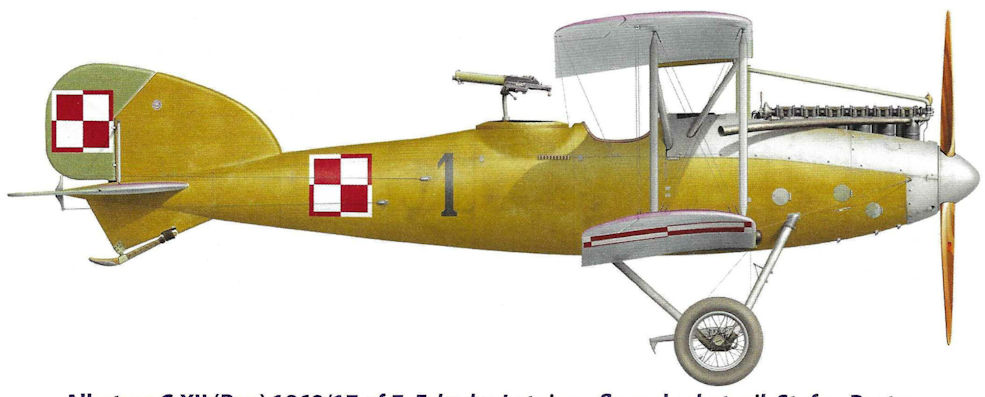
Albatros C.XII (Bay) 1869/17 of 7. Eskadra Lotnicza, flown by kpt. pil. Stefan Bastyr and por. obs. Wladyslaw Torun, Lviv, April 1919.
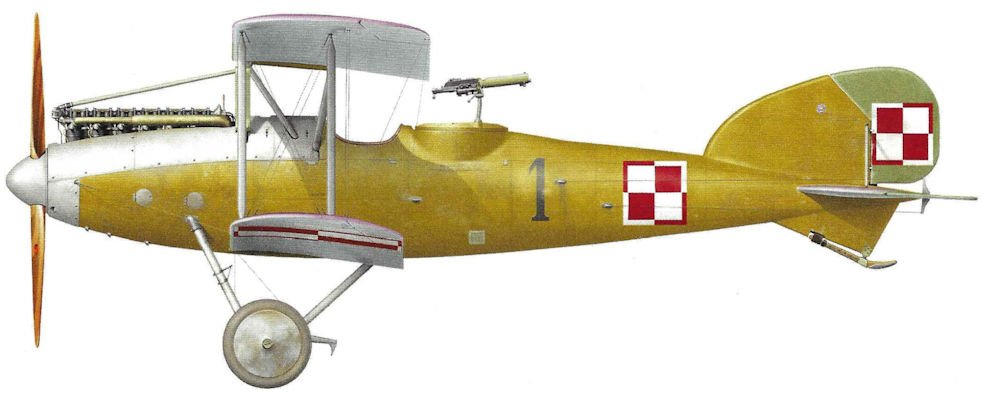
Albatros C.XII (Bay) 1869/17 of 7. Eskadra Lotnicza, flown by kpt. pil. Stefan Bastyr and por. obs. Wladyslaw Torun, Lviv, April 1919.
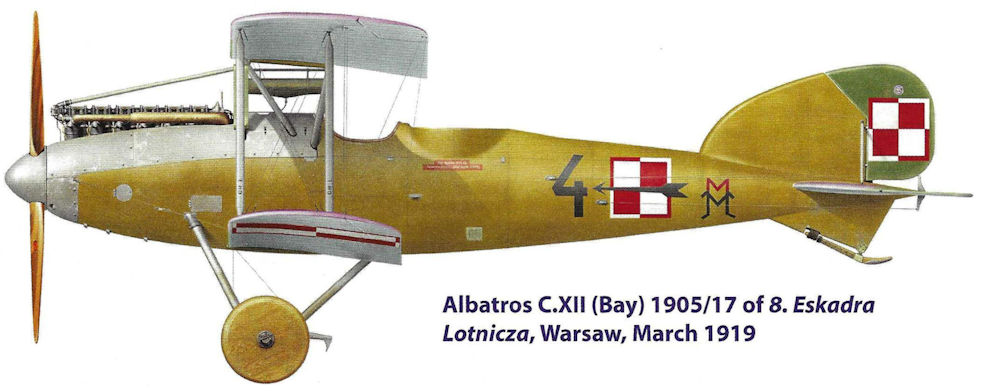
Albatros C.XII (Bay) 1905/17 of 8. Eskadra Lotnicza, Warsaw, March 1919
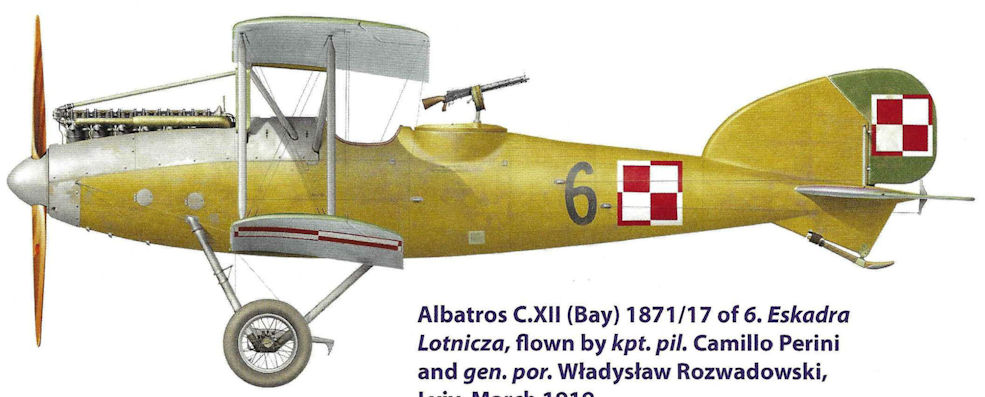
Albatros C.XII (Bay) 1871/17 of 6. Eskadra Lotnicza, flown by kpt. pil. Camillo Perini and gen. por. Wladyslaw Rozwadowski, Lviv, March 1919.
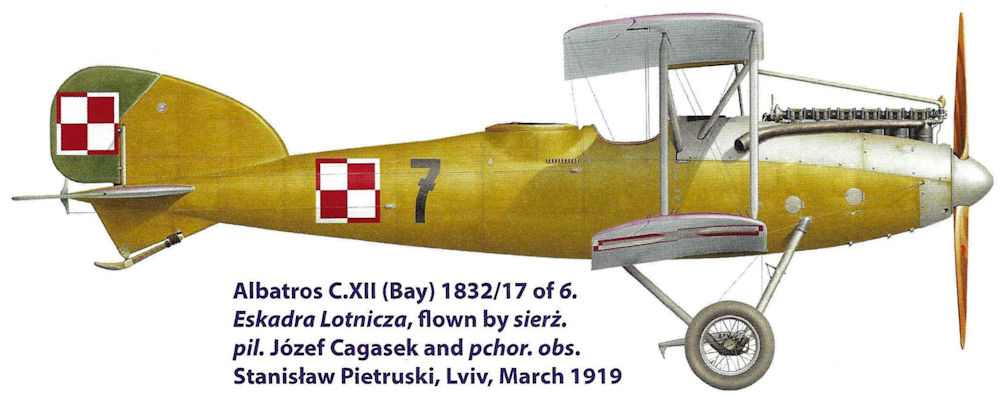
Albatros C.XII (Bay) 1832/17 of 6. Eskadra Lotnicza, flown by sierz. pil. Jozef Cagasek and pchor. obs. Stanisław Pietruski, Lviv, March 1919
Albatros C.XII and Albatros C.I aircraft of Flieger-Beobachterschule Warschau, photographed in Warsaw, probably in early 1918. Although widely distributed to both Western and Eastern Front units, the Albatros C.XII was gradually withdrawn from combat roles by late 1917 and reassigned to training duties. (The Polish Air Force Museum in Deblin)
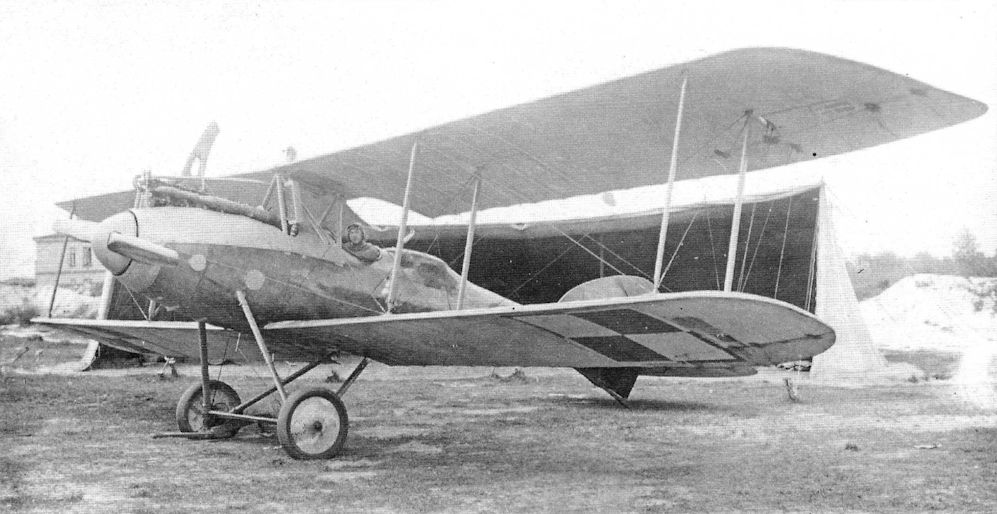
During its service with 3. Eskadra Lotnicza, Albatros C.XII (Bay) 1909/17 flew three combat missions. The photo was likely taken on 30 May 1919, when the crew - ppor. pil. Jozef Krzyczkowski and ppor. obs.Tadeusz Antonowicz - carried out a reconnaissance flight over the Kovel-Perespa-Dubno-Kovel area. Krzyczkowski is seen here seated in the cockpit. This aircraft featured an unusual exhaust configuration for an Albatros C.XII, with the pipe routed above the upper wing. The marking "C.12 1909/17 8" was painted on the port upper aileron. (Tomasz J. Kopanski)
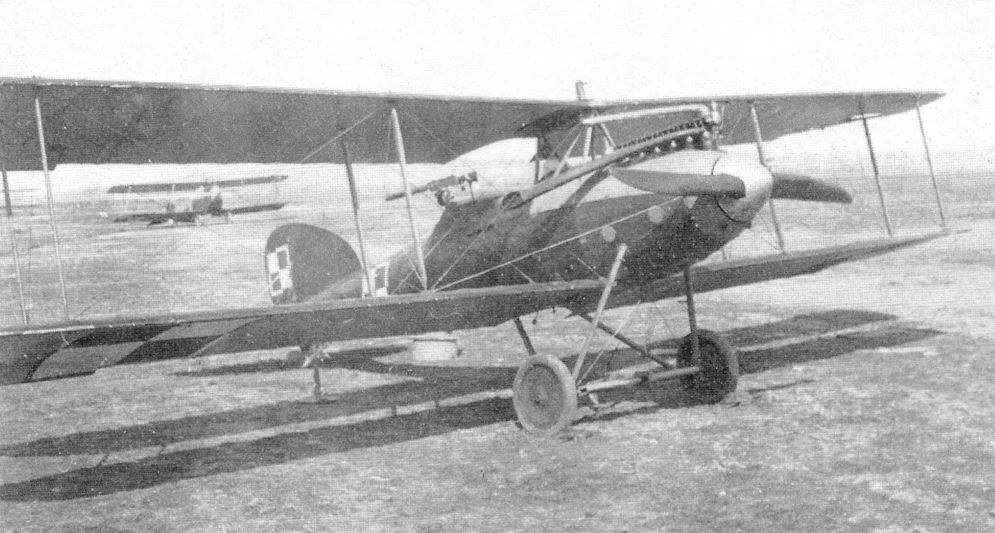
Another view of Albatros C.XII (Bay) 1910/17, taken on the same occasion as the previous photo. All operational Polish Albatros C.XII aircraft had their LMG 08/15 machine guns removed, following their earlier use by Flieger-Beobachterschule Warschau. (Tomasz J. Kopanski)
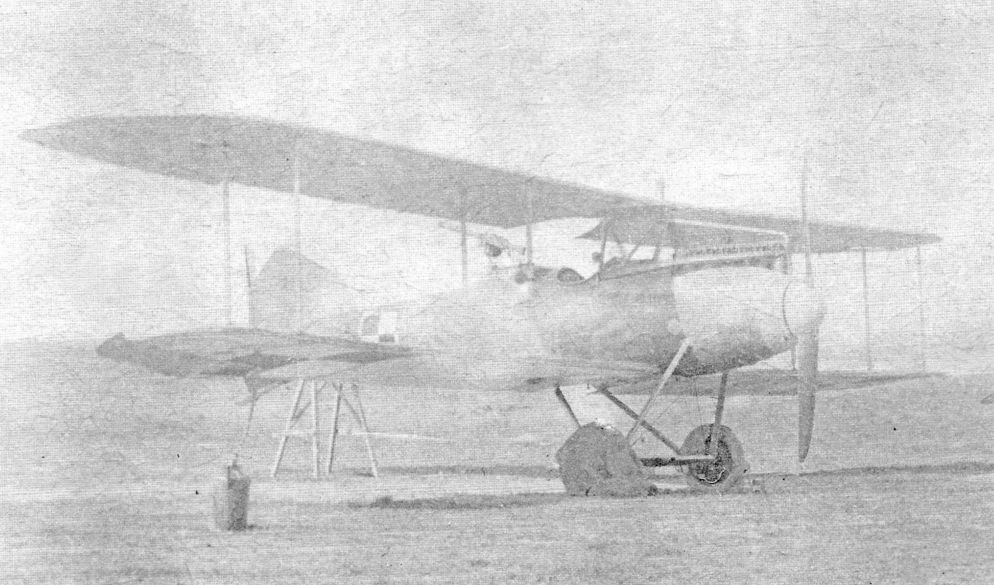
Albatros C.XII (Bay) 1905/17 being prepared for a combat mission. The photo was taken in Volodymyr, likely on 12 June 1919. At the time, the aircraft was serving with 2. Eskadra Lotnicza and was no longer equipped with the additional fuel tank. A Parabellum LMG 14 machine gun was mounted on the observer's ring for the mission. (Tomasz J. Kopanski)
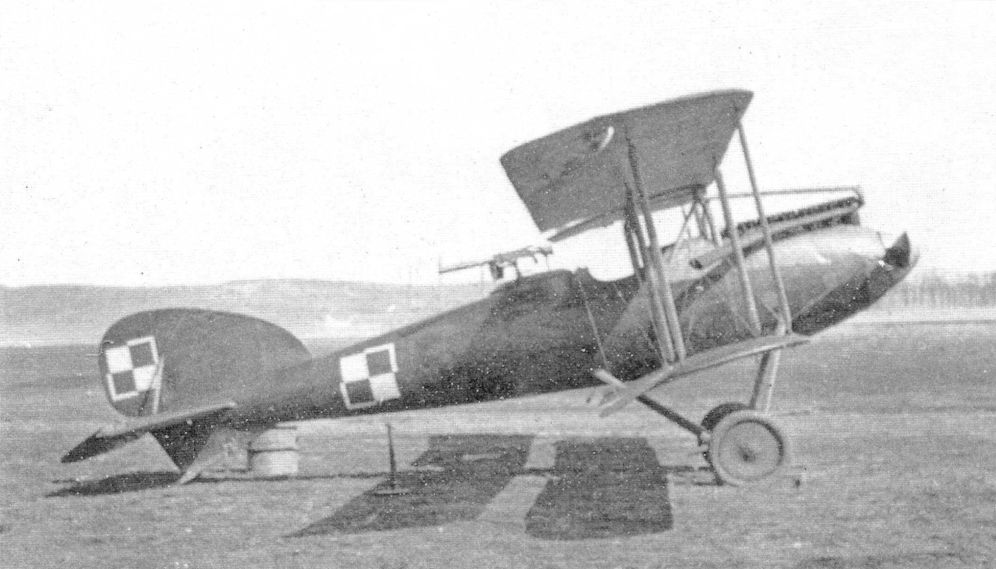
Albatros C.XII (Bay) 1910/17 photographed in Lviv during its service with 7. Eskadra Lotnicza. The Parabellum LMG 14 machine gun mounted on the observer's ring suggests that the photo may have been taken on 11 April 1919, shortly before a bombing mission targeting the railway station and the palace in Khodoriv, then serving as General Mykhailo Omelianovych-Pavlenko's headquarters. (Tomasz J. Kopanski)
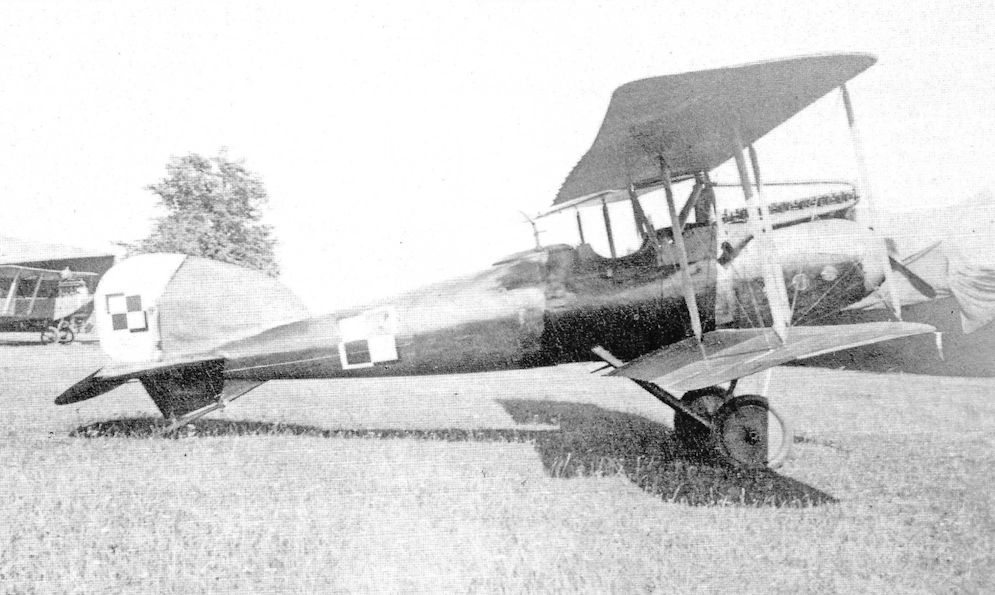
Aircraft of 6. Eskadra Lotnicza in Ternopil, with Albatros C.XII (Bay) 1907/17 in the foreground. The photo was taken between 17 and 24 September 1919, shortly after the aircraft returned from repair. This particular example was distinguished by its white-painted rudder and an unusual number and arrangement of circular access panels below the engine cowling - three instead of the typical two. (Wojciech Sankowski)
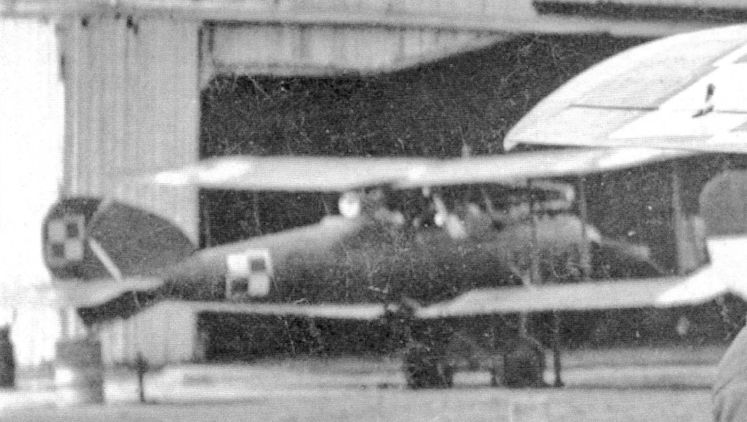
This photo provides further evidence that personnel at Centralne Warsztaty Lotnicze paid little attention to the correct application of national markings. On Albatros C.XII (Bay) 1910/17, all checkerboards on the fuselage and rudder were painted with reversed colors, in contrast to the layout prescribed by the regulations issued by the Chief of the General Staff of the Polish Army. The photo was taken on 20 April 1919 in Lviv. (The Polish Aviation Museum in Krakow)
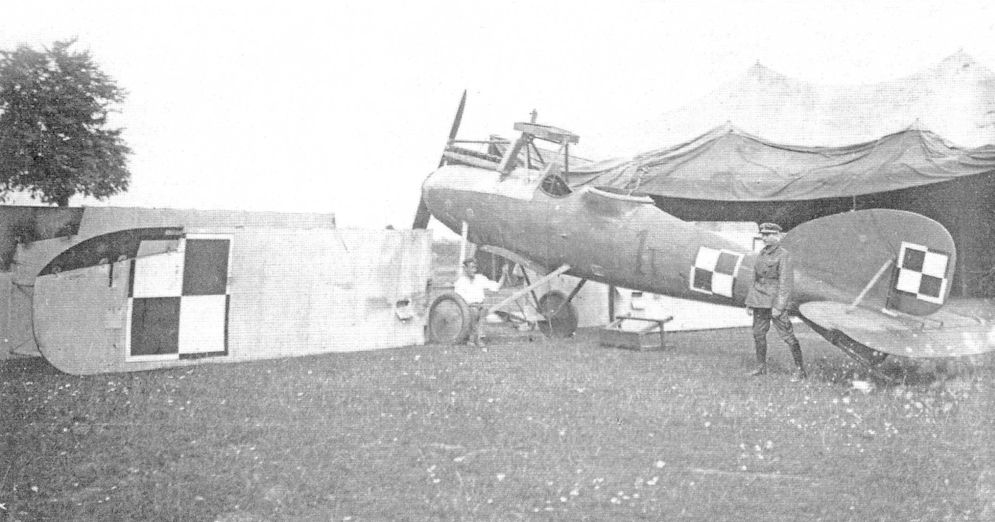
On 15 July 1919, the repaired fuselage of Albatros C.XII (Bay) 1869/17 was transferred from III Park Lotniczy to 6. Eskadra Lotnicza stationed in Ternopil. During assembly, the aircraft was fitted with wings previously used on Albatros C.XII (Bay) 1907/17, as evidenced by the marking С.12 1907/179 painted near the aileron. Notably, the checkerboards on the fuselage and rudder were painted in reversed color order - a common but unintended mistake made by ground crews. (Fr. Robert Kulczynski SDB)
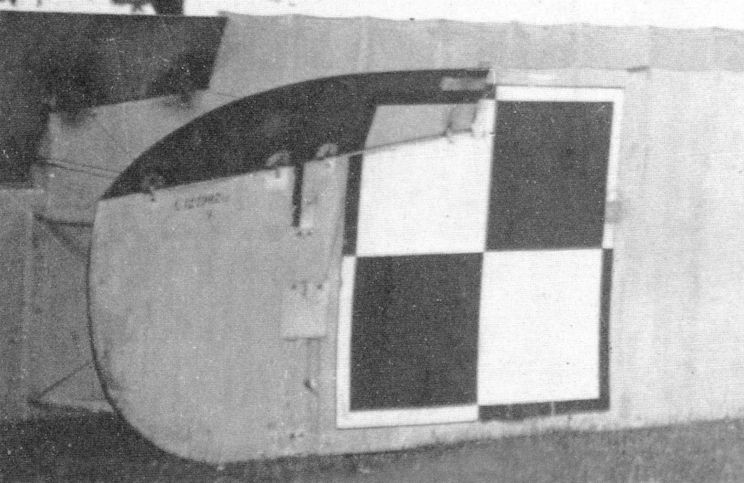
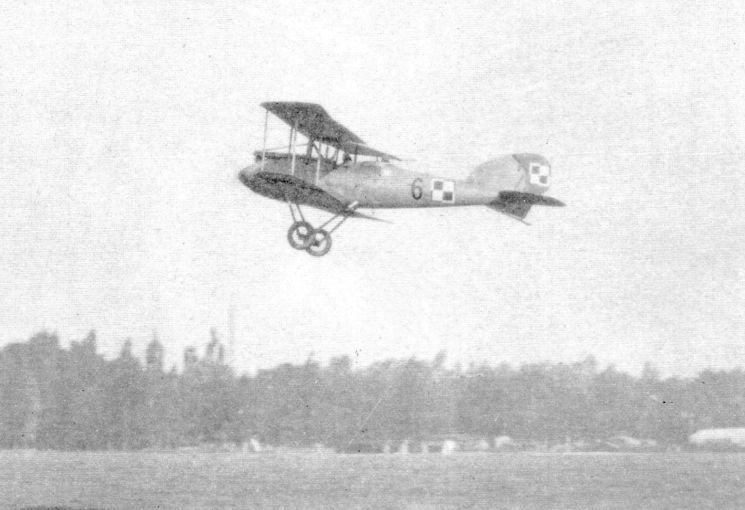
Albatros C.XII (Bay) 1871/17 climbing after takeoff. The photo was taken on 20 August 1919, as the aircraft departed from Warsaw to Vilnius. The purpose of the flight was to help establish an airmail route for transporting diplomatic mail, including intelligence materials, between Vilnius and Riga. (The Polish Aviation Museum in Krakow)
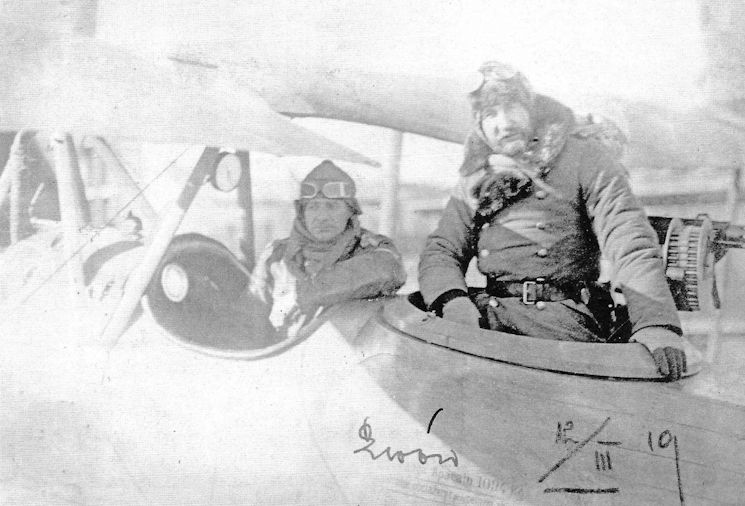
On 12 March 1919, kpt. pil. Camillo Perini was tasked with flying gen. por.Wladyslaw Rozwadowski, commander of the Army "East", from Lviv to Przemysl. The mission was carried out using Albatros C.XII (Bay) 1871/17. In the event of an encounter with Ukrainian aircraft, General Rozwadowski was able to fire a Parabellum LMG 14 machine gun mounted on the observer's ring. A stenciled marking is partially visible on the fuselage, reading: Waga Aparatu 1094 Kg. Dopuszczalne obciazenie przy pelnym zbiorniku 520 Kg. (“Aircraft weight: 1,094 kg. Permissible load with full tank: 520 kg"). It is believed that the dark shape in front of the windshield was a small figurine of a satyr - a mythical creature from Greek mythology, depicted as half man and half goat, typically with horns, hooves, and a tail-carried by Perini as a good-luck charm during his missions. (The Polish Air Force Museum in Deblin)
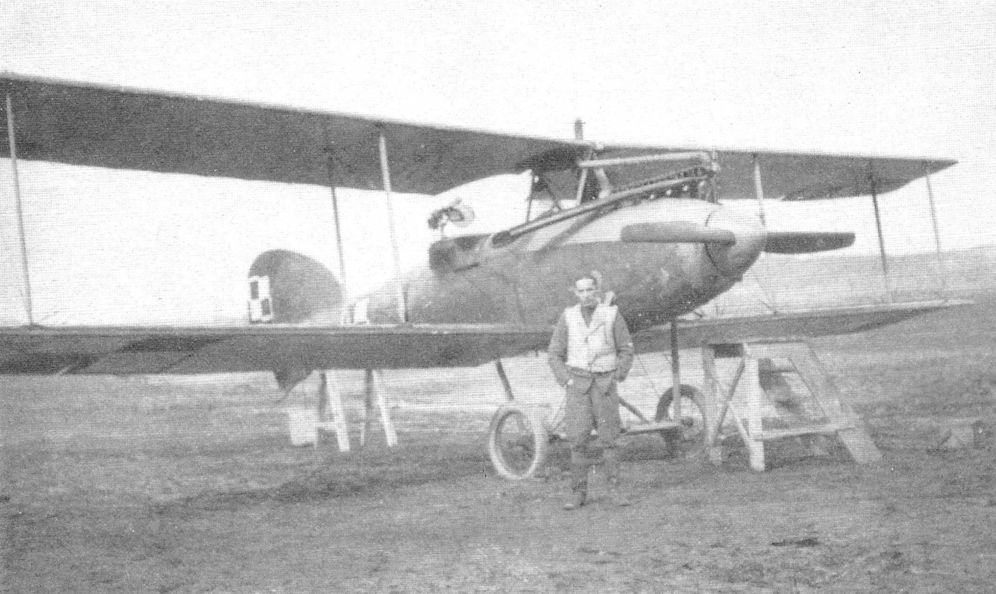
Commanding officer of 7. Eskadra Lotnicza, por. pil. Stefan Stec, pictured next to Albatros C.XII (Bay) 1869/17. The photo was taken in Lviv, likely in the first half of April 1919, shortly before the aircraft was reassigned to 6. Eskadra Lotnicza. A Schwarzlose M.07/12 machine gun is mounted on the observer's ring. (Tomasz J. Kopanski)
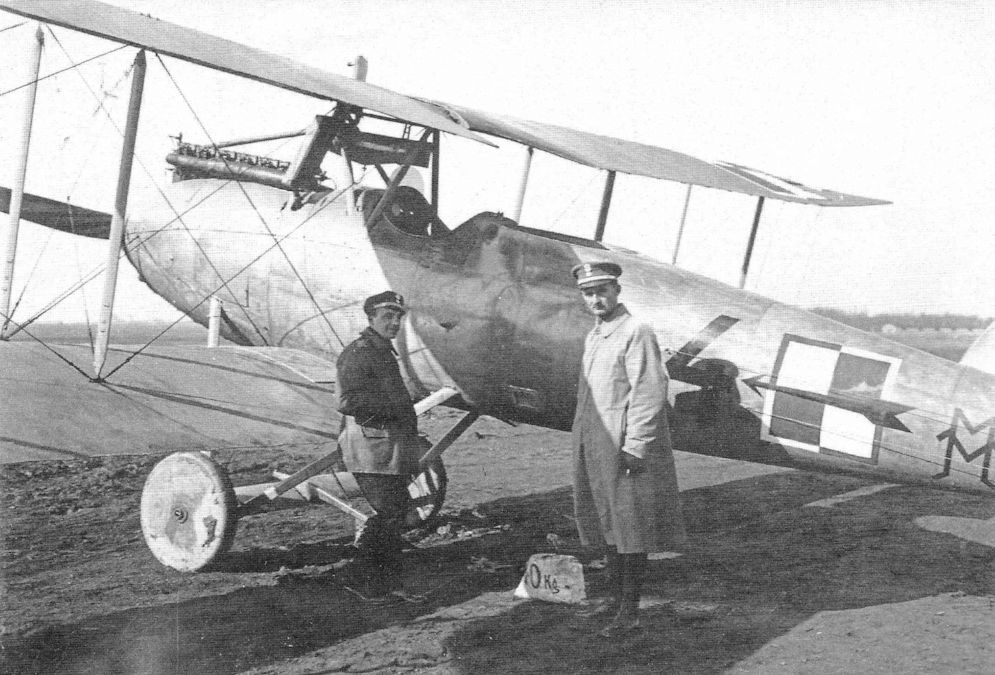
In early 1919, Albatros C.XII (Bay) 1905/17 underwent maintenance at Centralne Warsztaty Lotnicze, where it was fitted with an additional gravity fuel tank - visible beneath the upper wing - to increase its range during long-distance liaison flights. During this period, an emblem of unknown origin was also painted on the fuselage, along with an arrow applied directly to the checkerboard. The photo was taken in Warsaw in March 1919, when the aircraft was serving with 8. Eskadra Lotnicza. The use of wooden replacement wheels suggests it was undergoing servicing at the time. (Arkadiusz Kalinski)
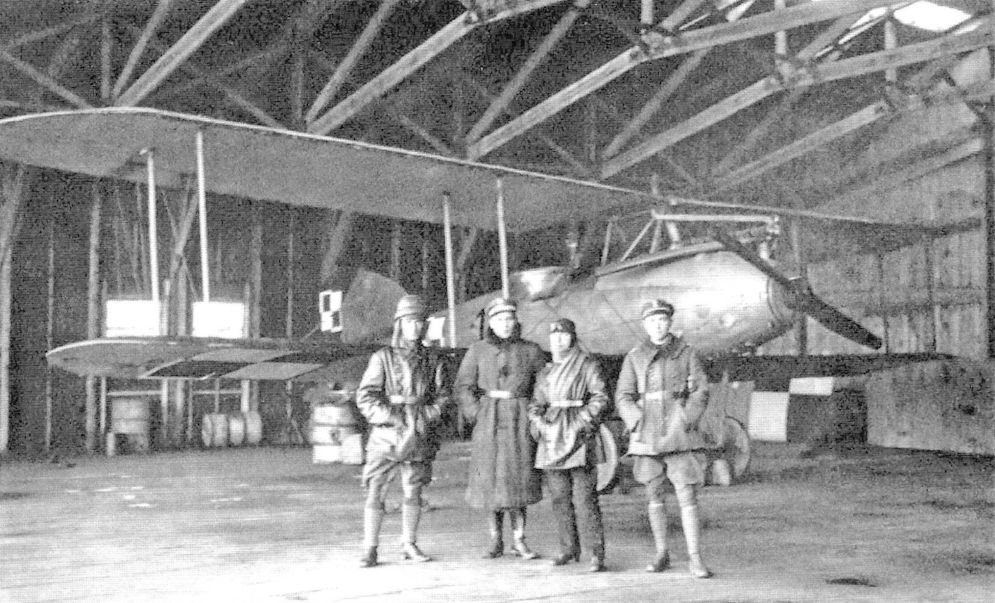
Albatros C.XII (Bay) 1869/17 inside one of the hangars at the Lviv airfield. At the time the photo was taken, the aircraft had its spinner removed and was fitted with wooden replacement wheels. (Jerzy Butkiewicz)
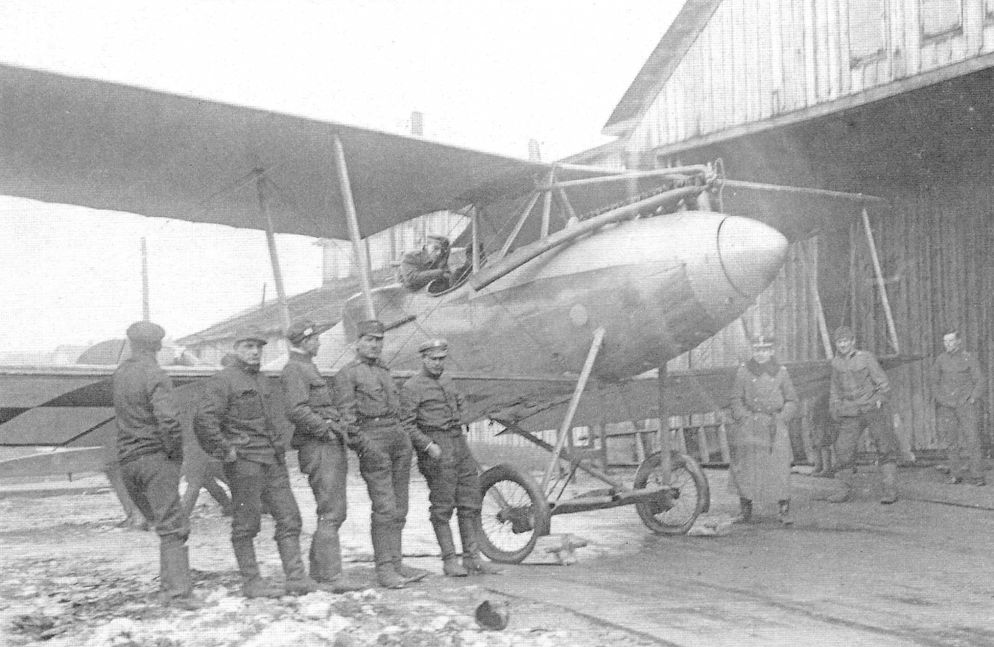
In late January 1919, Albatros C.XII (Bay) 1871/17 was transported from Warsaw to III Park Lotniczy in Lviv. The photo was likely taken shortly before the aircraft was handed over to 6. Eskadra Lotnicza. As seen here, a distinctive feature of Albatros C.XIl aircraft built under license by Bayerische Flugzeug-Werke AG was the use of full-length aluminum cowling panels. (Tomasz J. Kopanski)
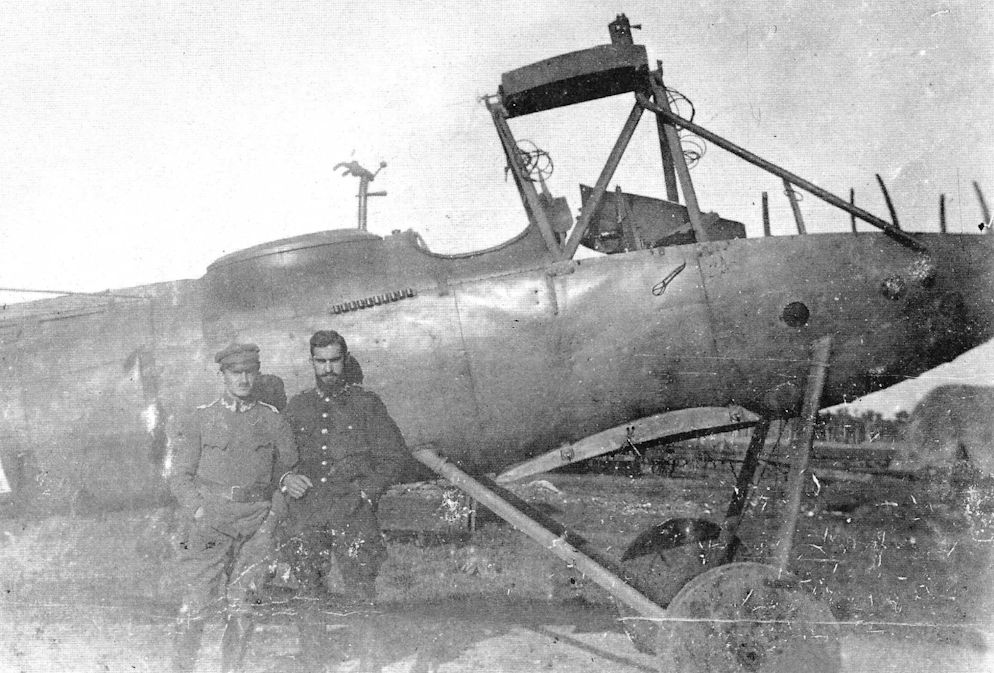
Fuselage of Albatros C.XII (Bay) 1869/17 with its engine and metal cowling removed. Beneath the observer's cockpit, holders for signal pistol cartridges are mounted. The photo was likely taken between May and July 1919, during repairs at III Park Lotniczy. Due to shortages of rubber and tires, it was standard practice during maintenance to equip aircraft with wooden replacement wheels. (The Polish Aviation Museum in Krakow)
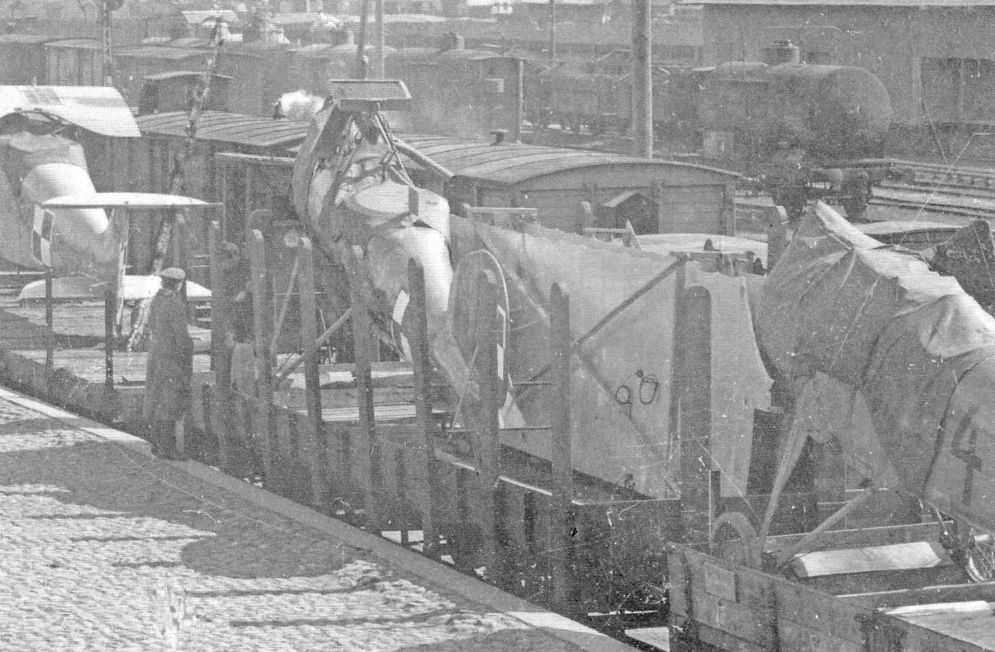
Flatcars loaded with disassembled aircraft of 8. Eskadra Lotnicza. Albatros C.XII (Bay) 1905/17 is seen in the center of the frame. The photo was taken in Warsaw on 7 April 1919, as the squadron was departing for Brest to relocate closer to the front lines. At the time, it was standard practice for Polish air units to move over longer distances by rail, which allowed them to transport personnel, aircraft, and equipment efficiently and with minimal risk. (The Polish Aviation Museum in Krakow)
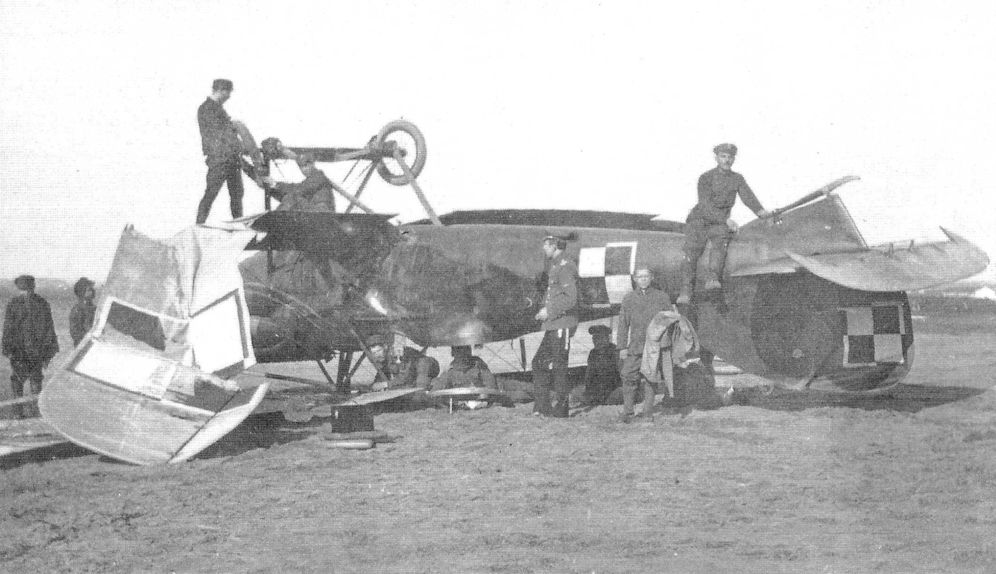
Albatros C.XII (Bay) 1832/17 was one of nine aircraft of this type captured in Warsaw on 15 November 1918. It was seriously damaged in an accident on 6 March 1919 in Lviv. Although Polish white-and-red checkerboards - used as national insignia - had been carefully applied, the outline of a German cross remained faintly visible beneath the one on the lower wing. This unintentional effect was common on many former German aircraft taken over by the Polish air service. (Wojciech Wolny)
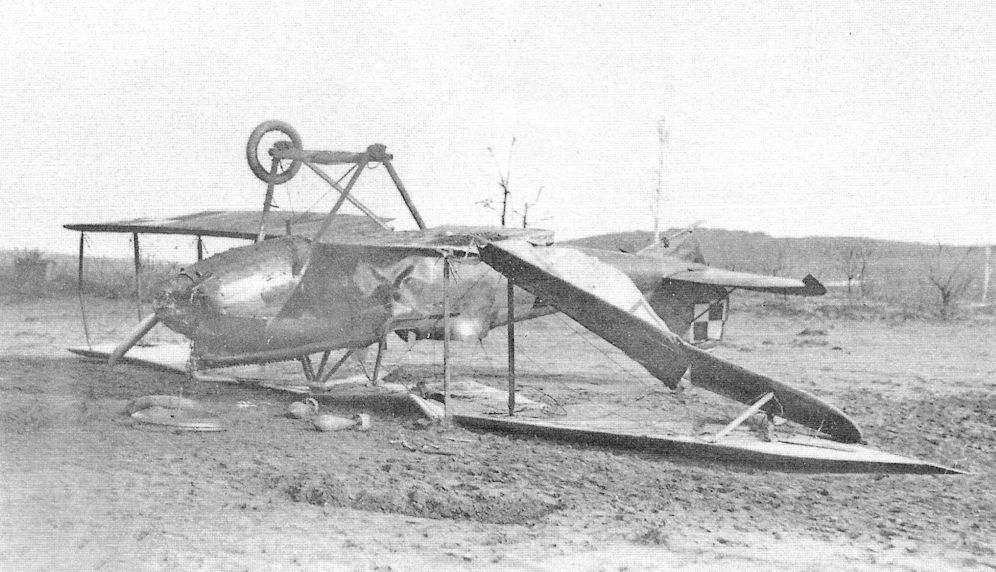
At the time of the crash, at least two SB bombs - captured from Austro-Hungarian Army depots - were carried in the observer's cockpit (visible on the ground next to the leading edge of the upper wing). During World War I, this type of ordnance was produced in several variants that differed slightly in size and weight. The Polish air service employed 10-, 15-, and 20-kilogram versions, using them effectively in low-level bombing missions. (The Polish Aviation Museum in Krakow)
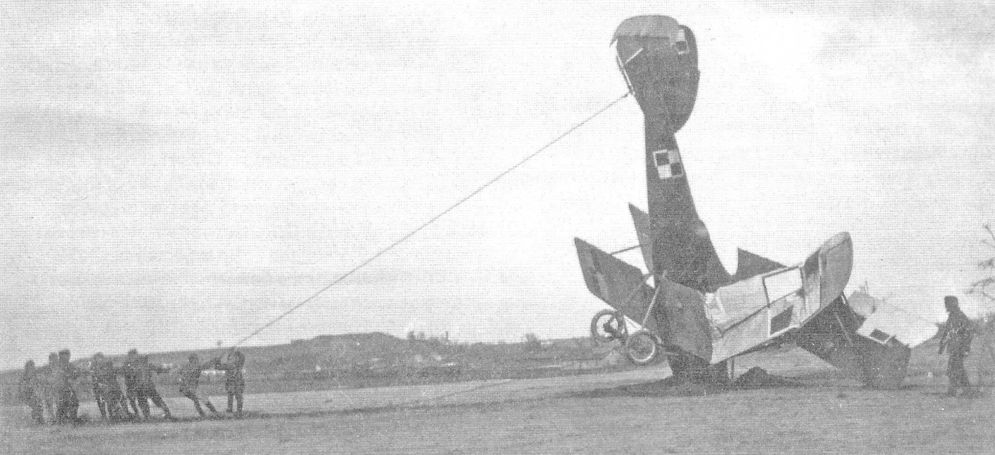
A rarely photographed, though not uncommon, scene shows Albatros C.XII (Bay) 1832/17 being flipped back onto its wheels after coming to rest upside down. With no advanced equipment available, the task fell to ground crewmen relying solely on ropes, manpower, and basic physics. The damaged aircraft was initially sent to III Park Lotniczy, then transferred to Centralne Sklady Lotnicze. Repairs were carried out at Centralne Warsztaty Lotnicze between 19 July and 13 August 1919. (Wojciech Wolny)
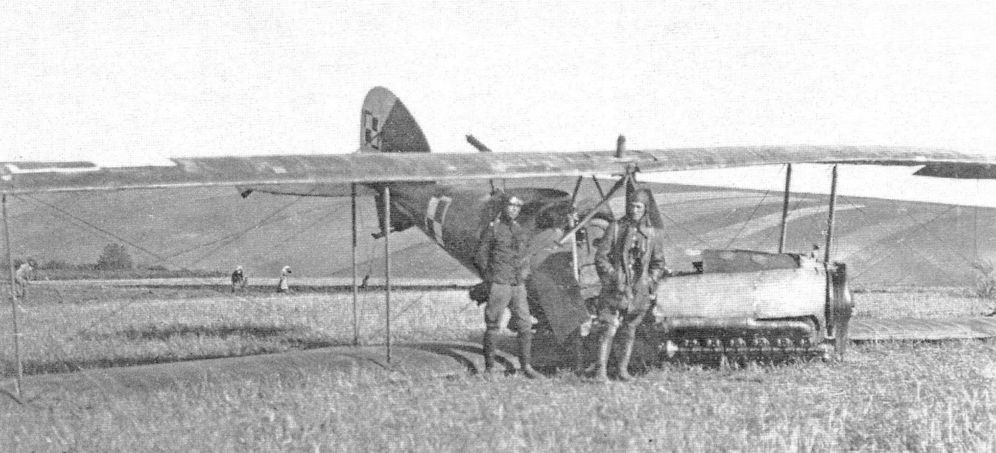
Albatros C.XII (Bay) 1907/17 was seriously damaged during a combat flight on 24 September 1919. Due to a fuel line leak and the resulting fire hazard, por. pil. Kazimierz Swoszowski was forced to make an emergency landing near Rosokhuvatets. The fuselage was destroyed on impact; nevertheless, both crew members - Swoszowski and ppor. obs. Feliks Błaszkiewicz - escaped without injury. The wreck was transported to III Park Lotniczy, but because of the extent of the damage, the aircraft was not repaired and was scrapped. (Tomasz J. Kopanski)
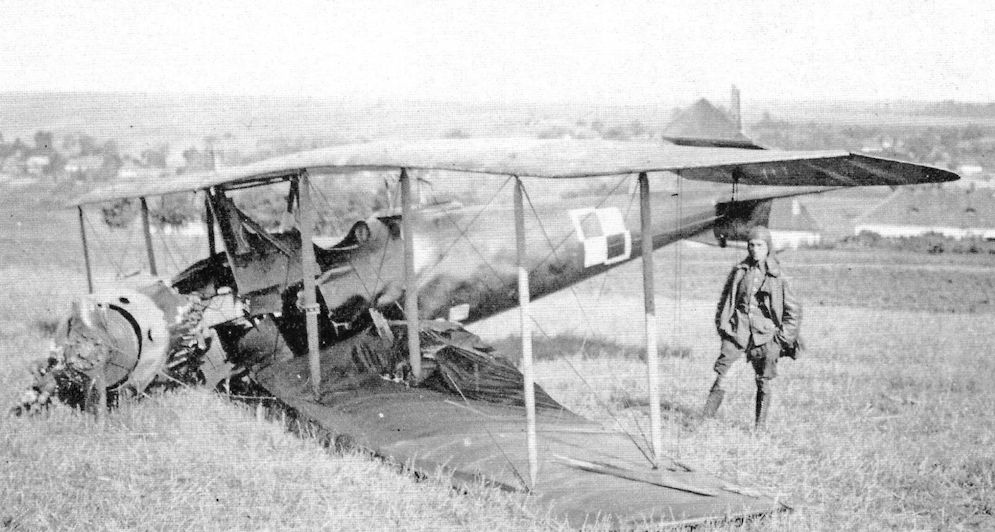
A souvenir photo of por. pil. Kazimierz Swoszowski with the wreck of Albatros C.XII (Bay) 1907/17. The fuselage bears code number 9, applied in March 1919 at Centralne Warsztaty Lotnicze. The checkerboards on the port side were painted with the colors reversed in relation to those on the starboard. Although regulations issued by the Chief of the General Staff of the Polish Army on 1 December 1918 stipulated that the upper left field of the checkerboard should be red, this aircraft illustrates how, in practice, national markings were often applied inconsistently. (Fr. Robert Kulczynski SDB)
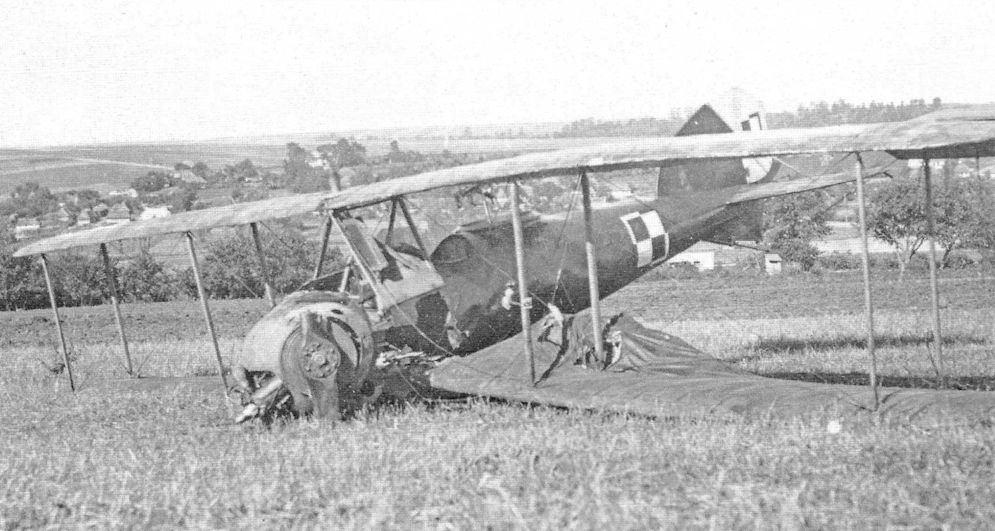
This follow-up photo of the wrecked Albatros C.XII (Bay) 1907/17 reveals additional details, including an anemometer-type airspeed indicator manufactured by Wilhelm Morell GmbH, seen on the inner interplane strut. For the mission, the aircraft had been armed with a Lewis machine gun mounted on the observer's ring. (Tomasz J. Kopanski)
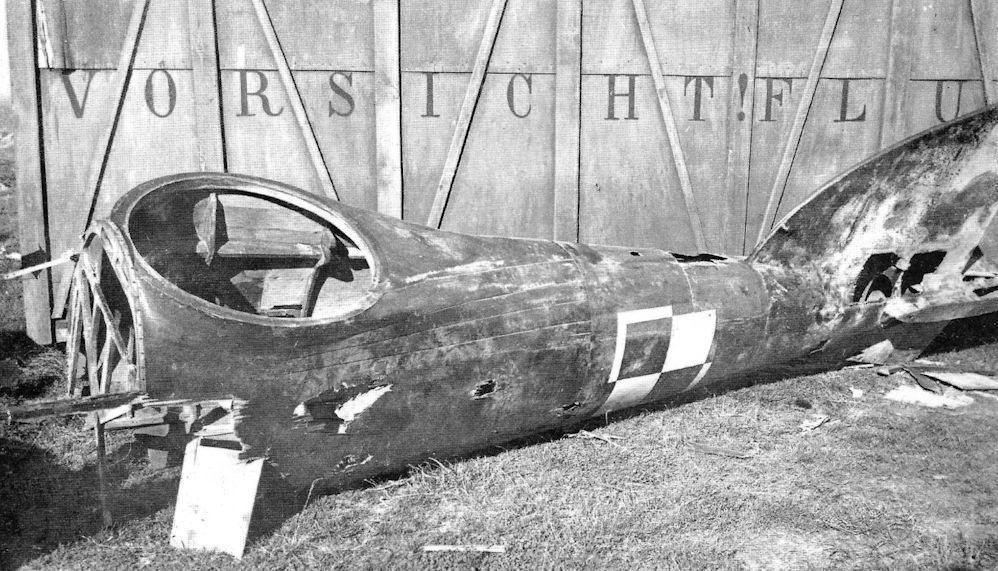
Fuselage of a Polish Albatros C.XII during scrapping. The lack of distinguishing features makes it difficult to positively identify the airframe, but it is likely that the photo shows the remains of Albatros C.XII (Bay) 1907/17. (The Polish Aviation Museum in Krakow)
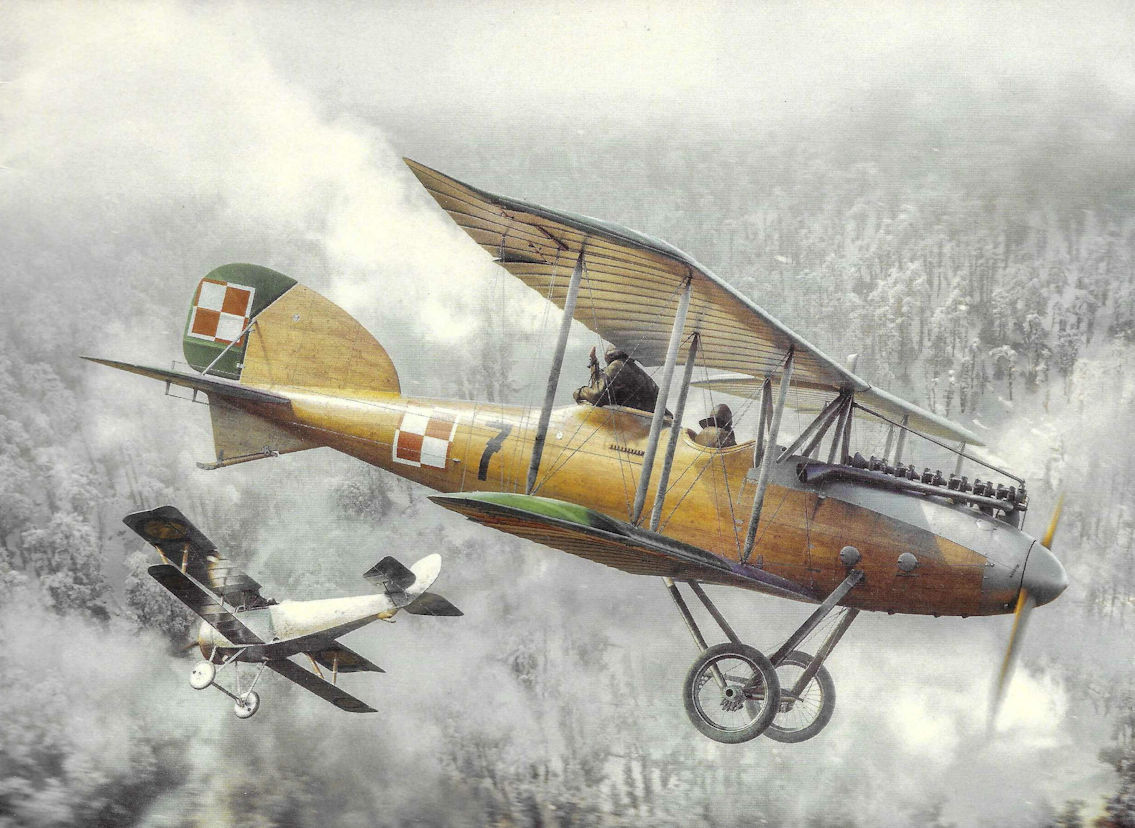
Chapter 3: The Albatros J.l
In November 1916, the German Army aviation inspectorate (Inspektion der Fliegertruppen, or Idflieg) adopted a plan to introduce a new type of two-seat infantry aircraft. Their primary role was was to gather tactical information about the progress of combat operations and the location of friendly forces, and then relay this data - along with aerial photographs - to command posts in the rear upon returning from the battlefield. The aim was to overcome the frequent shortcomings of traditional communication methods, such as field telephones and messengers,which often proved unreliable during intense fighting. Attacking ground targets was not initially a priority, as that task had been assigned to other types of aircraft.
Idflieg specified that these aircraft were to be equipped with 5 mm steel armor to protect the pilot, observer, engine, and fuel tank from rifle-caliber fire. No specific performance requirements were set for speed or altitude, as it was believed that the armor itself would ensure survivability. Operational ceilings above 1,500 m were not required. In practice, however, crews found the aircraft underpowered and lacking in maneuverability, especially when compared to unarmored types.
The observer's cockpit had to accommodate both a wireless transmitter and photographic equipment. Initially, the aircraft's armament was to include a flexible machine gun for the observer and a fixed, forward-firing machine gun for the pilot. However, Idflieg soon recognized that shallow dive attacks against ground targets posed too great a risk for such heavy aircraft and dropped the requirement for the fixed gun, thereby reducing weight.
To avoid confusion between the letter "I" (standing for Infanterie-Flugzeug) and the Roman numeral I, the new aircraft type was designated with the letter "J."This choice was intuitive, as in the German print script of the time, the capital letters "I" and "J" were written identically.
In response to the specification, three manufacturers were initially selected to develop prototypes: Allgemeine Elektrizitats-Gesellschaft AG (AEG), Junkers & Co., and Albatros Werke GmbH (later “Albatros" Gesellschaft fur Flugzeugunternehmungen mbH). AEG was experienced in fabric-covered metal airframes that were relatively easy to manufacture and had significant production capacity; its J-type was the first to reach frontline units. Junkers introduced a revolutionary all-metal design using Duralumin, which became the first aircraft of its kind to enter series production. Albatros, one of Germany's largest aircraft producers, relied on traditional wooden construction techniques and widely available materials. Its design was based on the Albatros C.XII and used many of the same components, but the resulting aircraft proved less resistant to ground fire than competing models.
The Albatros J.I retained the wings and tail of the С.XII but featured a new, slab-sided fuselage designed specifically to accommodate armor plating. The fuselage was built around six primary longerons and multi-ply formers, and it was skinned with plywood that was both pinned and glued in place. Around the crew compartment, chrome-nickel steel plates were bolted directly onto the wooden frame, with the bottom and sides fully protected. However, the forward fuselage was left unarmored, exposing the engine and radiator to combat damage - a compromise made to save weight, though it reduced overall survivability.
The aircraft was powered by a 200 hp Benz Bz.IV engine, significantly less powerful than the 260 hp Mercedes D.IVa used in the lighter C.XII. This choice, combined with the added weight of nearly 490 kg of armor, severely limited performance. The aircraft was slow, required long takeoff runs, and had a narrow margin between stall speed and cruising speed, making it difficult to operate from unimproved airfields and leaving it vulnerable to enemy fighters.
The armament of the Albatros J.I typically consisted of a flexible machine gun operated by the observer. Some aircraft were also fitted with a pair of fixed, downward-firing LMG 08/15 machine guns mounted in the floor of the fuselage, allowing the pilot to strafe targets during low-level passes. Crews often carried hand grenades and small bombs as improvised ordnance.
Despite Albatros's production capacity, only 225 J.I aircraft were ordered. By the end of 1917, no more than 37 had reached frontline units. As of 30 June 1918, 51 were reported in service, accounting for 28% of all J-types at the front. Two months later, the number had dropped to just 16. The aircraft's wooden construction proved less resistant to ground fire than the all-metal Junkers J.I or the AEG J.I, and crews criticized its poor performance and limited maneuverability. The type was soon withdrawn from frontline service.
The Polish air service came into possession of seven Albatros J.I aircraft. All were captured by insurgents on 2 January 1919, when they seized an airship hangar in Poznan that had been converted by the Germans into an aviation equipment depot. The aircraft came from the final production batch (J.616/18–J.715/18), originally ordered as Albatros J.II, although they still conformed to the J.I configuration. They were distinguished by the use of printed camouflage fabric (Flugzeugstoff) on the wings and horizontal stabilizer, the absence of spinners, and a three-color paint scheme: topaz and dark ruby forming a camouflage pattern on the fuselage, with cream covering the undersides. The aircraft were practically factory-new but had been stripped of their engines and machine guns before being placed in storage.
Initially, only two were returned to flying condition. They were assigned to I Eskadra Wielkopolska (1st Wielkopolska Squadron) and Szkola Obserwatorow (Observer School) in Lawica, but after a few months of limited use, both were pulled from operational duty. Their weight and limited performance made them difficult to operate from unimproved airfields and unsuitable for close reconnaissance missions.
The Albatros J.I returned to active service only in August 1920, when the situation of the Polish forces had become critical and Red Army units were advancing on the outskirts of Warsaw. All available aircraft were sent into action at that time, including those previously considered obsolete or unfit for frontline duty. The Albatros J.I was assigned to 8. and 14. Eskadra Wywiadowcza (8th and 14th Reconnaissance Squadrons) to conduct combat missions against Soviet cavalry formations. One aircraft was also assigned to Wyzsza Szkola Pilotow (Advanced Pilot School) in Lawica.
Following a Polish-Ukrainian agreement in the spring of 1920, the two recent adversaries had joined forces against the common Soviet threat. The alliance led to closer military cooperation, including logistical and operational support. As a result, four Albatros J.I aircraft were temporarily transferred to the Ukrainian 1st Zaporizhian Air Squadron in the second half of September 1920. These aircraft also saw action against Soviet forces, performing reconnaissance flights and attacking ground targets during operations in the eastern part of Podolia. They were returned to the Polish air service in February 1921.The last Albatros J.I in Polish hands was used as a training aircraft at Wyzsza Szkola Pilotow in Grudziadz and was presumably scrapped in 1923.
Albatros J.l 618/18
The aircraft returned to active service in August 1920, following repairs carried out at the workshops of Stacja Lotnicza Lawica (Lawica Air Station). Initially intended for assignment to 17. EW, it was instead transferred, in the second half of September, to the newly formed Ukrainian 1st Zaporizhian Air Squadron, temporarily based in Warsaw. From 14 October to 20 November 1920, it took part in combat against Soviet forces, performing reconnaissance flights and ground attack missions in the Vinnytsia-Bar-Nova Ushytsia area. At the end of November, under pressure from the advancing Red Army, the forces of the Ukrainian People's Republic withdrew into Polish territory. The squadron first arrived in Lviv and then moved to Czestochowa, and finally reached Bydgoszcz in early January 1921. The aircraft was returned to the Polish air service on 22 February and likely scrapped shortly thereafter.
Albatros J.l 621/18
The aircraft returned to active service in August 1920 following repairs at the Lawica workshops. It was assigned to 14. EW (initially stationed in Lawica; later relocated closer to the front - to Lublin and subsequently Chelm). On 22 September 1920, during a combat mission against units of the Soviet 1st Cavalry Army, the carburetor caught fire. Although the pilot managed to locate a suitable landing site, the aircraft flipped over after touchdown and sustained severe damage. It was returned to Lawica and subsequently scrapped.
Albatros J.l 623/18
The aircraft was delivered to the Lawica workshops by the end of April and restored to flying condition. It was then assigned to I Esk. Wlkp. in Hureczko, which was engaged in combat against Ukrainian forces at the time. The aircraft arrived on 14 May but was never assembled. On 6 June, the unit returned to Lawica, and just ten days later, relocated to Wojnowice, about 30 km southwest of Poznan. In the weeks that followed, the aircraft performed several maintenance check flights and training sorties. On 16 September, the squadron was ordered to the Lithuanian-Belarusian Front and deployed to the Bobruisk area - 830 km to the east - to take part in operations against Soviet forces. Although the unit conducted reconnaissance and close support missions, this aircraft was again grounded. In early October, it was placed in storage at Lawica, where it remained until August 1920. It then entered service with Wyzsza Szkola Pilotow in Lawica and was used for training purposes until at least the spring of 1921.
Albatros J.I 625/18
The aircraft returned to active service in August 1920 after undergoing repairs at the Lawica workshops. It arrived at CSL on 16 August and was assigned to 8. EW the following day. At that time, the squadron was engaged in the decisive Battle of Warsaw. By 25 August, the aircraft had logged a total of 3 hours and 20 minutes of flight time. Existing records allow the reconstruction of only one mission:
- 19 August 1920 - Takeoff: 18:20, landing: 19:50. Crew: por. pil. Pawel Jeneczko and plut. obs. Walenty Marchlewski. Summary: reconnaissance mission to locate the forward line of own troops and to strafe ground targets in the Ostrow-Mazowiecka-Wyszkow-Pultusk area. Mission report: very little activity observed in Wyszkow. A column of approximately 30 wagons was moving toward Pultusk along the Ostrow-Wyszkow-Pultusk road (the head of the column was located 2 km from Wyszkow). No movement detected on the Wyszkow-Ostrow road up to the first stream crossing it. Cavalry patrols were observed on the bridge over this stream and the next one. Approximately 1 km north of Budykierz, a campfire and a larger infantry unit were spotted. On the opposite side of the road, at the southern edge of the forest, smoke was visible. Between Budykierz and Dybki, several (eight) supply wagons were moving toward Wyszkow. From Dybki to Ostrow, there was heavy wagon traffic heading toward Ostrow. A large train of approximately 100 wagons was turning onto the road toward Ostrow. In Nagoszewo, a large supply camp was observed, which was strafed with machine gun fire. South of Nowa Wies, fighting was likely in progress.
In the second half of September, the aircraft was transferred to the Ukrainian 1st Zaporizhian Air Squadron. From 14 October to 20 November 1920, it flew combat missions in the Vinnytsia-Bar-Nova Ushytsia area. As the Red Army advanced, the squadron withdrew into Polish territory. It reached Lviv,was later moved to Czestochowa, and finally arrived in Bydgoszcz in early January 1921. The aircraft was returned to the Polish air service on 22 February and likely scrapped soon after.
Albatros J.l 626/18
The aircraft returned to active service in August 1920 after undergoing repairs at the Lawica workshops. It arrived at CSL on 16 August and was assigned to 8. EW the following day. By 25 August, it had logged 2 hours and 20 minutes of flight time. Its operational history mirrored that of Albatros J.I 625/18, including service with the Ukrainian 1st Zaporizhian Air Squadron and combat operations in the Vinnytsia-Bar-Nova Ushytsia area. After retreating via Lviv and Czestochowa, the aircraft reached Bydgoszcz and was returned to Polish service on 22 February 1921. It was presumably scrapped shortly thereafter.
Albatros J.l 628/18
The aircraft was delivered to the Lawica workshops in February and restored to flying condition. In mid-April, it was assigned the Polish serial number 215/18 and used for observer training. Presumably disassembled and placed in storage in late June, it returned to service in August 1920. On 16 August, during a delivery flight, it ran out of fuel and was forced to make an emergency landing near Warsaw. Although damaged beyond repair, the pilot, kpr. pil. Witold Krasicki, escaped with only minor injuries.
Albatros J.l 632/18
The aircraft was restored in August 1920 at the Lawica workshops and assigned to 8. EW via CSL on 18 August. By 25 August, it had logged 3 hours and 20 minutes of flight time. In September, it was transferred to the Ukrainian 1st Zaporizhian Air Squadron and took part in combat in eastern Podolia. Returned to Polish service on 22 February 1921, it was disassembled and placed in storage at Lawica, but soon reentered service as a trainer. In August 1922, it was transferred from 3. Pulk Lotniczy to Wyzsza Szkola Pilotow in Grudziadz.
Albatros J.I Aircraft in Poland
German Serial Number Manufacturer & Model Polish Serial Number Code Number Engine Type (Serial Number)
618/18 Albatros J.I - - Benz Bz.IV (30859)
621/18 Albatros J.I - - Benz Bz.IV (31448)
623/18 Albatros J.I 217/18 6 Benz Bz.IV (22910)
625/18 Albatros J.I - - Benz Bz.IV (35642)
626/18 Albatros J.I - - Benz Bz.IV (36054)
628/18 Albatros J.I 215/18 - Benz Bz.IV (no data)
632/18 Albatros J.I - - Benz Bz.IV (33977, 30060)
In November 1916, the German Army aviation inspectorate (Inspektion der Fliegertruppen, or Idflieg) adopted a plan to introduce a new type of two-seat infantry aircraft. Their primary role was was to gather tactical information about the progress of combat operations and the location of friendly forces, and then relay this data - along with aerial photographs - to command posts in the rear upon returning from the battlefield. The aim was to overcome the frequent shortcomings of traditional communication methods, such as field telephones and messengers,which often proved unreliable during intense fighting. Attacking ground targets was not initially a priority, as that task had been assigned to other types of aircraft.
Idflieg specified that these aircraft were to be equipped with 5 mm steel armor to protect the pilot, observer, engine, and fuel tank from rifle-caliber fire. No specific performance requirements were set for speed or altitude, as it was believed that the armor itself would ensure survivability. Operational ceilings above 1,500 m were not required. In practice, however, crews found the aircraft underpowered and lacking in maneuverability, especially when compared to unarmored types.
The observer's cockpit had to accommodate both a wireless transmitter and photographic equipment. Initially, the aircraft's armament was to include a flexible machine gun for the observer and a fixed, forward-firing machine gun for the pilot. However, Idflieg soon recognized that shallow dive attacks against ground targets posed too great a risk for such heavy aircraft and dropped the requirement for the fixed gun, thereby reducing weight.
To avoid confusion between the letter "I" (standing for Infanterie-Flugzeug) and the Roman numeral I, the new aircraft type was designated with the letter "J."This choice was intuitive, as in the German print script of the time, the capital letters "I" and "J" were written identically.
In response to the specification, three manufacturers were initially selected to develop prototypes: Allgemeine Elektrizitats-Gesellschaft AG (AEG), Junkers & Co., and Albatros Werke GmbH (later “Albatros" Gesellschaft fur Flugzeugunternehmungen mbH). AEG was experienced in fabric-covered metal airframes that were relatively easy to manufacture and had significant production capacity; its J-type was the first to reach frontline units. Junkers introduced a revolutionary all-metal design using Duralumin, which became the first aircraft of its kind to enter series production. Albatros, one of Germany's largest aircraft producers, relied on traditional wooden construction techniques and widely available materials. Its design was based on the Albatros C.XII and used many of the same components, but the resulting aircraft proved less resistant to ground fire than competing models.
The Albatros J.I retained the wings and tail of the С.XII but featured a new, slab-sided fuselage designed specifically to accommodate armor plating. The fuselage was built around six primary longerons and multi-ply formers, and it was skinned with plywood that was both pinned and glued in place. Around the crew compartment, chrome-nickel steel plates were bolted directly onto the wooden frame, with the bottom and sides fully protected. However, the forward fuselage was left unarmored, exposing the engine and radiator to combat damage - a compromise made to save weight, though it reduced overall survivability.
The aircraft was powered by a 200 hp Benz Bz.IV engine, significantly less powerful than the 260 hp Mercedes D.IVa used in the lighter C.XII. This choice, combined with the added weight of nearly 490 kg of armor, severely limited performance. The aircraft was slow, required long takeoff runs, and had a narrow margin between stall speed and cruising speed, making it difficult to operate from unimproved airfields and leaving it vulnerable to enemy fighters.
The armament of the Albatros J.I typically consisted of a flexible machine gun operated by the observer. Some aircraft were also fitted with a pair of fixed, downward-firing LMG 08/15 machine guns mounted in the floor of the fuselage, allowing the pilot to strafe targets during low-level passes. Crews often carried hand grenades and small bombs as improvised ordnance.
Despite Albatros's production capacity, only 225 J.I aircraft were ordered. By the end of 1917, no more than 37 had reached frontline units. As of 30 June 1918, 51 were reported in service, accounting for 28% of all J-types at the front. Two months later, the number had dropped to just 16. The aircraft's wooden construction proved less resistant to ground fire than the all-metal Junkers J.I or the AEG J.I, and crews criticized its poor performance and limited maneuverability. The type was soon withdrawn from frontline service.
The Polish air service came into possession of seven Albatros J.I aircraft. All were captured by insurgents on 2 January 1919, when they seized an airship hangar in Poznan that had been converted by the Germans into an aviation equipment depot. The aircraft came from the final production batch (J.616/18–J.715/18), originally ordered as Albatros J.II, although they still conformed to the J.I configuration. They were distinguished by the use of printed camouflage fabric (Flugzeugstoff) on the wings and horizontal stabilizer, the absence of spinners, and a three-color paint scheme: topaz and dark ruby forming a camouflage pattern on the fuselage, with cream covering the undersides. The aircraft were practically factory-new but had been stripped of their engines and machine guns before being placed in storage.
Initially, only two were returned to flying condition. They were assigned to I Eskadra Wielkopolska (1st Wielkopolska Squadron) and Szkola Obserwatorow (Observer School) in Lawica, but after a few months of limited use, both were pulled from operational duty. Their weight and limited performance made them difficult to operate from unimproved airfields and unsuitable for close reconnaissance missions.
The Albatros J.I returned to active service only in August 1920, when the situation of the Polish forces had become critical and Red Army units were advancing on the outskirts of Warsaw. All available aircraft were sent into action at that time, including those previously considered obsolete or unfit for frontline duty. The Albatros J.I was assigned to 8. and 14. Eskadra Wywiadowcza (8th and 14th Reconnaissance Squadrons) to conduct combat missions against Soviet cavalry formations. One aircraft was also assigned to Wyzsza Szkola Pilotow (Advanced Pilot School) in Lawica.
Following a Polish-Ukrainian agreement in the spring of 1920, the two recent adversaries had joined forces against the common Soviet threat. The alliance led to closer military cooperation, including logistical and operational support. As a result, four Albatros J.I aircraft were temporarily transferred to the Ukrainian 1st Zaporizhian Air Squadron in the second half of September 1920. These aircraft also saw action against Soviet forces, performing reconnaissance flights and attacking ground targets during operations in the eastern part of Podolia. They were returned to the Polish air service in February 1921.The last Albatros J.I in Polish hands was used as a training aircraft at Wyzsza Szkola Pilotow in Grudziadz and was presumably scrapped in 1923.
Albatros J.l 618/18
The aircraft returned to active service in August 1920, following repairs carried out at the workshops of Stacja Lotnicza Lawica (Lawica Air Station). Initially intended for assignment to 17. EW, it was instead transferred, in the second half of September, to the newly formed Ukrainian 1st Zaporizhian Air Squadron, temporarily based in Warsaw. From 14 October to 20 November 1920, it took part in combat against Soviet forces, performing reconnaissance flights and ground attack missions in the Vinnytsia-Bar-Nova Ushytsia area. At the end of November, under pressure from the advancing Red Army, the forces of the Ukrainian People's Republic withdrew into Polish territory. The squadron first arrived in Lviv and then moved to Czestochowa, and finally reached Bydgoszcz in early January 1921. The aircraft was returned to the Polish air service on 22 February and likely scrapped shortly thereafter.
Albatros J.l 621/18
The aircraft returned to active service in August 1920 following repairs at the Lawica workshops. It was assigned to 14. EW (initially stationed in Lawica; later relocated closer to the front - to Lublin and subsequently Chelm). On 22 September 1920, during a combat mission against units of the Soviet 1st Cavalry Army, the carburetor caught fire. Although the pilot managed to locate a suitable landing site, the aircraft flipped over after touchdown and sustained severe damage. It was returned to Lawica and subsequently scrapped.
Albatros J.l 623/18
The aircraft was delivered to the Lawica workshops by the end of April and restored to flying condition. It was then assigned to I Esk. Wlkp. in Hureczko, which was engaged in combat against Ukrainian forces at the time. The aircraft arrived on 14 May but was never assembled. On 6 June, the unit returned to Lawica, and just ten days later, relocated to Wojnowice, about 30 km southwest of Poznan. In the weeks that followed, the aircraft performed several maintenance check flights and training sorties. On 16 September, the squadron was ordered to the Lithuanian-Belarusian Front and deployed to the Bobruisk area - 830 km to the east - to take part in operations against Soviet forces. Although the unit conducted reconnaissance and close support missions, this aircraft was again grounded. In early October, it was placed in storage at Lawica, where it remained until August 1920. It then entered service with Wyzsza Szkola Pilotow in Lawica and was used for training purposes until at least the spring of 1921.
Albatros J.I 625/18
The aircraft returned to active service in August 1920 after undergoing repairs at the Lawica workshops. It arrived at CSL on 16 August and was assigned to 8. EW the following day. At that time, the squadron was engaged in the decisive Battle of Warsaw. By 25 August, the aircraft had logged a total of 3 hours and 20 minutes of flight time. Existing records allow the reconstruction of only one mission:
- 19 August 1920 - Takeoff: 18:20, landing: 19:50. Crew: por. pil. Pawel Jeneczko and plut. obs. Walenty Marchlewski. Summary: reconnaissance mission to locate the forward line of own troops and to strafe ground targets in the Ostrow-Mazowiecka-Wyszkow-Pultusk area. Mission report: very little activity observed in Wyszkow. A column of approximately 30 wagons was moving toward Pultusk along the Ostrow-Wyszkow-Pultusk road (the head of the column was located 2 km from Wyszkow). No movement detected on the Wyszkow-Ostrow road up to the first stream crossing it. Cavalry patrols were observed on the bridge over this stream and the next one. Approximately 1 km north of Budykierz, a campfire and a larger infantry unit were spotted. On the opposite side of the road, at the southern edge of the forest, smoke was visible. Between Budykierz and Dybki, several (eight) supply wagons were moving toward Wyszkow. From Dybki to Ostrow, there was heavy wagon traffic heading toward Ostrow. A large train of approximately 100 wagons was turning onto the road toward Ostrow. In Nagoszewo, a large supply camp was observed, which was strafed with machine gun fire. South of Nowa Wies, fighting was likely in progress.
In the second half of September, the aircraft was transferred to the Ukrainian 1st Zaporizhian Air Squadron. From 14 October to 20 November 1920, it flew combat missions in the Vinnytsia-Bar-Nova Ushytsia area. As the Red Army advanced, the squadron withdrew into Polish territory. It reached Lviv,was later moved to Czestochowa, and finally arrived in Bydgoszcz in early January 1921. The aircraft was returned to the Polish air service on 22 February and likely scrapped soon after.
Albatros J.l 626/18
The aircraft returned to active service in August 1920 after undergoing repairs at the Lawica workshops. It arrived at CSL on 16 August and was assigned to 8. EW the following day. By 25 August, it had logged 2 hours and 20 minutes of flight time. Its operational history mirrored that of Albatros J.I 625/18, including service with the Ukrainian 1st Zaporizhian Air Squadron and combat operations in the Vinnytsia-Bar-Nova Ushytsia area. After retreating via Lviv and Czestochowa, the aircraft reached Bydgoszcz and was returned to Polish service on 22 February 1921. It was presumably scrapped shortly thereafter.
Albatros J.l 628/18
The aircraft was delivered to the Lawica workshops in February and restored to flying condition. In mid-April, it was assigned the Polish serial number 215/18 and used for observer training. Presumably disassembled and placed in storage in late June, it returned to service in August 1920. On 16 August, during a delivery flight, it ran out of fuel and was forced to make an emergency landing near Warsaw. Although damaged beyond repair, the pilot, kpr. pil. Witold Krasicki, escaped with only minor injuries.
Albatros J.l 632/18
The aircraft was restored in August 1920 at the Lawica workshops and assigned to 8. EW via CSL on 18 August. By 25 August, it had logged 3 hours and 20 minutes of flight time. In September, it was transferred to the Ukrainian 1st Zaporizhian Air Squadron and took part in combat in eastern Podolia. Returned to Polish service on 22 February 1921, it was disassembled and placed in storage at Lawica, but soon reentered service as a trainer. In August 1922, it was transferred from 3. Pulk Lotniczy to Wyzsza Szkola Pilotow in Grudziadz.
Albatros J.I Aircraft in Poland
German Serial Number Manufacturer & Model Polish Serial Number Code Number Engine Type (Serial Number)
618/18 Albatros J.I - - Benz Bz.IV (30859)
621/18 Albatros J.I - - Benz Bz.IV (31448)
623/18 Albatros J.I 217/18 6 Benz Bz.IV (22910)
625/18 Albatros J.I - - Benz Bz.IV (35642)
626/18 Albatros J.I - - Benz Bz.IV (36054)
628/18 Albatros J.I 215/18 - Benz Bz.IV (no data)
632/18 Albatros J.I - - Benz Bz.IV (33977, 30060)
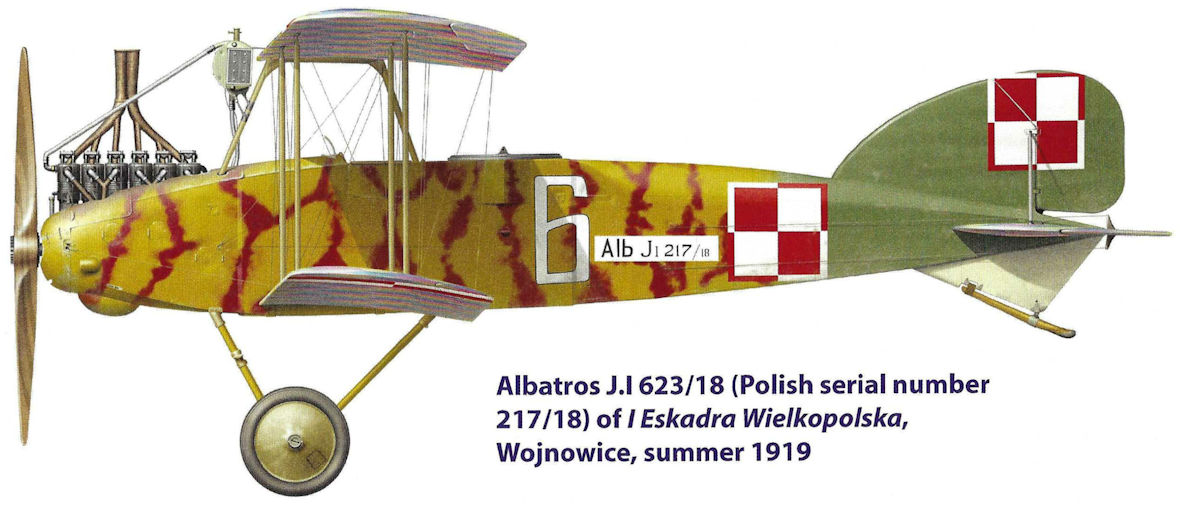
Albatros J.I 623/18 (Polish serial number 217/18) of I Eskadra Wielkopolska, Wojnowice, summer 1919
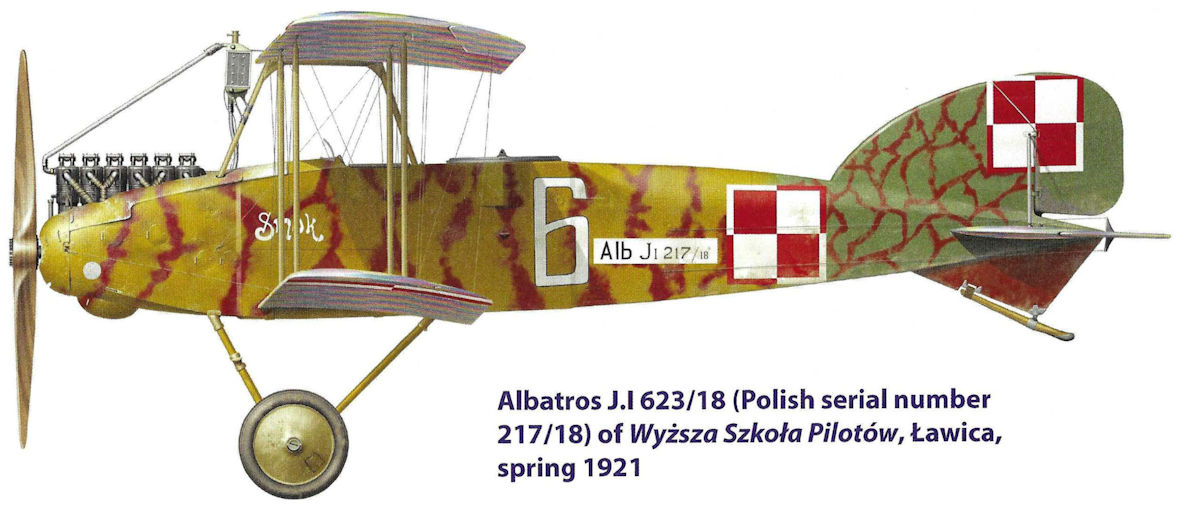
Albatros J.I 623/18 (Polish serial number 217/18) of Wyzsza Szkola Pilotow, Lawica, spring 1921
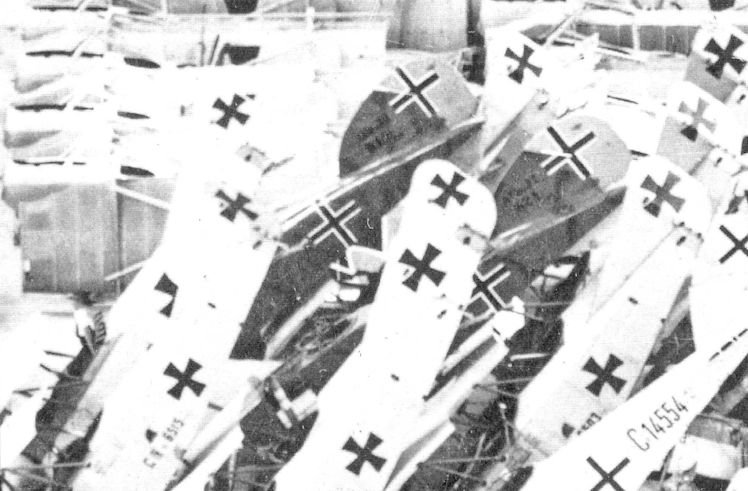
After the Armistice of 11 November 1918, the airship hangar in Poznan (then known as Posen) was used by the German military as a storage depot for aircraft and other equipment from demobilized units. On 2 January 1919, it was captured by Polish insurgent forces, who took possession of more than 400 aircraft stored inside. Among them were Albatros J.I 618/18 and 621/18 - recognizable in the photograph by their noticeably darker finish compared to the surrounding types. (The Polish Aviation Museum in Krakow)
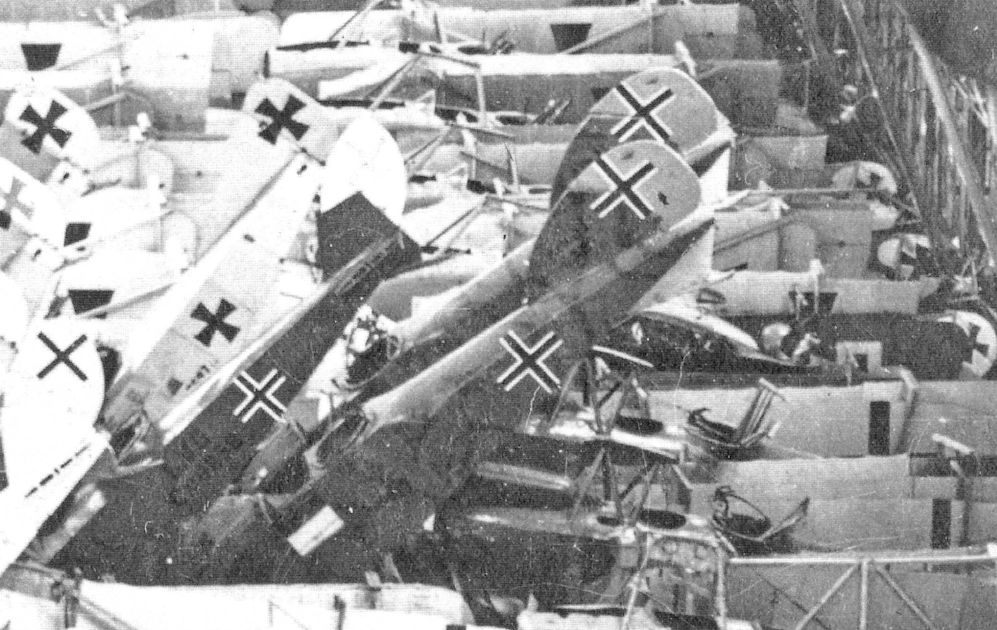
Disassembled Albatros J.I aircraft - 632/18 in the foreground and 626/18 behind - inside the airship hangar in Poznan, 15 March 1920. In the second half of September, both were transferred to the Ukrainian 1st Zaporizhian Air Squadron. From 14 October to 20 November 1920, they flew combat missions over the Vinnytsia-Bar-Nova Ushytsia area. With the Red Army advancing, the squadron withdrew into Polish territory, reaching Lviv, then relocating to Czestochowa, and finally arriving in Bydgoszcz in early January 1921. Both aircraft were returned to the Polish air service on 22 February 1921. (The Polish Aviation Museum in Krakow)
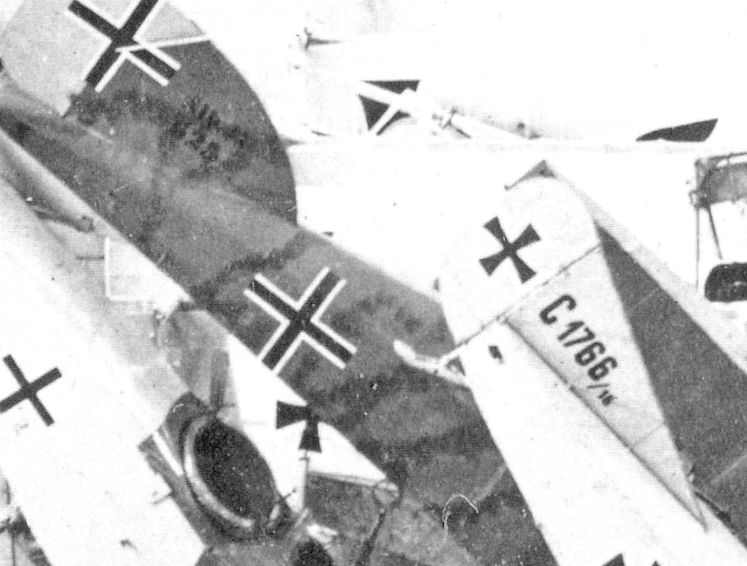
Fuselage of Albatros J.I 625/18 photographed inside the airship hangar in Poznan on 15 March 1920. This aircraft was part of the final production batch (J.616/18 - J.715/18), originally ordered as the Albatros J.II. Shortage of armor may have been the reason they were completed as J.Is. Examples from this series were distinguished by the use of printed fabric (Flugzeugstoff) on the wings and horizontal stabilizer, the absence of spinners, and a three-color paint scheme: topaz and dark ruby forming a camouflage pattern on the fuselage, with cream applied to the undersides. Although practically factory-new, these aircraft had been stripped of their engines and machine guns before being placed in storage. (The Polish Aviation Museum in Krakow)
Interior of the storage building at Lawica, August 1919. Among the various aircraft types is Albatros J.I 628/18 - the only one in the photo to display a Polish checkerboard insignia. A sign reading Palenie tytoniu wzbronione ("Smoking prohibited") is visible on a roof beam, highlighting the fire hazard posed by wooden structures, plywood, and fabric used in aircraft construction. (Tomasz J. Kopanski)
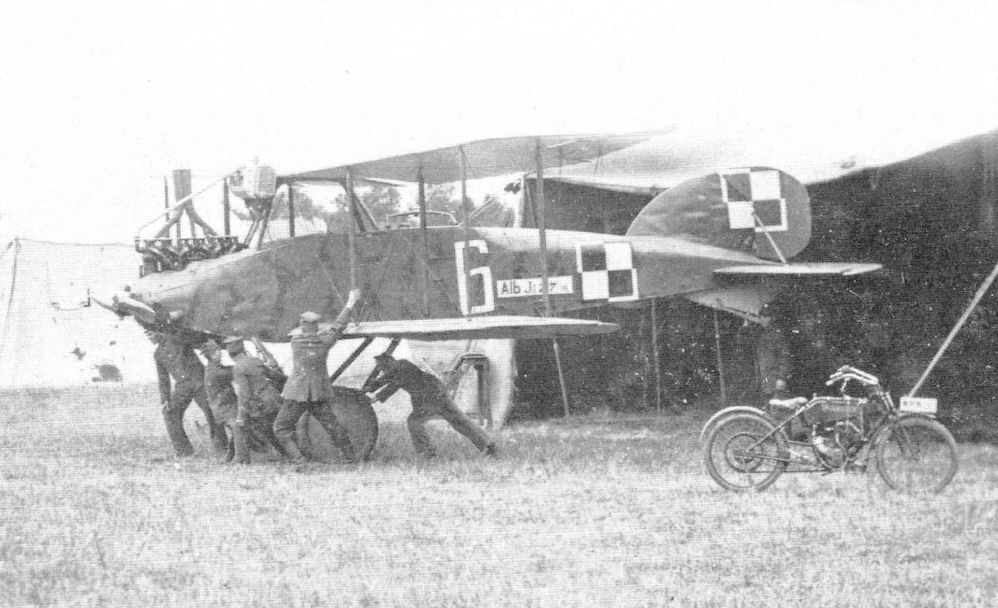
In late February and early March 1919, the German High Command began preparations for a possible war against Poland. Although strategic concepts evolved over time, the threat of open conflict remained real until the end of June 1919. In response, I Eskadra Wielkopolska was relocated to Wojnowice, about 30 km southwest of Poznan, bringing with it Albatros J.I 623/18. The aircraft retained most of its original factory camouflage, with only the tail fin and rear fuselage repainted in a single color. The Balkenkreuz markings were overpainted with Polish checkerboards, and rectangular fields bearing the aircraft type and Polish serial number 217/18 were applied to the fuselage. The code number 6 was also painted just below the observer's cockpit. At right is the squadron's Wanderer motorcycle. (The Polish Air Force Museum in Deblin)
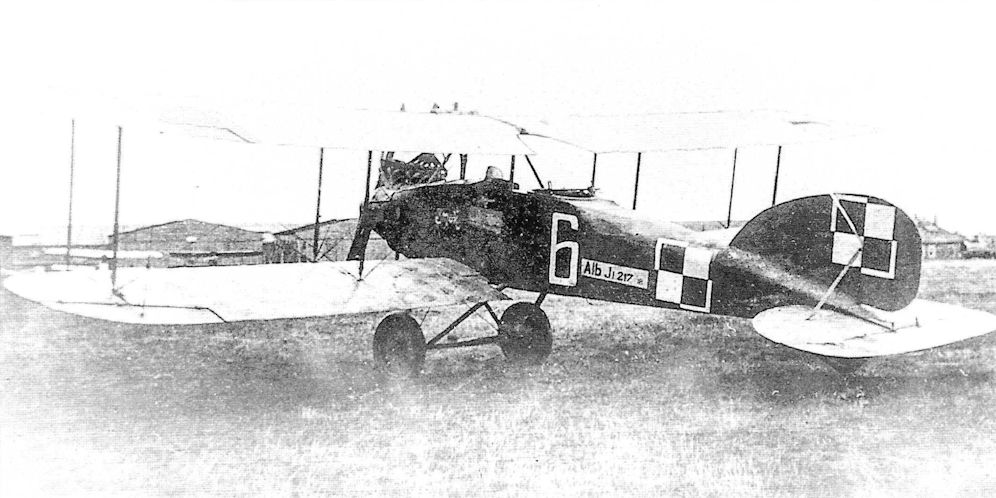
The wings and horizontal stabilizer of Albatros J.I 623/18 were covered with printed fabric (Flugzeugstoff) - a common feature of late-war German aircraft, designed to reduce weight, conserve paint, and simplify camouflage. This photograph, taken during the aircraft's service with Wyzsza Szkola Pilotow in Lawica, provides a clear view of the fabric pattern and shows the overall condition of the aircraft during its time as a trainer. (Jack Herris)
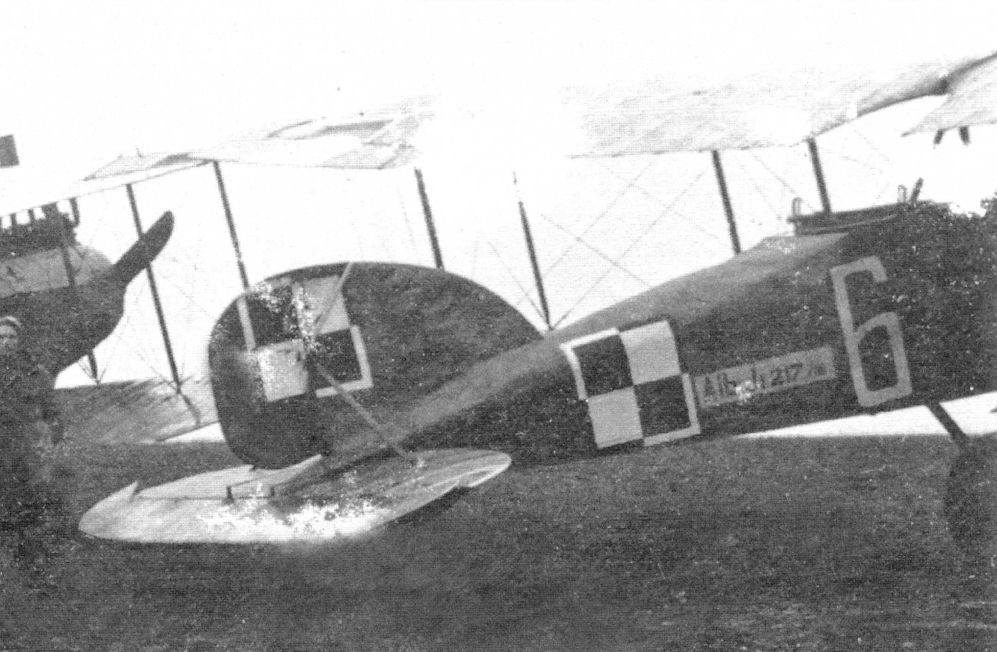
Starboard side view of Albatros J.I 623/18, photographed at Ławica in the spring of 1921. The markings mirrored those on the port side, including overpainted Balkenkreuz replaced by Polish checkerboards, rectangular fields bearing the aircraft type and Polish serial number 217/18, and the code number 6 painted below the observer's cockpit. (Tomasz J. Kopanski)
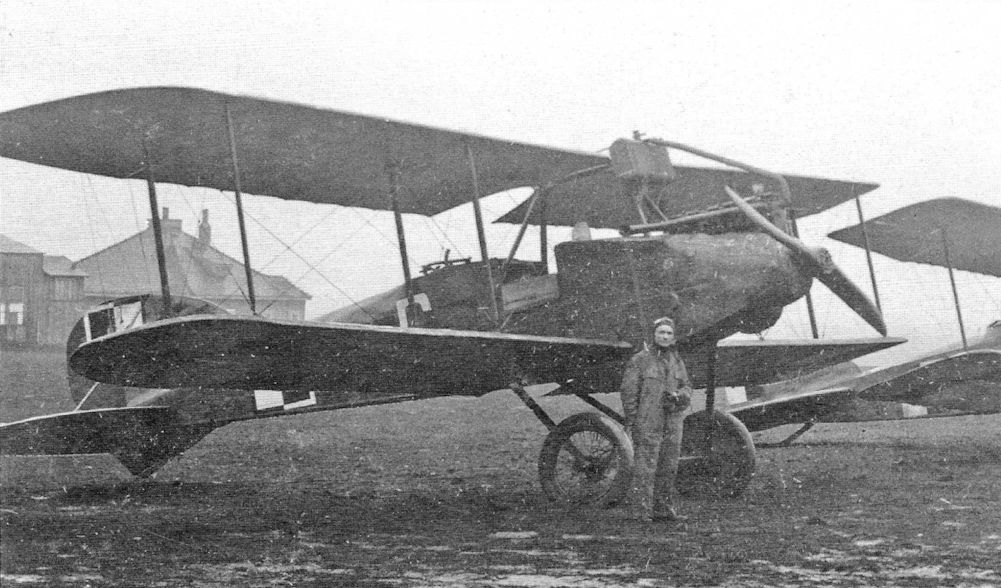
During its service with Wyzsza Szkola Pilotow in Lawica, Albatros J.I 623/18 was fitted with a new exhaust pipe that vented to the starboard side of the fuselage. Several other minor modifications were made at the same time. Although originally designed for frontline use, the aircraft's weight and limited performance made it difficult to operate from unimproved airfields and unsuitable for close reconnaissance missions. With only a narrow margin between cruising and stall speed, it was also far from ideal as a trainer. (Tomasz J. Kopanski)
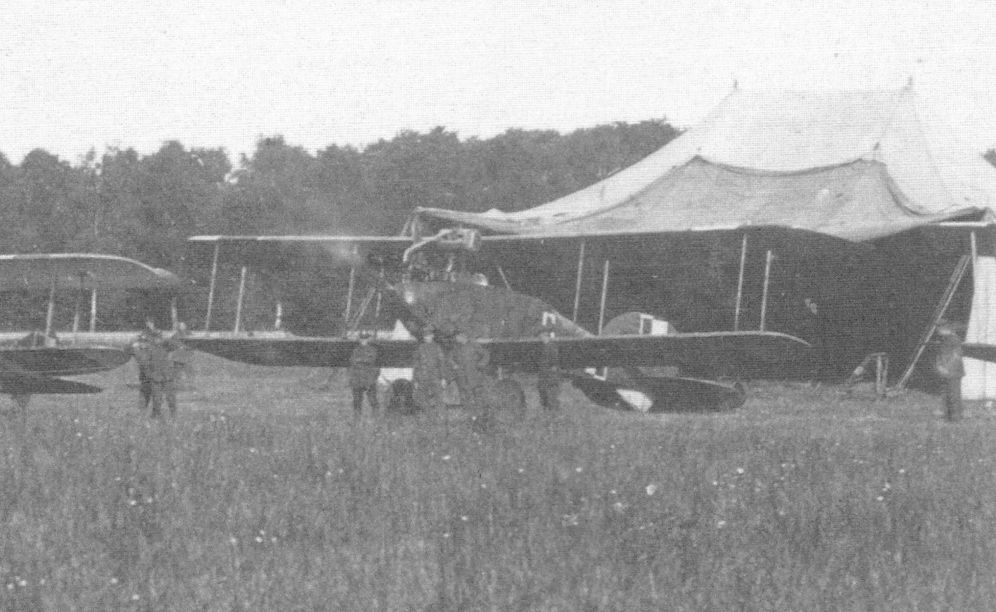
While I Eskadra Wielkopolska was stationed in Wojnowice in preparation for a possible German attack, Albatros J.I 623/18 carried out several maintenance check flights and training sorties. Squadron personnel commonly referred to the aircraft as Ifelka - a nickname derived from the German designation Infanterie-Flugzeug, meaning "infantry aircraft." (The Polish Air Force Museum in Deblin)
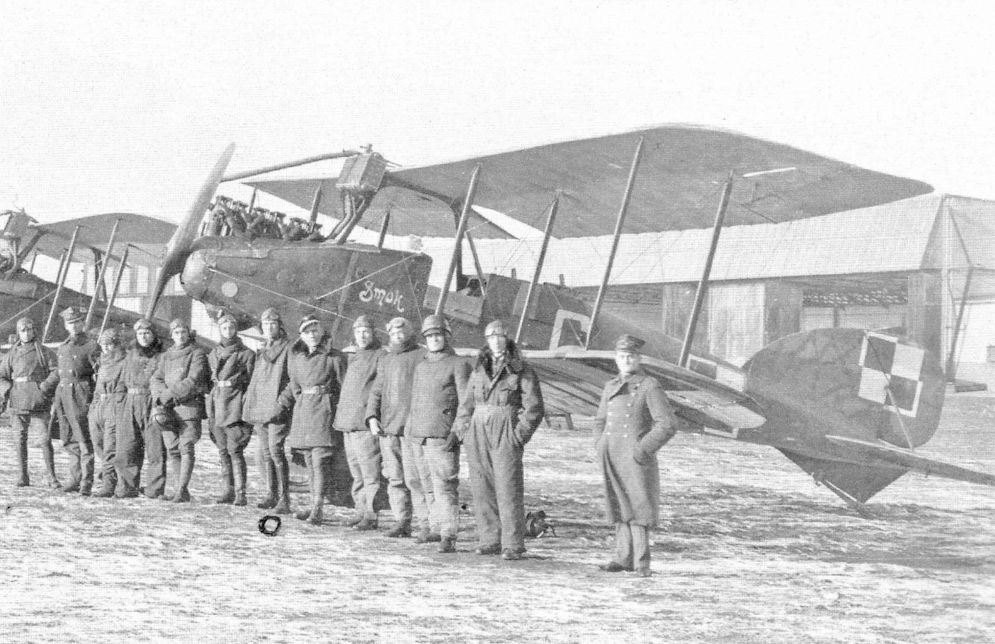
Post-war the new Polish state used a number of German warplanes, including the Albatros J.I. As can be seen on its fin, this J.I, named Smok and with tactical number '6', wears the irregular camouflage pattern illustrated by the Japanese artist in color.
In early October 1919, Albatros J.I 623/18 was placed in storage, where it remained until August 1920. It was then assigned to Wyzsza Szkola Pilotow in Lawica and used for pilot training at least until the spring of 1921.The photograph, taken at the time, shows the name Smok (Dragon) painted on the fuselage and camouflage stripes on the tail, intended to replicate the factory-applied pattern. Also of note is the repainted tail fin. (The Greater Poland Military Museum in Poznan)
In early October 1919, Albatros J.I 623/18 was placed in storage, where it remained until August 1920. It was then assigned to Wyzsza Szkola Pilotow in Lawica and used for pilot training at least until the spring of 1921.The photograph, taken at the time, shows the name Smok (Dragon) painted on the fuselage and camouflage stripes on the tail, intended to replicate the factory-applied pattern. Also of note is the repainted tail fin. (The Greater Poland Military Museum in Poznan)
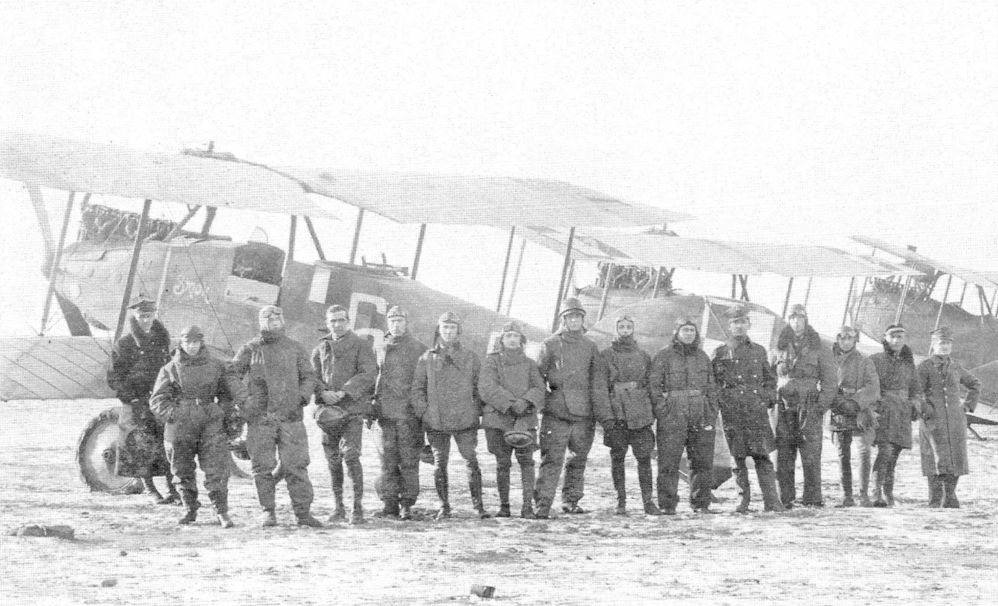
Another photograph of personnel from Wyzsza Szkola Pilotow in Lawica, taken in the spring of 1921 next to Albatros J.I 623/18. The name Smok, painted on the fuselage, referred to the aircraft's unusual camouflage scheme, which featured bright, "dragon-like" colors - likely intended to disguise its armor plating and make it resemble a standard reconnaissance biplane. (The Greater Poland Military Museum in Poznan)
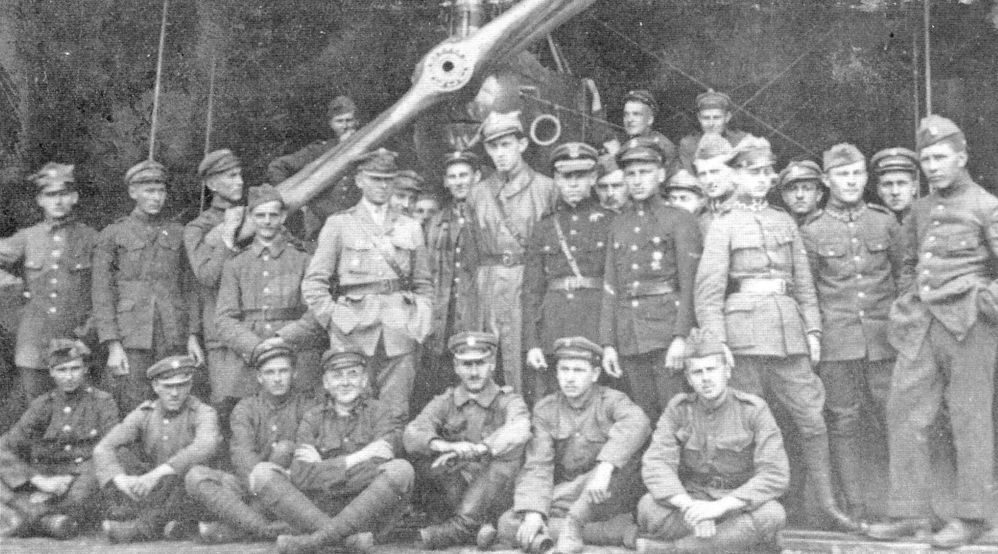
Personnel of 8. Eskadra Wywiadowcza posing with Albatros J.I 632/18 in Warsaw, late August 1920. The aircraft was identified by engine serial number 33977, painted on the engine. By 25 August, it had logged a total of 3 hours and 20 minutes of flight time. The photo was taken shortly after the Polish victory in the Battle of Warsaw - a turning point in the Polish-Soviet War. (The Polish Aviation Museum in Krakow)
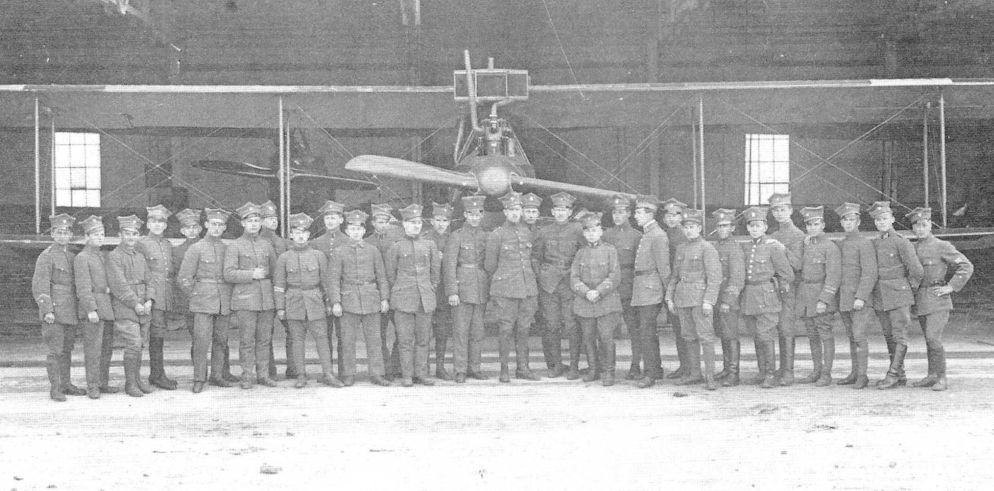
Students and instructors of the observer school based at Lawica in 1919 gathered for a photo with DFW C.V 485/18. Standing near the spinner with his arms behind his back is the school's commanding officer, ppor. obs. Feliks Gornicki, who had completed his observer training during World War I at Flieger-Beobachterschule Stolp. In the background, deeper inside the hangar, is Albatros J.I 628/18.
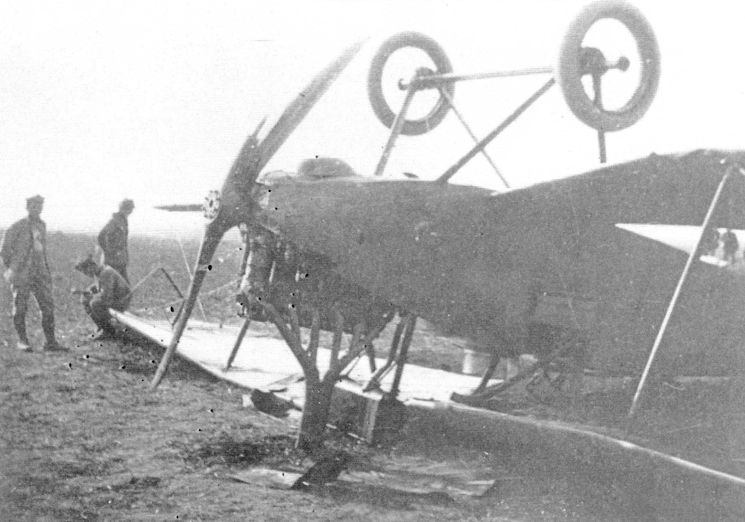
Albatros J.I 621/18 was not returned to active service until August 1920, when Poland's military situation was critical and the Red Army was advancing on the outskirts of Warsaw. The aircraft was assigned to 14. Eskadra Wywiadowcza, where it took part in low-level ground attack missions in support of Polish forces. On 22 September 1920, it was severely damaged in a forced landing that ended in a nose-over. (Tomasz J. Kopanski)
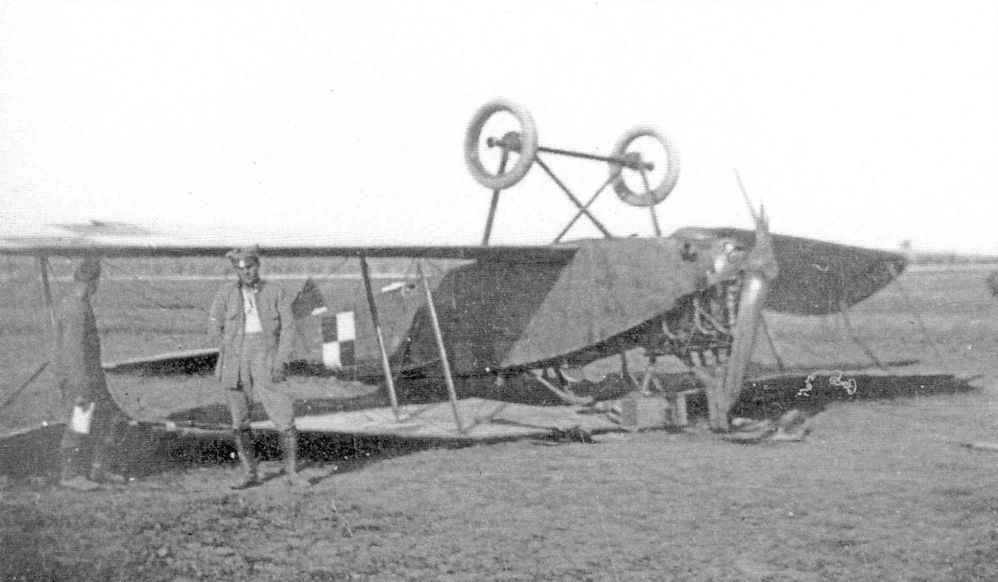
At the time of the accident, Albatros J.I 621/18 still retained its original factory camouflage. The Balkenkreuz markings had been overpainted with early white-and-red checkerboards without outlines - a variant of Polish national insignia that was already rarely seen by that time. (Tomasz J. Kopanski)
Chapter 2: The Albatros C.XV
The disappointing performance of the large and elegant C.XII prompted Albatros Gesellschaft fur Flugzeugunternehmungen mbH to change its approach to designing two-seat reconnaissance aircraft. The result was the compact Albatros C.XIV, whose prototype was completed in the spring of 1918. Compared to the C.XII, the new aircraft was much smaller and reflected a more practical design philosophy that prioritized simplicity and crew ergonomics over outward elegance. The refined geometry and complex airframe construction of its predecessor were abandoned in favor of a significantly lighter structure - thanks largely to the installation of a 220 hp Benz Bz.IVa engine. Notably, the C.XIV was the first Albatros design to feature a 20-degree wing stagger, reducing aerodynamic interference. Although it remained a prototype, the C.XIV showed considerable promise and became the basis for the Albatros C.XV, the company's final wartime reconnaissance aircraft to reach production.
The C.XV retained the key features of its predecessor while incorporating a number of refinements in line with the same practical design philosophy. Like the C.XIV, it abandoned the oval fuselage cross-section in favor of a conventional slab-sided layout, which simplified construction and eased production. The observer's cockpit was raised to improve visibility and expand the field of fire for the flexible machine gun, while an enlarged cutout in the upper wing gave the pilot a better upward view. The crew positions were placed close together to facilitate effective communication an important factor in combat coordination. To further improve flight characteristics, all controls were aerodynamically balanced, enhancing both maneuverability and handling. Despite being roughly 10 percent larger than the C.XIV, the C.XV was actually lighter - its empty weight reduced from 950 to just 859 kg - resulting in noticeably better overall performance.
Thanks to these refinements, the Albatros C.XV proved to be a reliable short-range reconnaissance aircraft, well suited for aerial photography, artillery spotting, and light ground-attack missions. While it was outperformed by the LVG C.VI and Halberstadt C.V, its initial evaluations were promising. A production order was likely placed in the summer of 1918, but only a small number of aircraft were completed before the end of the war. Although few C.XVs reached frontline units before the Armistice, the design went on to have a successful postwar career in both military and civilian aviation. After November 1918, production continued to fulfill existing contracts, and completed aircraft were delivered to German volunteer squadrons, police units, and aviation companies. Some were also sold to foreign customers.
The Polish air service acquired 15 Albatros C.XV aircraft, all purchased in Danzig (now Gdansk) in July 1920, shortly before the city officially became a Free City under a League of Nations mandate. Although the Polish acceptance commission reported them as factory-new, at least some had previously seen service in either military or civilian aviation. At the time of purchase, they were still listed in the German aircraft register and retained their Balkenkreuz markings. The aircraft were delivered in batches between August and October 1920. Because their original serial numbers were unknown - or possibly never assigned - Polish records identified them by their German civil registration numbers. Only three aircraft received additional Polish serials (23.1, 23.2, 23.3), which were painted on their fuselages at Centralne Warsztaty Lotnicze.
The primary combat user of the Albatros C.XV in Poland was 21. Eskadra Niszczycielska (21st Bombardment Squadron), which received six aircraft that supported cavalry raids during the final weeks of the Polish-Soviet War. The C.XV proved well suited to close air support, which became its main role, much like the Cl-type biplanes. Surviving records - both documents and photographs - confirm that these aircraft were armed solely with flexible Lewis machine guns during combat missions and were not fitted with forward-firing LMG 08/15s.
Other units that operated the C.XV included 4., 8., 12., 14., and 16. Eskadra Wywiadowcza (4th, 8th, 12th, 14th, and 16th Reconnaissance Squadrons), 11. (4.) Eskadra Niszczycielska (11th/4th Bombardment Squadron), Wyzsza Szkola Pilotažu (Advanced Pilot School) in Grudziadz, and 3. Pulk Lotniczy (3rd Air Regiment) in Lawica. Most aircraft were withdrawn from use between late 1921 and early 1922, as part of a broader effort to retire outdated and nonstandard types. However, at least one Albatros C.XV remained in service with 3. Pulk Lotniczy as late as 1926, where it was used for training purposes.
Albatros C.XV (“249"; 23.3)
At the time of its purchase, the aircraft was registered in Germany as D.249. In the first half of September 1920, it was delivered to Torun and shortly afterward entered service with 12. EW. Prior to the armistice, the aircraft flew two combat missions:
- 1 October 1920 - Takeoff: 14:20, landing: 17:15. Crew: pchor. pil. Kazimierz Burzynski and ppor. obs. Adam Karpinski. Summary: reconnaissance mission to locate the forward line of own troops and deliver new orders. After successfully dropping the message, the crew descended to 100 m to identify the troops occupying the next trench line. It quickly became clear that the position was already under Soviet control, as the aircraft came under heavy fire. One round struck the spar of the lower wing. The observer returned fire with a machine gun, forcing the enemy infantry to take cover in the trenches and giving the pilot a chance to escape the danger zone. After an extended search for friendly positions, the aircraft ran out of fuel and was forced to land about 24 km from the airfield in Grodno.
- 8 October 1920 - Takeoff: 12:45, landing: 15:30. Crew: ppor. pil. Franciszek Jach and pchor. obs. Leonard Hudzicki. Summary: reconnaissance mission over the Salos-Danyushava-Zhodzishki-Hiry area. During the flight, the crew experienced a serious engine failure, forcing them to land about 3 km north of Salos, between the forward positions of Polish patrols. Ultimately, the airmen managed to repair the aircraft and return to Lida.
On 31 October 1920, after the armistice had been declared, the aircraft joined the Air Squadron of Central Lithuania, the air arm of a short-lived quasi-state based in Vilnius, formed under Polish military and political influence and unrecognized by the international community. In the following weeks, it took part in combat operations against units of the Republic of Lithuania:
- 5 November 1920 - Takeoff: 11:15, landing: 13:00. Crew: kpt. pil. Waclaw Iwaszkiewicz and pchor. obs. Franciszek Suchos. Summary: reconnaissance mission.
- 6 November 1920 - Takeoff: 12:50, landing: 14:45. Crew: kpt. pil. Waclaw Iwaszkiewicz and sierz. pil. Antoni Wolniczek. Summary: reconnaissance mission over the Vilnius-Kaunas area.
- 13 November 1920 - Takeoff: 11:40, landing: 12:30. Crew: kpt. pil. Waclaw Iwaszkiewicz and ppor. obs. Zenon Romanowski. Summary: reconnaissance mission. The mission was aborted due to dense fog.
- 19 November 1920 - Crew: kpt. pil. Waclaw Iwaszkiewicz and ppor. obs. Michal Blaicher. Summary: reconnaissance and bombing mission. Flight time: 2 hours 10 minutes.
- 20 November 1920 - Takeoff: 11:00, landing: 13:00. Crew: kpt. pil. Waclaw Iwaszkiewicz and pchor. obs. Franciszek Suchos. Summary: reconnaissance mission.
- 21 November 1920 - Takeoff: 11:15, landing: 13:30. Crew: kpt. pil.Waclaw Iwaszkiewicz and ppor. obs. Michal Blaicher. Summary: reconnaissance mission to locate the Wilenska Brygada Jazdy (Wilno Cavalry Brigade) and drop orders; the crew was unable to find the unit's position.
- 22 November 1920 - Takeoff: 11:45, landing: 13:50. Crew: kpt. pil. Waclaw Iwaszkiewicz and sierz. pil. Antoni Wolniczek. Summary: reconnaissance mission to locate the Wilenska Brygada Jazdy, the crew was unable to find the unit's position.
- 23 November 1920 - Takeoff: 12:00, landing: 13:35. Crew: kpt. pil. Waclaw Iwaszkiewicz and pchor. obs. Czeslaw Wajcht. Summary: reconnaissance mission to locate the Wilenska Brygada Jazdy; the crew was unable to find the unit's position.
On 30 November 1920, the agreement ending military operations between the Republic of Lithuania and Central Lithuania came into effect. During the winter, the aircraft remained grounded. On 19 March 1921, it was sent by rail to Krakow. From 1 July 1921, it was stationed at IV RPL in Brest, and on 1 November 1921, it was assigned to Wyzsza Szkola Pilotow in Grudziadz.
Albatros C.XV ("408")
At the time of its purchase, the aircraft was registered in Germany as D.408. It was delivered to lawica in early September 1920. After undergoing an inspection, it was assigned to 21. EN in Lviv, where it officially joined the unit on 29 September 1920. Five days later, the squadron was relocated to Ternopil. As of 10 January 1921, it had logged 20 hours and 15 minutes of flight time. On 22 January 1921, a strong gust of wind destroyed one of the squadron's tent hangars. Among the aircraft inside was Albatros C.XV "408," which sustained serious damage. The airframe was disassembled and left in the open until early February. The squadron then moved to Grudziadz, where it was disbanded, and both its equipment and personnel were absorbed into 14. EW.On 31 March 1921, the damaged aircraft was handed over to I RPL in Grudziadz, where it remained until at least 20 June.
Albatros C.XV ("409"; 23.1)
At the time of its purchase, the aircraft was registered in Germany as D.409. Initially, it was delivered to the Polish naval aviation base in Puck, which had been known during World War I as Seeflugstation Putzig. On 2 August 1920, the aircraft arrived in Torun. The passenger on this flight was por. Karol Dubicz-Penther, an intelligence officer involved in acquiring aircraft for the Polish air service. In the following days, the Albatros C.XV was assigned to 16. EW in Warsaw. Its operational history was brief, consisting of just two combat flights:
- 11 August 1920 - Crew: ppor. pil. Tadeusz Halewski and an observer. Summary: reconnaissance mission over the front line in the Warsaw-Plock area. Despite technical issues, the crew managed to determine the exact positions of the retreating Polish units. During the mission, the aircraft was hit multiple times by ground fire. Flight time: 3 hours 30 minutes.
- 12 August 1920 - Takeoff: 8:35. Crew: kpr. pil. Maksymilian Bialogrodzki and plut. obs. Jan Starzynski. Summary: reconnaissance mission over the front line in the Warsaw area. Shortly after takeoff, the aircraft went into a spin and crashed near the airfield. Both crew members were killed.
Albatros C.XV (“410")
At the time of its purchase, the aircraft was registered in Germany as D.410. It was delivered to Lawica in early September 1920. After undergoing an inspection, it was assigned to 21. EN in Lviv, where it officially joined the unit on 29 September 1920. Five days later, the squadron was relocated to Ternopil. In November 1920, the aircraft was temporarily stationed at III RPL in Lviv. In early February 1921, 21. EN moved to Grudziadz, where it was disbanded, and both its equipment and personnel were absorbed into 14. EW. Albatros C.XV "410" was damaged beyond repair in an accident in April 1921, with the pilot, pptk pil. Aleksander Serednicki, suffering only minor injuries. Salvageable parts of the airframe were sent to I RPL in Grudziadz.
Albatros C.XV ("411")
At the time of its purchase, the aircraft was registered in Germany as D.411. It was delivered to lawica in early October 1920. After undergoing an inspection, it was stored as a reserve aircraft.
Albatros C.XV (“412"; 23.2)
At the time of its purchase, the aircraft was registered in Germany as D.412. In the second half of August 1920, it was delivered to Torun and then flown to lawica. It likely sustained propeller damage during landing, but the issue was quickly resolved, and the aircraft soon returned to Torun. On 3 September 1920, the commanding officer of 18. EM, por. pil.Wladyslaw Kralewski, performed a delivery flight to Warsaw. The aircraft was initially intended for 8. EW, but on 29 September 1920, it was ultimately transferred to 4. EW in Dojlidy. Before the armistice took effect, it completed the following flights:
- 30 September 1920 - Takeoff: 15:10, landing: 15:25. Crew: pchor. pil. Wladyslaw Dittmer and a mechanic. Summary: maintenance check flight.
- 30 September 1920 - Takeoff: 15:30, landing: 15:39. Crew: pchor. pil.Wladyslaw Dittmer and a mechanic. Summary: maintenance check flight.
- 2 October 1920 - Takeoff: 16:30, landing: 17:45. Crew: pchor. pil.Wladyslaw Dittmer and por. obs. Jan Roder. Summary: ferry flight from Dojlidy to Vawkavysk.
- 5 October 1920 - Takeoff: 11:15, landing: 12:25. Crew: pchor. pil. Wladyslaw Dittmer and por. obs. Jan Roder. Summary: ferry flight from Vawkavysk to Baranavichy.
- 6 October 1920 - Takeoff: 15:55, landing: 17:50. Crew: pchor. pil. Wladyslaw Dittmer and por. obs. Jan Roder. Summary: reconnaissance mission.
-7 October 1920 - Takeoff: 9:35, landing: 11:40. Crew: pchor. pil.Wladyslaw Dittmer and por. obs. Jan Roder. Summary: reconnaissance mission over the Koydanava area and along the Usha River. During the flight, the observer identified Soviet infantry positions and opened fire on them from an altitude of 100 m.
- 8 October 1920 - Takeoff: 13:55, landing: 14:55. Crew: pchor. pil. Wladyslaw Dittmer and por. obs. Jan Roder. Summary: reconnaissance mission.
-9 October 1920 - Takeoff: 10:00, landing: 11:30. Crew: pchor. pil. Wladyslaw Dittmer and plut. obs. Stanislaw Czerwinski. Summary: reconnaissance mission.
- 11 October 1920 - Takeoff: 14:00, landing: 15:30. Crew: pchor. pil. Wladyslaw Dittmer and sierz. Marian Rada (air gunner). Summary: reconnaissance mission.
With combat operations winding down and 4. EW preparing to relocate to Torun, the aircraft was reassigned to 12. EW in Lida. However, after the unit received relocation orders on 3 November 1920, Albatros C.XV "412" was transferred to 11. (4.) EN. In mid-February 1921, the squadron was absorbed into 8. EW. The aircraft remained in service until at least 28 February 1921.
Albatros C.XV ("413")
At the time of its purchase, the aircraft was registered in Germany as D.413. It was delivered to Lawica in early October 1920. In March 1921, Albatros C.XV "413" was assigned to 8. EW in Lida. In August 1922, following the unit's relocation to Krakow and its re-equipment with Ansaldo SVA 10 aircraft, it was transferred to 3. Pulk Lotniczy in lawica. It remained in use as a trainer until the winter of 1926, when it was damaged in an accident.
Albatros C.XV ("414")
At the time of its purchase, the aircraft was registered in Germany as D.414. It was delivered to Lawica in early October 1920. After undergoing an inspection, it was stored as a reserve aircraft.
Albatros C.XV ("416")
At the time of its purchase, the aircraft was registered in Germany as D.416. It was delivered to Lawica in early October 1920. In November 1920, the aircraft was assigned to 12. EW in Wilanow and, just a few days later, transferred to 11. (4.) EN in Lida. By 10 February 1921, its engine had run for only 15 minutes. Albatros C.XV "416" remained in service at least until 28 February 1921, although it already required repairs.
Albatros C.XV ("417")
At the time of its purchase, the aircraft was registered in Germany as D.417. It was delivered to Lawica in early September 1920. After undergoing an inspection, it was assigned to 21. EN in Lviv, where it officially joined the unit on 29 September 1920. Five days later, the squadron was relocated to Ternopil. The aircraft was seriously damaged in an accident on 1 November 1920 in Lviv. It was then sent back to Lawica, where it was scrapped.
Albatros C.XV ("418")
At the time of its purchase, the aircraft was registered in Germany as D.418. It was delivered to lawica in early October 1920. After undergoing an inspection, it was assigned to 21. EN in Ternopil,where it officially joined the unit on 23 October 1920. During the winter, the aircraft remained grounded. On 22 January 1921, a strong gust of wind destroyed one of the squadron's tent hangars. Among the aircraft inside was Albatros C.XV "418," which sustained serious damage. The airframe was disassembled and left in the open until early February. At that time, the squadron relocated to Grudziadz, where it was disbanded, and both its equipment and personnel were absorbed into 14. EW. The aircraft was repaired and returned to flying condition by the unit's mechanics. As of 22 May 1921, it had logged 9 hours and 50 minutes of flight time.
Albatros C.XV (“419")
At the time of its purchase, the aircraft was registered in Germany as D.419. It was delivered to Lawica in early October 1920. After undergoing an inspection, it was stored as a reserve aircraft.
Albatros C.XV (“420")
At the time of its purchase, the aircraft was registered in Germany as D.420. It was delivered to Lawica in early October 1920. After undergoing an inspection, it was assigned to 21. EN in Ternopil, where it officially joined the unit on 23 October 1920. During the winter, the aircraft remained grounded. On 30 January 1921, a strong gust of wind lifted it into the air. The impact with the ground caused severe damage to the fuselage and wings. That same day, it was returned to Lawica and subsequently scrapped.
Albatros C.XV (“421")
At the time of its purchase, the aircraft was registered in Germany as D.421. It was delivered to Lawica in early October 1920. After undergoing an inspection, it was stored as a reserve aircraft.
Albatros C.XV ("422")
At the time of its purchase, the aircraft was registered in Germany as D.422. It was delivered to Lawica in early October 1920. After undergoing an inspection and engine replacement, it was assigned to 21. EN in Ternopil, where it officially joined the unit on 23 October 1920. During the winter, the aircraft remained grounded. On 22 January 1921, a strong gust of wind destroyed one of the squadron's tent hangars. Among the aircraft inside was Albatros C.XV "422," which sustained serious damage. The airframe was disassembled and left in the open until early February. At that time, the squadron relocated to Grudziadz, where it was disbanded, and both its equipment and personnel were absorbed into 14. EW. On 31 March 1921, the damaged aircraft was handed over to I RPL in Grudziadz, where it remained until at least 20 June.
Albatros C.XV Aircraft in Poland
German Reg. Number Manufacturer & Model Polish Reg. Number Engine Type (Serial Number)
D.249 Albatros C.XV 249, 23.3 Benz Bz.IV (34119)
D.408 Albatros C.XV 408 Benz Bz.IV (35587, 33199)
D.409 Albatros C.XV 409, 23.1 Benz Bz.IV (no data)
D.410 Albatros C.XV 410 Benz Bz.IV (33662)
D.411 Albatros C.XV 411 Benz Bz.IV (32740)
D.412 Albatros C.XV 412, 23.2 Benz Bz.IV (35651)
D.413 Albatros C.XV 413 Benz Bz.IV (35511)
D.414 Albatros C.XV 414 Benz Bz.IV (32868)
D.416 Albatros C.XV 416 Benz Bz.IV (33992)
D.417 Albatros C.XV 417 Benz Bz.IV (33718)
D.418 Albatros C.XV 418 Benz Bz.IV (32827)
D.419 Albatros C.XV 419 Benz Bz.IV (33420)
D.420 Albatros C.XV 420 Benz Bz.IV (33984)
D.421 Albatros C.XV 421 Benz Bz.IV (35594)
D.422 Albatros C.XV 422 Benz Bz.IV (35595, 32614)
The disappointing performance of the large and elegant C.XII prompted Albatros Gesellschaft fur Flugzeugunternehmungen mbH to change its approach to designing two-seat reconnaissance aircraft. The result was the compact Albatros C.XIV, whose prototype was completed in the spring of 1918. Compared to the C.XII, the new aircraft was much smaller and reflected a more practical design philosophy that prioritized simplicity and crew ergonomics over outward elegance. The refined geometry and complex airframe construction of its predecessor were abandoned in favor of a significantly lighter structure - thanks largely to the installation of a 220 hp Benz Bz.IVa engine. Notably, the C.XIV was the first Albatros design to feature a 20-degree wing stagger, reducing aerodynamic interference. Although it remained a prototype, the C.XIV showed considerable promise and became the basis for the Albatros C.XV, the company's final wartime reconnaissance aircraft to reach production.
The C.XV retained the key features of its predecessor while incorporating a number of refinements in line with the same practical design philosophy. Like the C.XIV, it abandoned the oval fuselage cross-section in favor of a conventional slab-sided layout, which simplified construction and eased production. The observer's cockpit was raised to improve visibility and expand the field of fire for the flexible machine gun, while an enlarged cutout in the upper wing gave the pilot a better upward view. The crew positions were placed close together to facilitate effective communication an important factor in combat coordination. To further improve flight characteristics, all controls were aerodynamically balanced, enhancing both maneuverability and handling. Despite being roughly 10 percent larger than the C.XIV, the C.XV was actually lighter - its empty weight reduced from 950 to just 859 kg - resulting in noticeably better overall performance.
Thanks to these refinements, the Albatros C.XV proved to be a reliable short-range reconnaissance aircraft, well suited for aerial photography, artillery spotting, and light ground-attack missions. While it was outperformed by the LVG C.VI and Halberstadt C.V, its initial evaluations were promising. A production order was likely placed in the summer of 1918, but only a small number of aircraft were completed before the end of the war. Although few C.XVs reached frontline units before the Armistice, the design went on to have a successful postwar career in both military and civilian aviation. After November 1918, production continued to fulfill existing contracts, and completed aircraft were delivered to German volunteer squadrons, police units, and aviation companies. Some were also sold to foreign customers.
The Polish air service acquired 15 Albatros C.XV aircraft, all purchased in Danzig (now Gdansk) in July 1920, shortly before the city officially became a Free City under a League of Nations mandate. Although the Polish acceptance commission reported them as factory-new, at least some had previously seen service in either military or civilian aviation. At the time of purchase, they were still listed in the German aircraft register and retained their Balkenkreuz markings. The aircraft were delivered in batches between August and October 1920. Because their original serial numbers were unknown - or possibly never assigned - Polish records identified them by their German civil registration numbers. Only three aircraft received additional Polish serials (23.1, 23.2, 23.3), which were painted on their fuselages at Centralne Warsztaty Lotnicze.
The primary combat user of the Albatros C.XV in Poland was 21. Eskadra Niszczycielska (21st Bombardment Squadron), which received six aircraft that supported cavalry raids during the final weeks of the Polish-Soviet War. The C.XV proved well suited to close air support, which became its main role, much like the Cl-type biplanes. Surviving records - both documents and photographs - confirm that these aircraft were armed solely with flexible Lewis machine guns during combat missions and were not fitted with forward-firing LMG 08/15s.
Other units that operated the C.XV included 4., 8., 12., 14., and 16. Eskadra Wywiadowcza (4th, 8th, 12th, 14th, and 16th Reconnaissance Squadrons), 11. (4.) Eskadra Niszczycielska (11th/4th Bombardment Squadron), Wyzsza Szkola Pilotažu (Advanced Pilot School) in Grudziadz, and 3. Pulk Lotniczy (3rd Air Regiment) in Lawica. Most aircraft were withdrawn from use between late 1921 and early 1922, as part of a broader effort to retire outdated and nonstandard types. However, at least one Albatros C.XV remained in service with 3. Pulk Lotniczy as late as 1926, where it was used for training purposes.
Albatros C.XV (“249"; 23.3)
At the time of its purchase, the aircraft was registered in Germany as D.249. In the first half of September 1920, it was delivered to Torun and shortly afterward entered service with 12. EW. Prior to the armistice, the aircraft flew two combat missions:
- 1 October 1920 - Takeoff: 14:20, landing: 17:15. Crew: pchor. pil. Kazimierz Burzynski and ppor. obs. Adam Karpinski. Summary: reconnaissance mission to locate the forward line of own troops and deliver new orders. After successfully dropping the message, the crew descended to 100 m to identify the troops occupying the next trench line. It quickly became clear that the position was already under Soviet control, as the aircraft came under heavy fire. One round struck the spar of the lower wing. The observer returned fire with a machine gun, forcing the enemy infantry to take cover in the trenches and giving the pilot a chance to escape the danger zone. After an extended search for friendly positions, the aircraft ran out of fuel and was forced to land about 24 km from the airfield in Grodno.
- 8 October 1920 - Takeoff: 12:45, landing: 15:30. Crew: ppor. pil. Franciszek Jach and pchor. obs. Leonard Hudzicki. Summary: reconnaissance mission over the Salos-Danyushava-Zhodzishki-Hiry area. During the flight, the crew experienced a serious engine failure, forcing them to land about 3 km north of Salos, between the forward positions of Polish patrols. Ultimately, the airmen managed to repair the aircraft and return to Lida.
On 31 October 1920, after the armistice had been declared, the aircraft joined the Air Squadron of Central Lithuania, the air arm of a short-lived quasi-state based in Vilnius, formed under Polish military and political influence and unrecognized by the international community. In the following weeks, it took part in combat operations against units of the Republic of Lithuania:
- 5 November 1920 - Takeoff: 11:15, landing: 13:00. Crew: kpt. pil. Waclaw Iwaszkiewicz and pchor. obs. Franciszek Suchos. Summary: reconnaissance mission.
- 6 November 1920 - Takeoff: 12:50, landing: 14:45. Crew: kpt. pil. Waclaw Iwaszkiewicz and sierz. pil. Antoni Wolniczek. Summary: reconnaissance mission over the Vilnius-Kaunas area.
- 13 November 1920 - Takeoff: 11:40, landing: 12:30. Crew: kpt. pil. Waclaw Iwaszkiewicz and ppor. obs. Zenon Romanowski. Summary: reconnaissance mission. The mission was aborted due to dense fog.
- 19 November 1920 - Crew: kpt. pil. Waclaw Iwaszkiewicz and ppor. obs. Michal Blaicher. Summary: reconnaissance and bombing mission. Flight time: 2 hours 10 minutes.
- 20 November 1920 - Takeoff: 11:00, landing: 13:00. Crew: kpt. pil. Waclaw Iwaszkiewicz and pchor. obs. Franciszek Suchos. Summary: reconnaissance mission.
- 21 November 1920 - Takeoff: 11:15, landing: 13:30. Crew: kpt. pil.Waclaw Iwaszkiewicz and ppor. obs. Michal Blaicher. Summary: reconnaissance mission to locate the Wilenska Brygada Jazdy (Wilno Cavalry Brigade) and drop orders; the crew was unable to find the unit's position.
- 22 November 1920 - Takeoff: 11:45, landing: 13:50. Crew: kpt. pil. Waclaw Iwaszkiewicz and sierz. pil. Antoni Wolniczek. Summary: reconnaissance mission to locate the Wilenska Brygada Jazdy, the crew was unable to find the unit's position.
- 23 November 1920 - Takeoff: 12:00, landing: 13:35. Crew: kpt. pil. Waclaw Iwaszkiewicz and pchor. obs. Czeslaw Wajcht. Summary: reconnaissance mission to locate the Wilenska Brygada Jazdy; the crew was unable to find the unit's position.
On 30 November 1920, the agreement ending military operations between the Republic of Lithuania and Central Lithuania came into effect. During the winter, the aircraft remained grounded. On 19 March 1921, it was sent by rail to Krakow. From 1 July 1921, it was stationed at IV RPL in Brest, and on 1 November 1921, it was assigned to Wyzsza Szkola Pilotow in Grudziadz.
Albatros C.XV ("408")
At the time of its purchase, the aircraft was registered in Germany as D.408. It was delivered to lawica in early September 1920. After undergoing an inspection, it was assigned to 21. EN in Lviv, where it officially joined the unit on 29 September 1920. Five days later, the squadron was relocated to Ternopil. As of 10 January 1921, it had logged 20 hours and 15 minutes of flight time. On 22 January 1921, a strong gust of wind destroyed one of the squadron's tent hangars. Among the aircraft inside was Albatros C.XV "408," which sustained serious damage. The airframe was disassembled and left in the open until early February. The squadron then moved to Grudziadz, where it was disbanded, and both its equipment and personnel were absorbed into 14. EW.On 31 March 1921, the damaged aircraft was handed over to I RPL in Grudziadz, where it remained until at least 20 June.
Albatros C.XV ("409"; 23.1)
At the time of its purchase, the aircraft was registered in Germany as D.409. Initially, it was delivered to the Polish naval aviation base in Puck, which had been known during World War I as Seeflugstation Putzig. On 2 August 1920, the aircraft arrived in Torun. The passenger on this flight was por. Karol Dubicz-Penther, an intelligence officer involved in acquiring aircraft for the Polish air service. In the following days, the Albatros C.XV was assigned to 16. EW in Warsaw. Its operational history was brief, consisting of just two combat flights:
- 11 August 1920 - Crew: ppor. pil. Tadeusz Halewski and an observer. Summary: reconnaissance mission over the front line in the Warsaw-Plock area. Despite technical issues, the crew managed to determine the exact positions of the retreating Polish units. During the mission, the aircraft was hit multiple times by ground fire. Flight time: 3 hours 30 minutes.
- 12 August 1920 - Takeoff: 8:35. Crew: kpr. pil. Maksymilian Bialogrodzki and plut. obs. Jan Starzynski. Summary: reconnaissance mission over the front line in the Warsaw area. Shortly after takeoff, the aircraft went into a spin and crashed near the airfield. Both crew members were killed.
Albatros C.XV (“410")
At the time of its purchase, the aircraft was registered in Germany as D.410. It was delivered to Lawica in early September 1920. After undergoing an inspection, it was assigned to 21. EN in Lviv, where it officially joined the unit on 29 September 1920. Five days later, the squadron was relocated to Ternopil. In November 1920, the aircraft was temporarily stationed at III RPL in Lviv. In early February 1921, 21. EN moved to Grudziadz, where it was disbanded, and both its equipment and personnel were absorbed into 14. EW. Albatros C.XV "410" was damaged beyond repair in an accident in April 1921, with the pilot, pptk pil. Aleksander Serednicki, suffering only minor injuries. Salvageable parts of the airframe were sent to I RPL in Grudziadz.
Albatros C.XV ("411")
At the time of its purchase, the aircraft was registered in Germany as D.411. It was delivered to lawica in early October 1920. After undergoing an inspection, it was stored as a reserve aircraft.
Albatros C.XV (“412"; 23.2)
At the time of its purchase, the aircraft was registered in Germany as D.412. In the second half of August 1920, it was delivered to Torun and then flown to lawica. It likely sustained propeller damage during landing, but the issue was quickly resolved, and the aircraft soon returned to Torun. On 3 September 1920, the commanding officer of 18. EM, por. pil.Wladyslaw Kralewski, performed a delivery flight to Warsaw. The aircraft was initially intended for 8. EW, but on 29 September 1920, it was ultimately transferred to 4. EW in Dojlidy. Before the armistice took effect, it completed the following flights:
- 30 September 1920 - Takeoff: 15:10, landing: 15:25. Crew: pchor. pil. Wladyslaw Dittmer and a mechanic. Summary: maintenance check flight.
- 30 September 1920 - Takeoff: 15:30, landing: 15:39. Crew: pchor. pil.Wladyslaw Dittmer and a mechanic. Summary: maintenance check flight.
- 2 October 1920 - Takeoff: 16:30, landing: 17:45. Crew: pchor. pil.Wladyslaw Dittmer and por. obs. Jan Roder. Summary: ferry flight from Dojlidy to Vawkavysk.
- 5 October 1920 - Takeoff: 11:15, landing: 12:25. Crew: pchor. pil. Wladyslaw Dittmer and por. obs. Jan Roder. Summary: ferry flight from Vawkavysk to Baranavichy.
- 6 October 1920 - Takeoff: 15:55, landing: 17:50. Crew: pchor. pil. Wladyslaw Dittmer and por. obs. Jan Roder. Summary: reconnaissance mission.
-7 October 1920 - Takeoff: 9:35, landing: 11:40. Crew: pchor. pil.Wladyslaw Dittmer and por. obs. Jan Roder. Summary: reconnaissance mission over the Koydanava area and along the Usha River. During the flight, the observer identified Soviet infantry positions and opened fire on them from an altitude of 100 m.
- 8 October 1920 - Takeoff: 13:55, landing: 14:55. Crew: pchor. pil. Wladyslaw Dittmer and por. obs. Jan Roder. Summary: reconnaissance mission.
-9 October 1920 - Takeoff: 10:00, landing: 11:30. Crew: pchor. pil. Wladyslaw Dittmer and plut. obs. Stanislaw Czerwinski. Summary: reconnaissance mission.
- 11 October 1920 - Takeoff: 14:00, landing: 15:30. Crew: pchor. pil. Wladyslaw Dittmer and sierz. Marian Rada (air gunner). Summary: reconnaissance mission.
With combat operations winding down and 4. EW preparing to relocate to Torun, the aircraft was reassigned to 12. EW in Lida. However, after the unit received relocation orders on 3 November 1920, Albatros C.XV "412" was transferred to 11. (4.) EN. In mid-February 1921, the squadron was absorbed into 8. EW. The aircraft remained in service until at least 28 February 1921.
Albatros C.XV ("413")
At the time of its purchase, the aircraft was registered in Germany as D.413. It was delivered to Lawica in early October 1920. In March 1921, Albatros C.XV "413" was assigned to 8. EW in Lida. In August 1922, following the unit's relocation to Krakow and its re-equipment with Ansaldo SVA 10 aircraft, it was transferred to 3. Pulk Lotniczy in lawica. It remained in use as a trainer until the winter of 1926, when it was damaged in an accident.
Albatros C.XV ("414")
At the time of its purchase, the aircraft was registered in Germany as D.414. It was delivered to Lawica in early October 1920. After undergoing an inspection, it was stored as a reserve aircraft.
Albatros C.XV ("416")
At the time of its purchase, the aircraft was registered in Germany as D.416. It was delivered to Lawica in early October 1920. In November 1920, the aircraft was assigned to 12. EW in Wilanow and, just a few days later, transferred to 11. (4.) EN in Lida. By 10 February 1921, its engine had run for only 15 minutes. Albatros C.XV "416" remained in service at least until 28 February 1921, although it already required repairs.
Albatros C.XV ("417")
At the time of its purchase, the aircraft was registered in Germany as D.417. It was delivered to Lawica in early September 1920. After undergoing an inspection, it was assigned to 21. EN in Lviv, where it officially joined the unit on 29 September 1920. Five days later, the squadron was relocated to Ternopil. The aircraft was seriously damaged in an accident on 1 November 1920 in Lviv. It was then sent back to Lawica, where it was scrapped.
Albatros C.XV ("418")
At the time of its purchase, the aircraft was registered in Germany as D.418. It was delivered to lawica in early October 1920. After undergoing an inspection, it was assigned to 21. EN in Ternopil,where it officially joined the unit on 23 October 1920. During the winter, the aircraft remained grounded. On 22 January 1921, a strong gust of wind destroyed one of the squadron's tent hangars. Among the aircraft inside was Albatros C.XV "418," which sustained serious damage. The airframe was disassembled and left in the open until early February. At that time, the squadron relocated to Grudziadz, where it was disbanded, and both its equipment and personnel were absorbed into 14. EW. The aircraft was repaired and returned to flying condition by the unit's mechanics. As of 22 May 1921, it had logged 9 hours and 50 minutes of flight time.
Albatros C.XV (“419")
At the time of its purchase, the aircraft was registered in Germany as D.419. It was delivered to Lawica in early October 1920. After undergoing an inspection, it was stored as a reserve aircraft.
Albatros C.XV (“420")
At the time of its purchase, the aircraft was registered in Germany as D.420. It was delivered to Lawica in early October 1920. After undergoing an inspection, it was assigned to 21. EN in Ternopil, where it officially joined the unit on 23 October 1920. During the winter, the aircraft remained grounded. On 30 January 1921, a strong gust of wind lifted it into the air. The impact with the ground caused severe damage to the fuselage and wings. That same day, it was returned to Lawica and subsequently scrapped.
Albatros C.XV (“421")
At the time of its purchase, the aircraft was registered in Germany as D.421. It was delivered to Lawica in early October 1920. After undergoing an inspection, it was stored as a reserve aircraft.
Albatros C.XV ("422")
At the time of its purchase, the aircraft was registered in Germany as D.422. It was delivered to Lawica in early October 1920. After undergoing an inspection and engine replacement, it was assigned to 21. EN in Ternopil, where it officially joined the unit on 23 October 1920. During the winter, the aircraft remained grounded. On 22 January 1921, a strong gust of wind destroyed one of the squadron's tent hangars. Among the aircraft inside was Albatros C.XV "422," which sustained serious damage. The airframe was disassembled and left in the open until early February. At that time, the squadron relocated to Grudziadz, where it was disbanded, and both its equipment and personnel were absorbed into 14. EW. On 31 March 1921, the damaged aircraft was handed over to I RPL in Grudziadz, where it remained until at least 20 June.
Albatros C.XV Aircraft in Poland
German Reg. Number Manufacturer & Model Polish Reg. Number Engine Type (Serial Number)
D.249 Albatros C.XV 249, 23.3 Benz Bz.IV (34119)
D.408 Albatros C.XV 408 Benz Bz.IV (35587, 33199)
D.409 Albatros C.XV 409, 23.1 Benz Bz.IV (no data)
D.410 Albatros C.XV 410 Benz Bz.IV (33662)
D.411 Albatros C.XV 411 Benz Bz.IV (32740)
D.412 Albatros C.XV 412, 23.2 Benz Bz.IV (35651)
D.413 Albatros C.XV 413 Benz Bz.IV (35511)
D.414 Albatros C.XV 414 Benz Bz.IV (32868)
D.416 Albatros C.XV 416 Benz Bz.IV (33992)
D.417 Albatros C.XV 417 Benz Bz.IV (33718)
D.418 Albatros C.XV 418 Benz Bz.IV (32827)
D.419 Albatros C.XV 419 Benz Bz.IV (33420)
D.420 Albatros C.XV 420 Benz Bz.IV (33984)
D.421 Albatros C.XV 421 Benz Bz.IV (35594)
D.422 Albatros C.XV 422 Benz Bz.IV (35595, 32614)
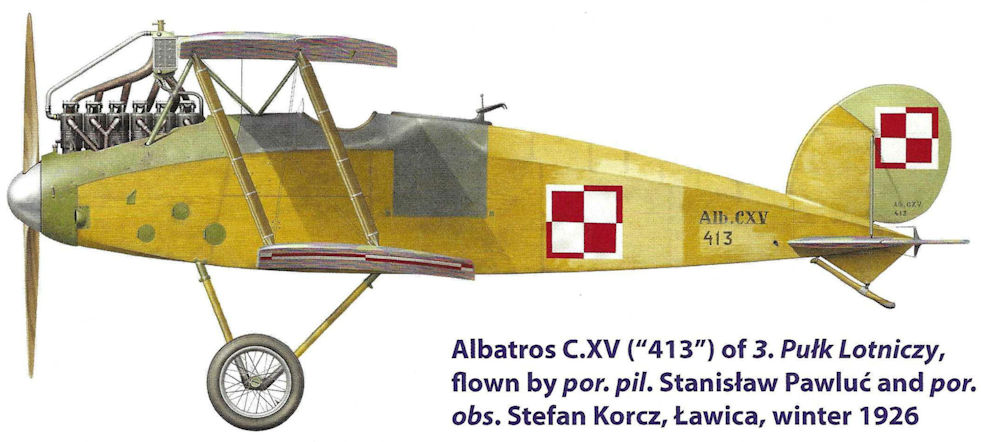
Albatros C.XV (“413") of 3. Pulk Lotniczy, flown by por. pil. Stanislaw Pawluc and por. obs. Stefan Korcz, Lawica, winter 1926
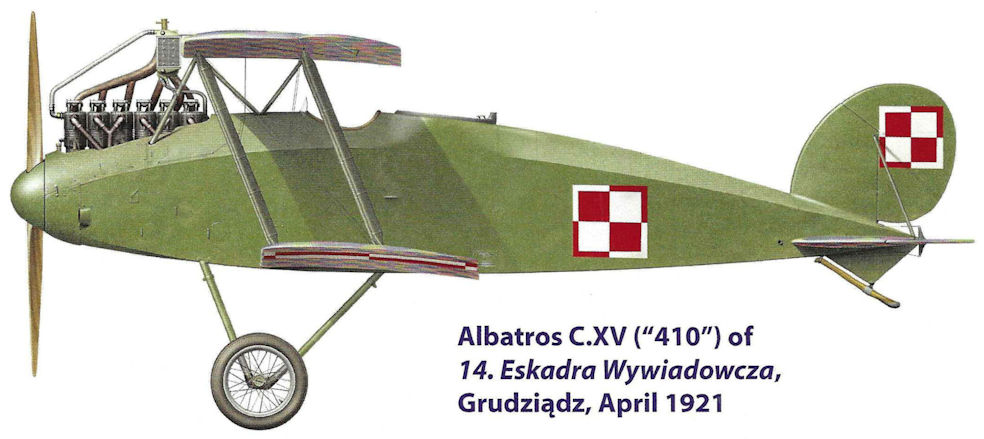
Albatros C.XV (“410") of 14. Eskadra Wywiadowcza, Grudziadz, April 1921
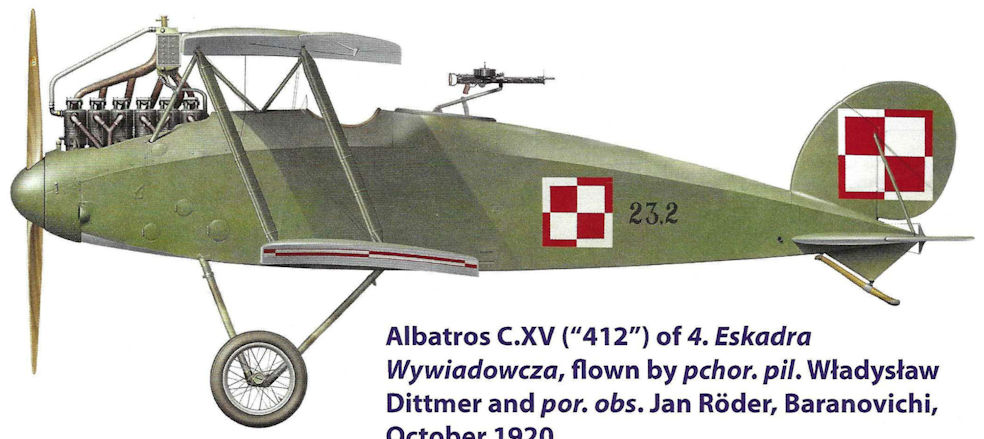
Albatros C.XV (“412") of 4. Eskadra Wywiadowcza, flown by pchor. pil. Wladyslaw Dittmer and por. obs. Jan Roder, Baranovichi, October 1920
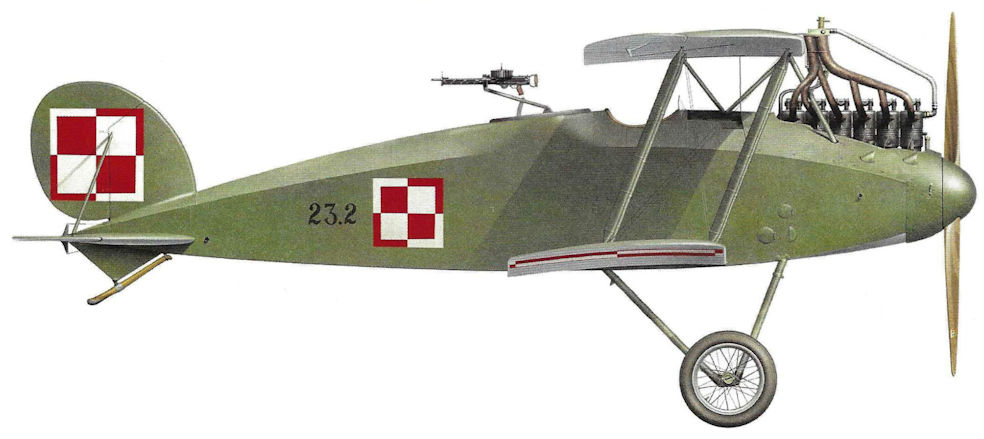
Albatros C.XV (“412") of 4. Eskadra Wywiadowcza, flown by pchor. pil. Wladyslaw Dittmer and por. obs. Jan Roder, Baranovichi, October 1920
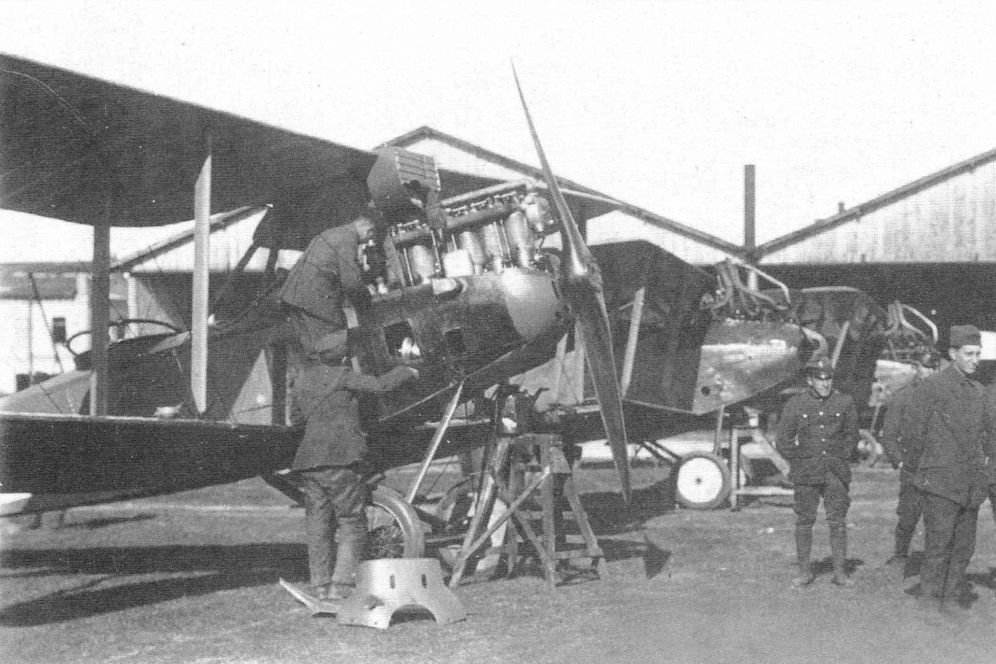
Aircraft of 12. Eskadra Wywiadowcza lined up in front of the hangars in Lida. From left to right: Rumpler C.VII (542/17), Albatros C.XV (“249"), and Albatros C.XV ("412"). The photo was taken in October 1920, shortly before the transfer of Albatros C.XV (“249") - along with kpt. pil. Waclaw Iwaszkiewicz - to the Air Squadron of Central Lithuania, the air arm of a short-lived quasi-state centered in Vilnius and formed from 16. Eskadra Wywiadowcza. (Marcin Bednarek)
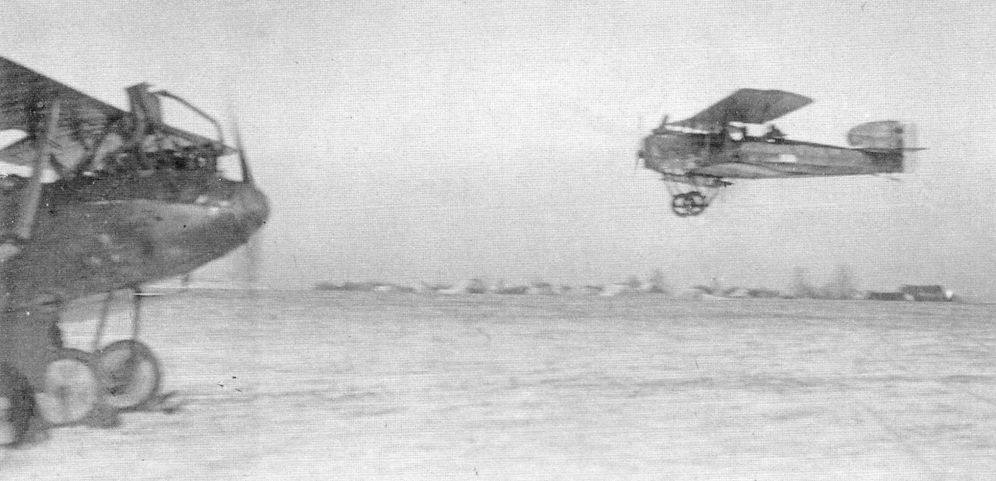
Albatros C.XV ("249") and Breguet 14B2 (10.36), photographed in early December 1920 in Vilnius. At the time, both aircraft were serving with the Air Squadron of Central Lithuania. The unit was disbanded in March 1921 and subsequently relocated to Krakow, where it resumed its previous designation as 16. Eskadra Wywiadowcza. (The Polish Aviation Museum in Krakow)
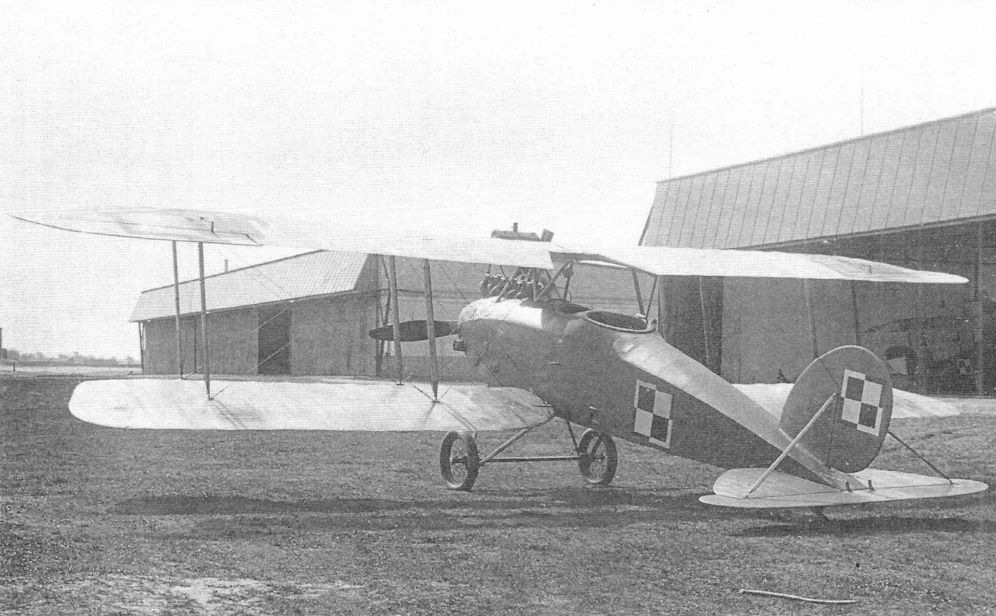
After its delivery to Poland, Albatros C.XV ("410") entered service with 21. Eskadra Niszczycielska. In early February 1921, the unit was relocated to Grudziadz (formerly Fliegerstation Graudenz), where it was disbanded, and its equipment and personnel were absorbed into 14. Eskadra Wywiadowcza. The photo was taken in Grudziadz on 12 April 1921. Faint traces of overpainted Balkenkreuz markings are still visible around the checkerboards on the upper wing. (Marcin Bednarek)
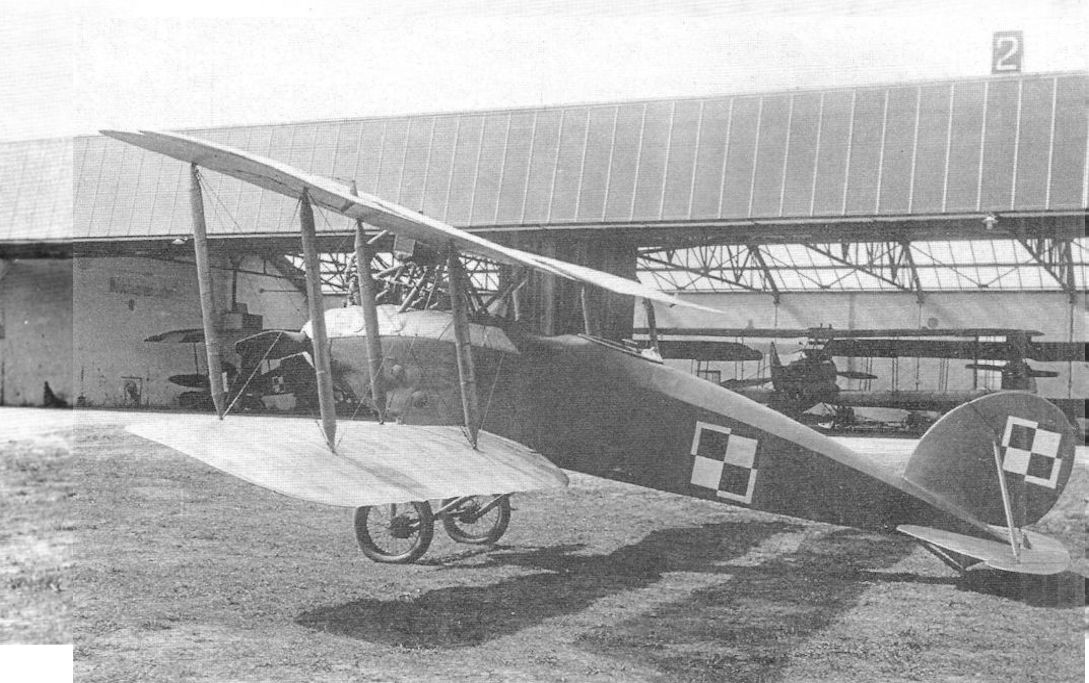
During its service in Poland, the fuselage of Albatros C.XV (“410") was likely painted in a single color. Unfortunately, surviving sources do not allow for a precise reconstruction of the shade. The few existing references to historical paint and varnish usage leave much room for speculation. Inside the hangar in the background is Albatros C.XV ("418"), which also belonged to 14. Eskadra Wywiadowcza at the time. (Piotr Lech)
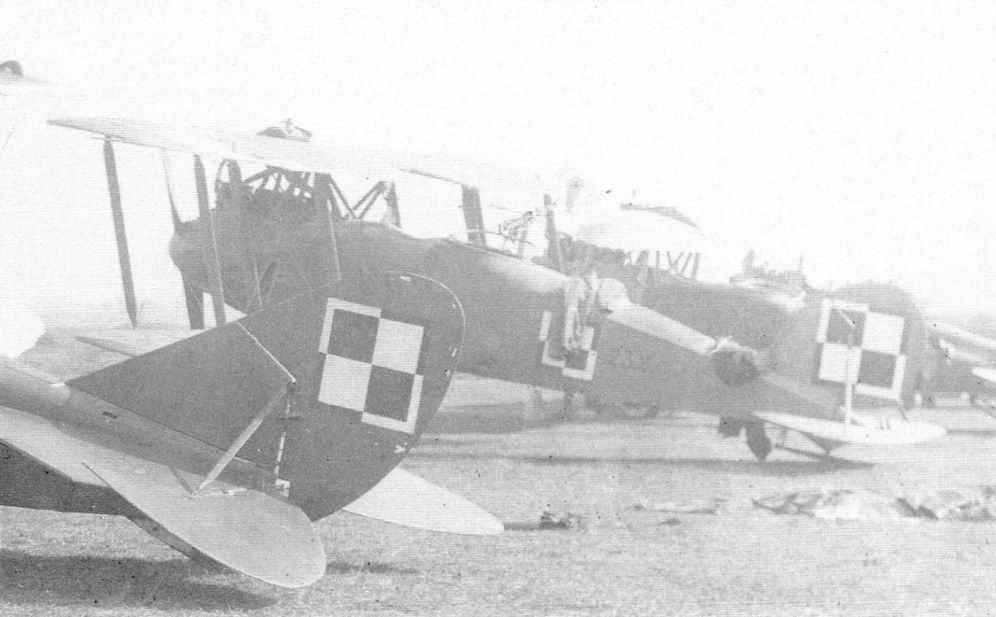
On 29 September 1920, Albatros C.XV ("412") was assigned to 4. Eskadra Wywiadowcza. Before the armistice came into effect, it flew five combat missions against the Red Army. This photo, taken in October 1920 in Baranovichi, shows the aircraft fitted with a Lewis machine gun on the observer's ring. The fuselage bears the Polish serial number 23.2, applied during servicing at Centralne Warsztaty Lotnicze. (Arkadiusz Kalinski)
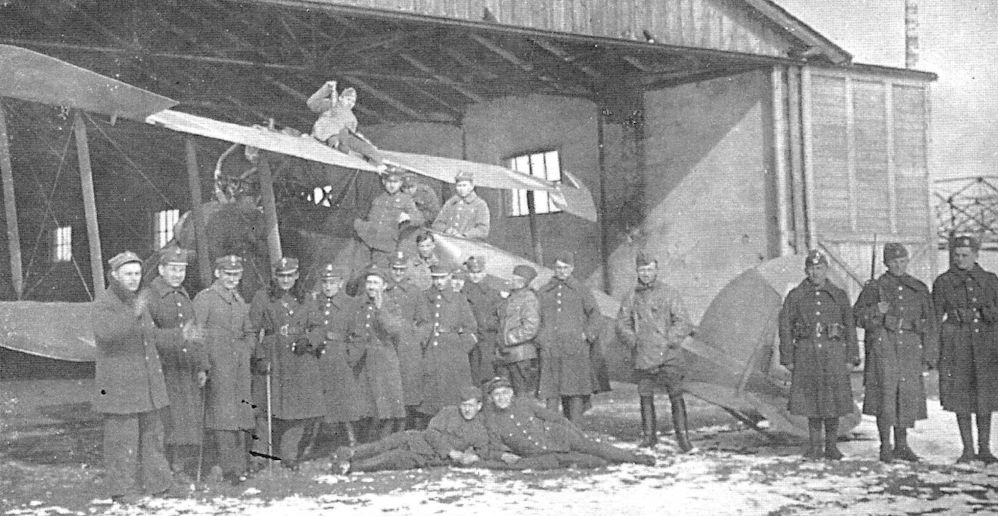
Personnel of 8. Eskadra Wywiadowcza posing with Albatros C.XV (“413") in Lida, early 1921. A stenciled inscription reading Alb. CXV. 413 appears along the lower edge of the rudder. Most of the soldiers in the photo are wearing rogatywki - distinctive four-pointed caps traditionally associated with the Polish military. (Mariusz Konarski)
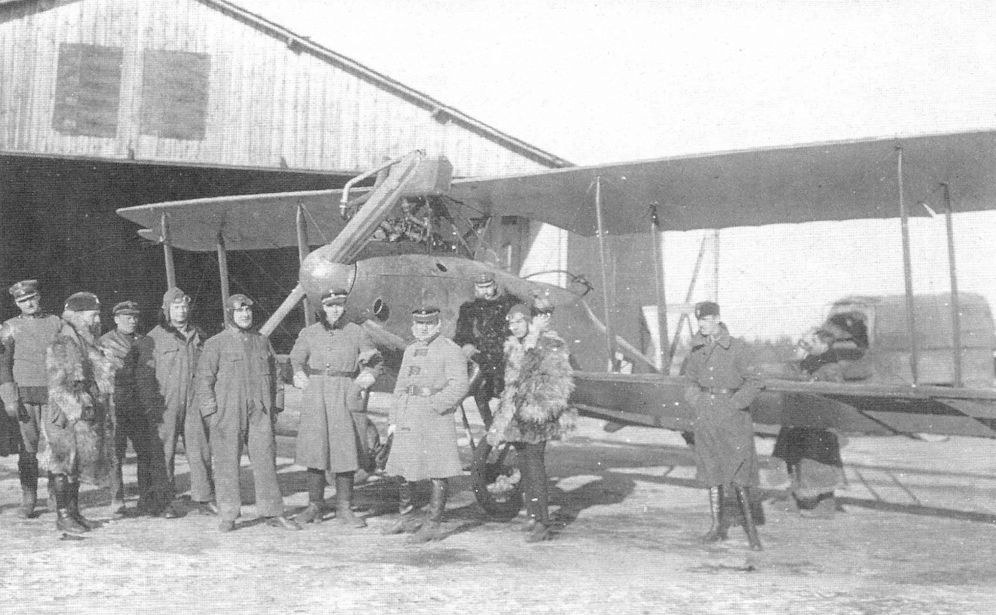
Albatros C.XV (“412") in Lida, early January 1921. The decal on the propeller indicates that it was manufactured at Centralne Warsztaty Lotnicze. Among the airmen posing with the aircraft are por. pil. Antoni Sielicki, commanding officer of 11. (4.) Eskadra Niszczycielska (second from left), and two Italian volunteers: por. obs. Virgilio Mastrelli (fourth from left) and ppor. obs. Veniero de Pisa (fifth from left). (Piotr Lech)
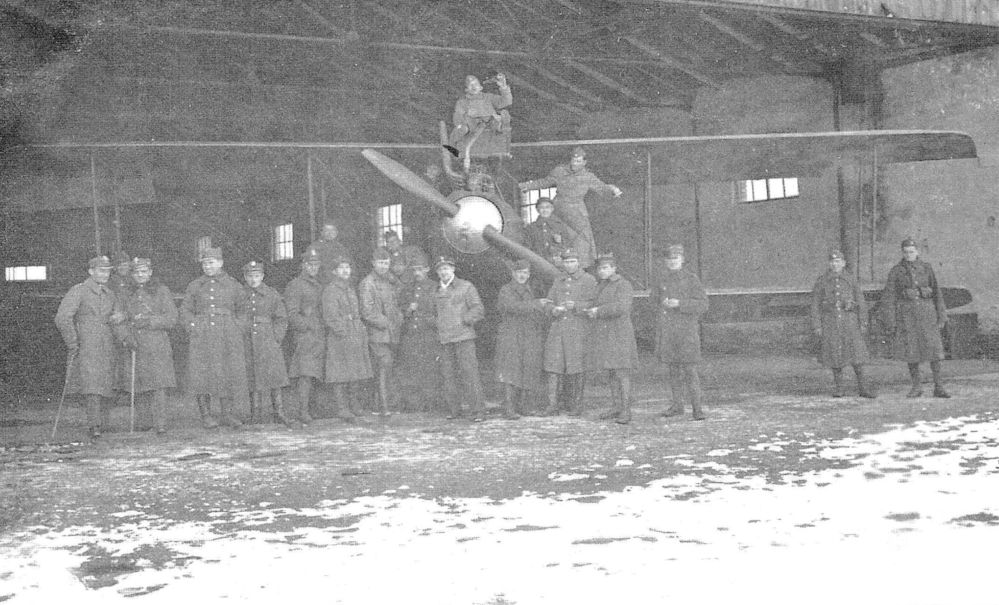
Albatros C.XV ("413") arrived in Poland in early October 1920, too late to see combat. After a brief stay at Stacja Lotnicza Lawica, it was assigned to 8. Eskadra Wywiadowcza in Lida. This photo was taken during its service with the squadron in early 1921. (Mariusz Konarski)
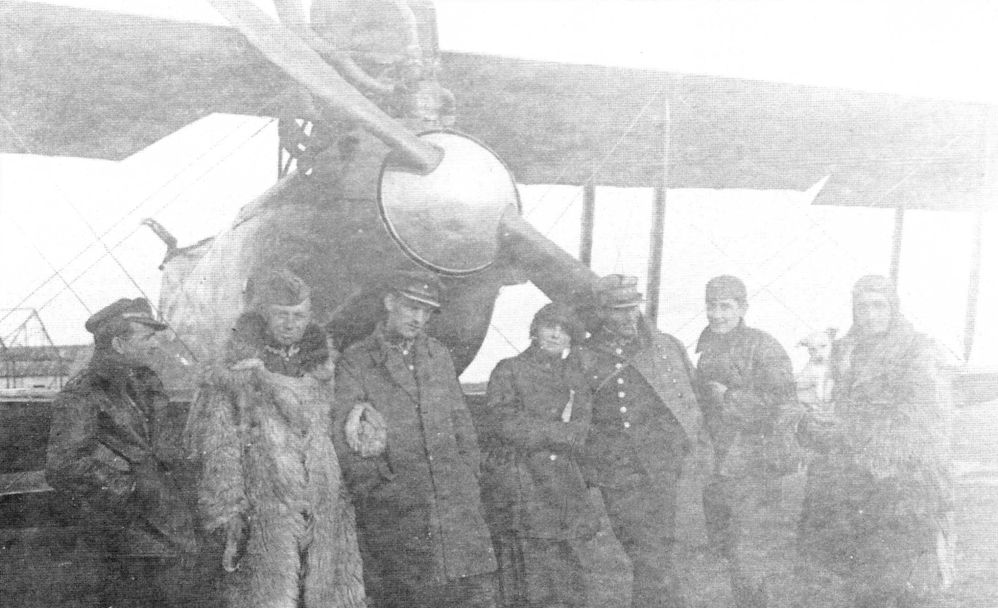
Airmen, a visiting lady, and a puppy pose for a group photo in front of Albatros C.XV ("413") in Lida, early 1921. The engine's serial number - 35511 - was painted on the first cylinder, allowing the aircraft to be positively identified in surviving records. Winter temperatures in the region were so low that heavy fur coats were often the only practical choice. (Mariusz Konarski)
During a ceremony held in Lviv on 2 October 1920, gen. por. Stanislaw Haller (third from left) decorated the most distinguished airmen of III Dywizjon Lotniczy with the Virtuti Militari - Poland's highest military award for valor in the face of the enemy. In the background are two Albatros C.XV aircraft and an Albatros B.II, all belonging to 21. Eskadra Niszczycielska. The aircraft in the center is likely Albatros C.XV (“417"). The two-finger salute seen in the photograph is a distinctive tradition of the Polish military, setting it apart from the customs of other armies. (The Polish Aviation Museum in Krakow)
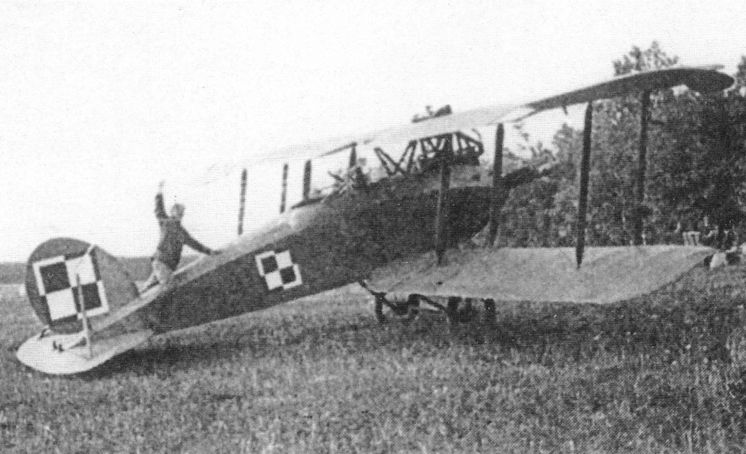
On 19 October 1920, with combat operations winding down and 4. Eskadra Wywiadowcza preparing to relocate to Torun, Albatros C.XV ("412") was reassigned to 12. Eskadra Wywiadowcza in Lida. This photo was first published in low quality in the 1933 commemorative book Ku czci poleglych lotnikow ("In Honor of Fallen Airmen"), and the original print has not resurfaced since, making it impossible to produce a version that would reveal more visual detail. It remains unclear why an oversized checkerboard was painted on the tail fin, while the fuselage carried a standard one. (Ku czci poleglych lotnikow, ed. M. Romeyko (Warsaw, 1933), 111.)
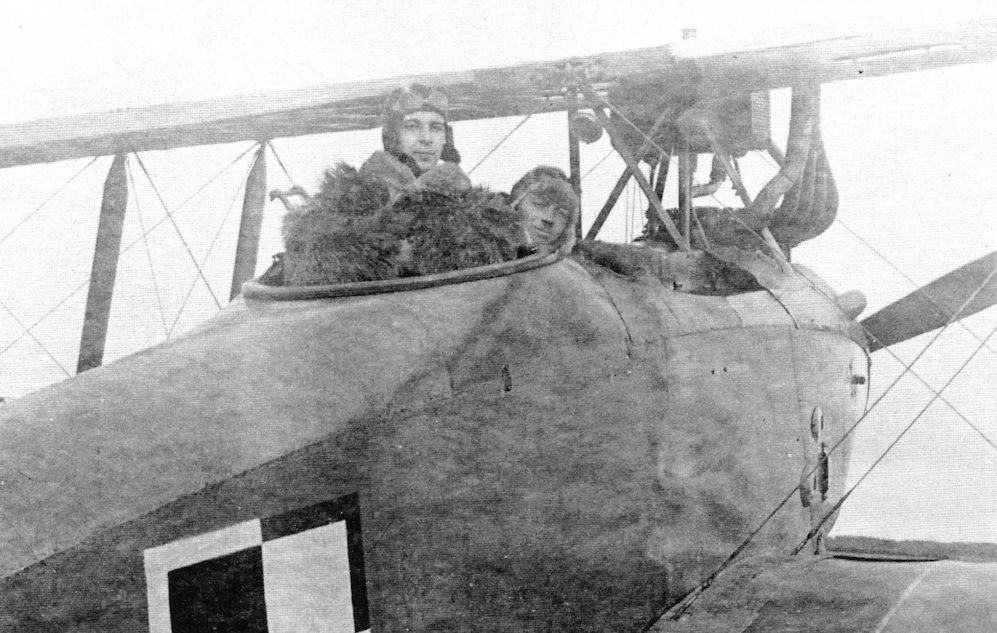
Close-up of the starboard side of Albatros C.XV ("413") fuselage. Like other aircraft of this type in Polish service, it was not armed with a forward-firing LMG 08/15 machine gun. The photo was taken in Lida in early 1921. (Mariusz Konarski)
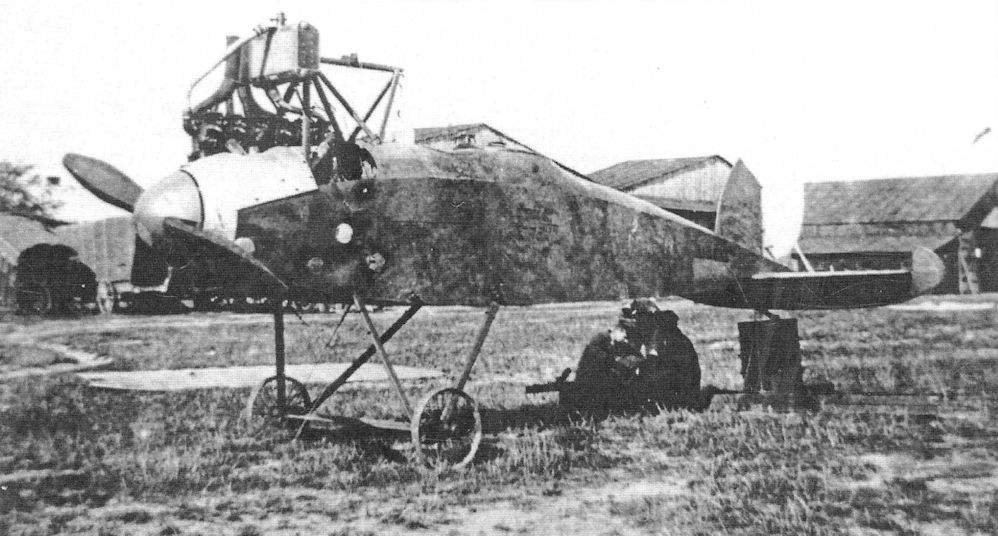
Ground crew of 21. Eskadra Niszczycielska assembling Albatros C.XV ("417") in Ternopil, early October 1920. A factory-applied "Alb. CXV" stencil is visible on the rear fuselage, just above a lighter patch where the original German serial number had been removed. A weight table, listing basic specifications, was painted below the observer's cockpit. The aircraft's paint scheme remains a mystery - it is unclear whether the fuselage was finished in clear-varnished plywood or painted in a camouflage pattern. (The Polish Aviation Museum in Krakow)
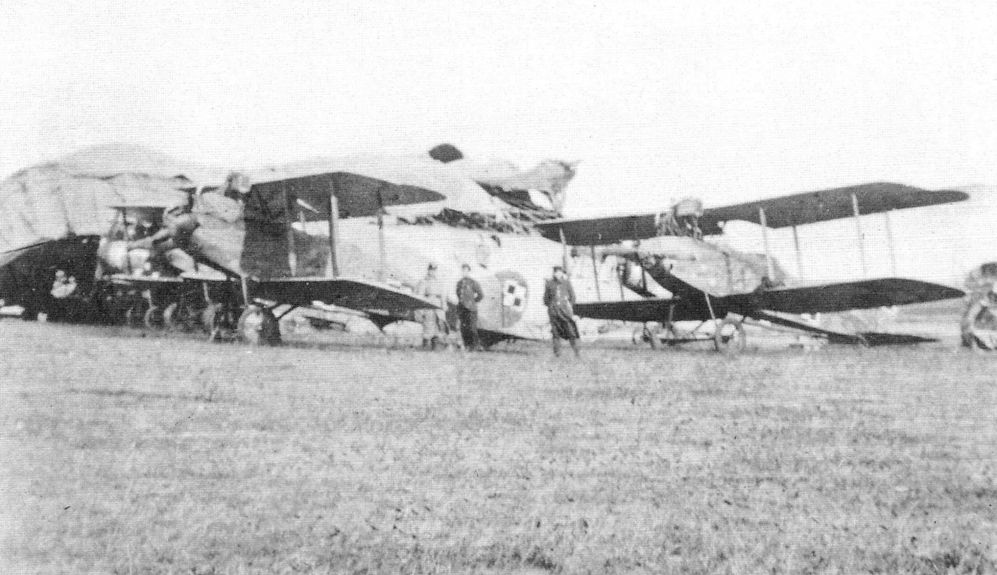
Albatros C.XV aircraft of 21. Eskadra Niszczycielska in Ternopil. On the left is a tent hangar destroyed by a strong gust of wind on 22 January 1921. Among the aircraft housed inside were Albatros C.XV"408", "418", and "422", all of which sustained serious damage. (Tomasz J. Kopanski)
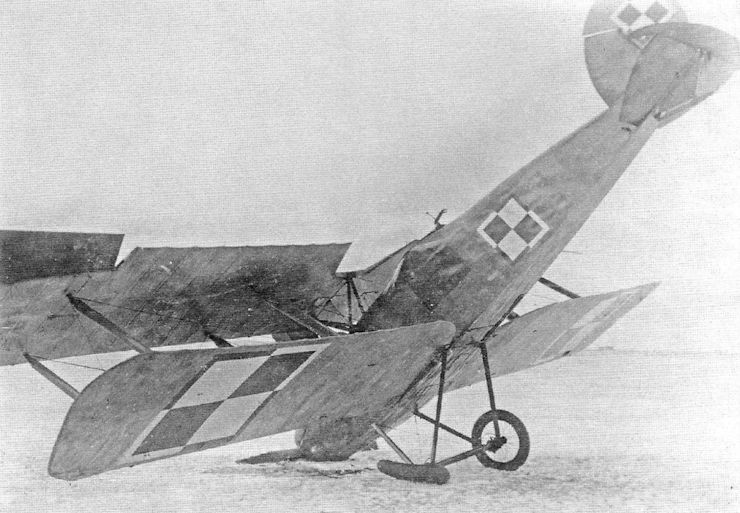
After serving with 8. Eskadra Wywiadowcza, Albatros C.XV ("413") was transferred to 3. Pulk Lotniczy. It remained in use as a trainer until the winter of 1926, when it was damaged in an accident at Lawica. The crew - por. pil. Stanislaw Pawluc and por. obs. Stefan Korcz - escaped uninjured. At the time, the aircraft still carried a slightly modified version of its original factory paint scheme. On the rear fuselage, the original "Alb. CXV" stencil from the production line was still visible, with the number "413" added later. (Tomasz J. Kopanski)
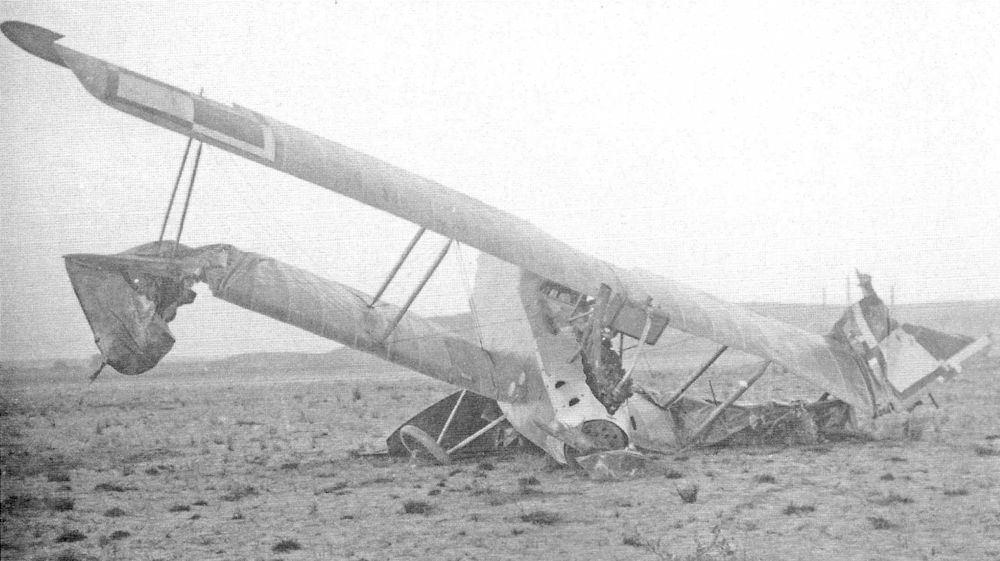
Albatros C.XV ("417") was lost in an accident in Lviv on 1 November 1920. Surviving records indicate that pilots from 15. Eskadra Mysliwska were deemed responsible, though the exact circumstances remain unclear. On the right side of the photograph, traces of the underlying Balkenkreuz marking can be seen around the edges of the Polish checkerboard. (The Polish Aviation Museum in Krakow)
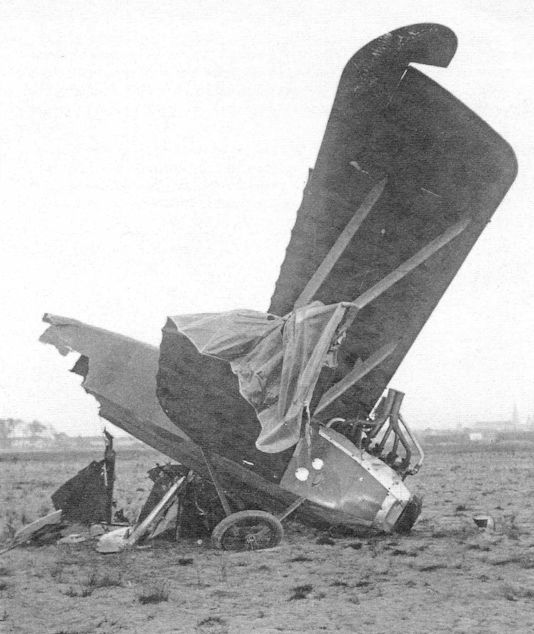
Distinguishing features of Albatros C.XV ("417") included a white rudder - seen here resting on the ground to the left - and an unpainted metal engine cowling and spinner, both left in their natural finish. While this photograph does not provide conclusive evidence of the fuselage paint scheme, it suggests that the aircraft may have been finished in a camouflage pattern rather than clear-varnished plywood. (Wojciech Sankowski)
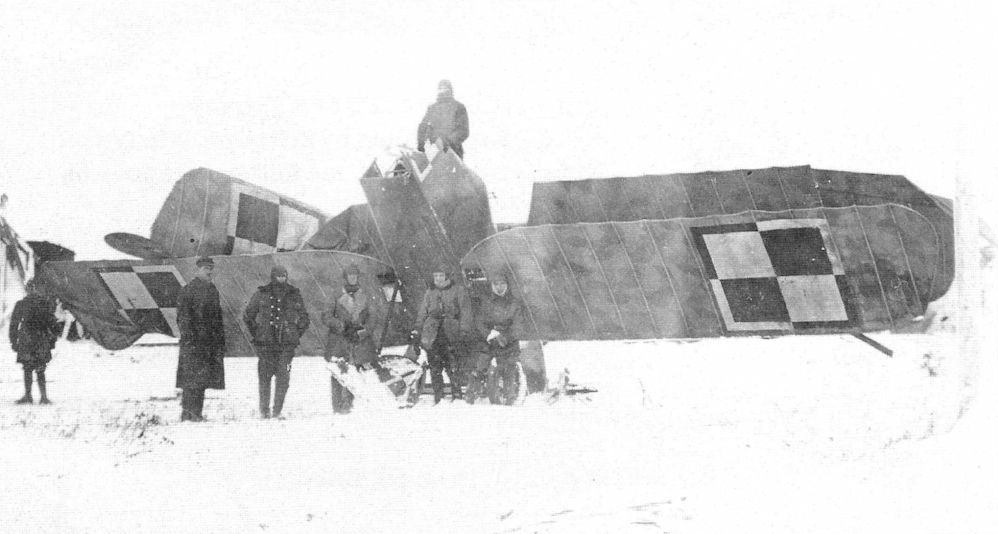
Albatros C.XV ("420") after the accident in Ternopil on 30 January 1921. A strong gust of wind lifted the aircraft into the air, and the resulting impact with the ground broke the fuselage in half and caused severe damage to the wings. Later that same day, it was returned to Lawica and subsequently scrapped. The wings of Polish Albatros C.XV aircraft were covered with printed fabric known as Flugzeugstoff. (The Polish Aviation Museum in Krakow)
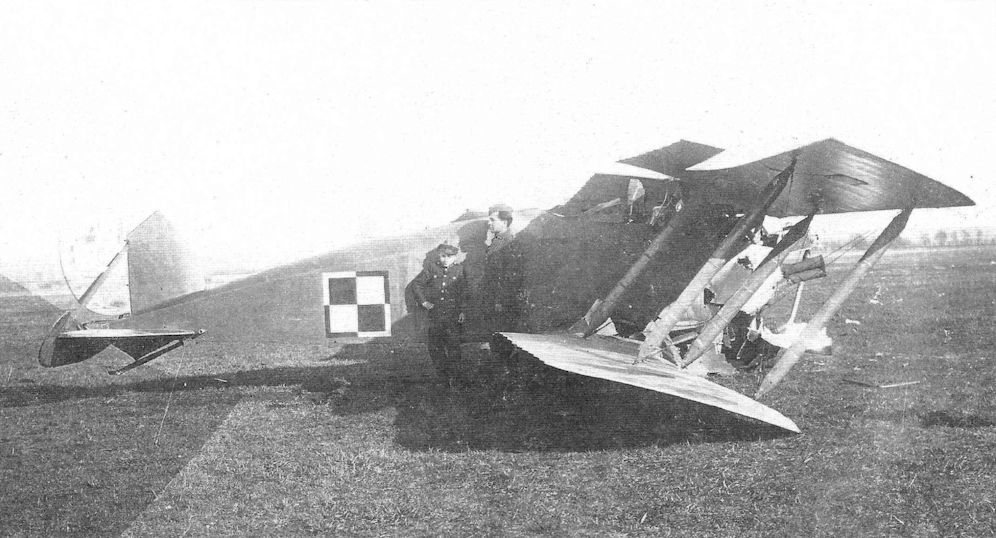
Albatros C.XV "410" was damaged beyond repair in an accident in April 1921. The pilot, pplk pil. Aleksander Serednicki, sustained only minor injuries. Due to different lighting conditions, the fuselage appears noticeably lighter in tone compared to earlier photographs. (The Polish Aviation Museum in Krakow)
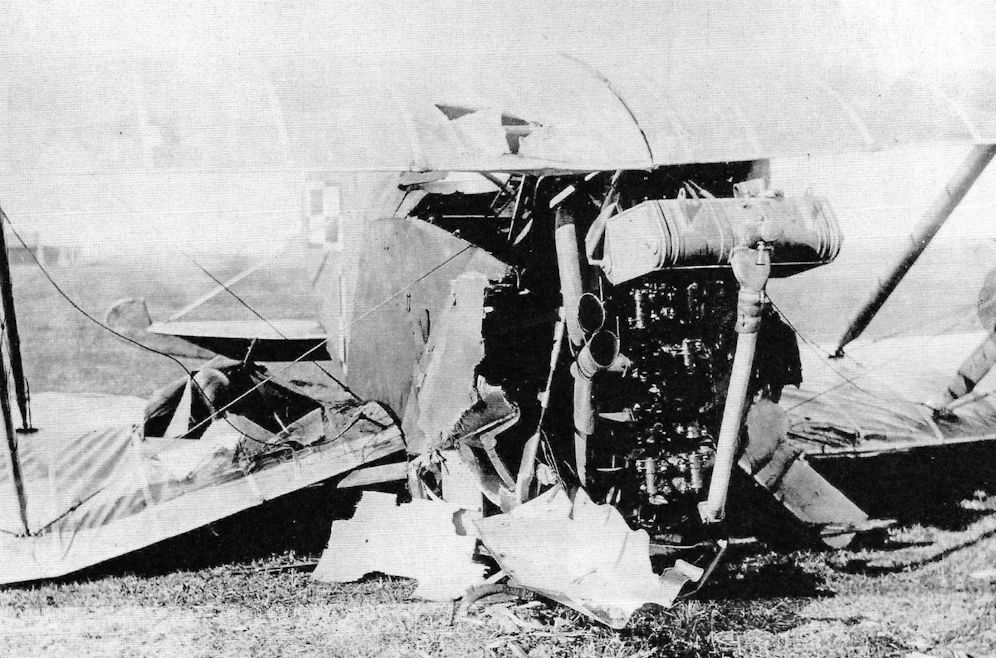
In the spring of 1921, as spare parts for German-built aircraft became increasingly scarce, salvageable components of Albatros C.XV ("410") were carefully recovered and handed over to I Ruchomy Park Lotniczy. Notably, all Albatros C.XV aircraft purchased by Poland were powered by 200 hp Benz Bz.IV engines. (The Polish Aviation Museum in Krakow)
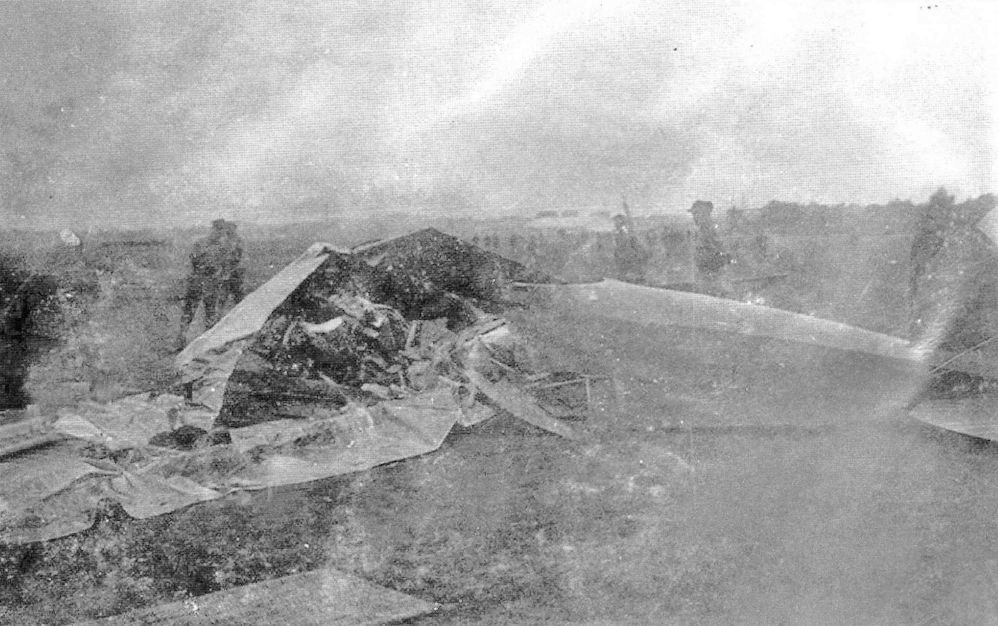
So far, this remains the only known photograph of Albatros C.XV ("409"). The aircraft was lost in a crash on 12 August 1920 in the vicinity of the Warsaw airfield. Both crew members - kpr. pil. Maksymilian Bialogrodzki and plut. obs. Jan Starzynski - were killed. (The Polish Aviation Museum in Krakow)
Students and instructors of the observer school based at Lawica in 1919 gathered for a photo with DFW C.V 485/18. Standing near the spinner with his arms behind his back is the school's commanding officer, ppor. obs. Feliks Gornicki, who had completed his observer training during World War I at Flieger-Beobachterschule Stolp. In the background, deeper inside the hangar, is Albatros J.I 628/18.
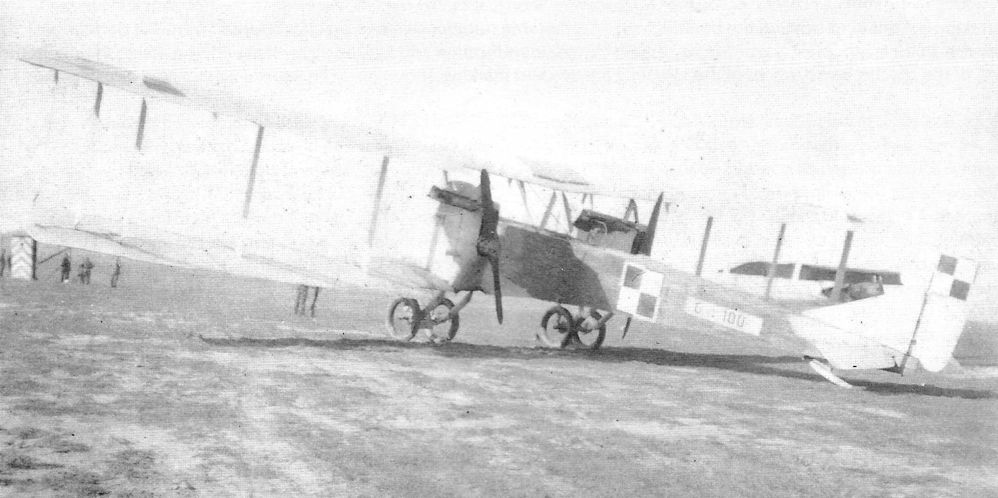
In contrast to the previous image, this photograph was likely intended to provide a wider view of the entire aircraft. Unfortunately, many of the fine details visible earlier are now lost - probably due to poor lighting conditions or the limitations of the photographic techniques available at the time. In the background on the right is Fokker D.VII (OAW) 8430/18. (The Polish Aviation Museum in Krakow)
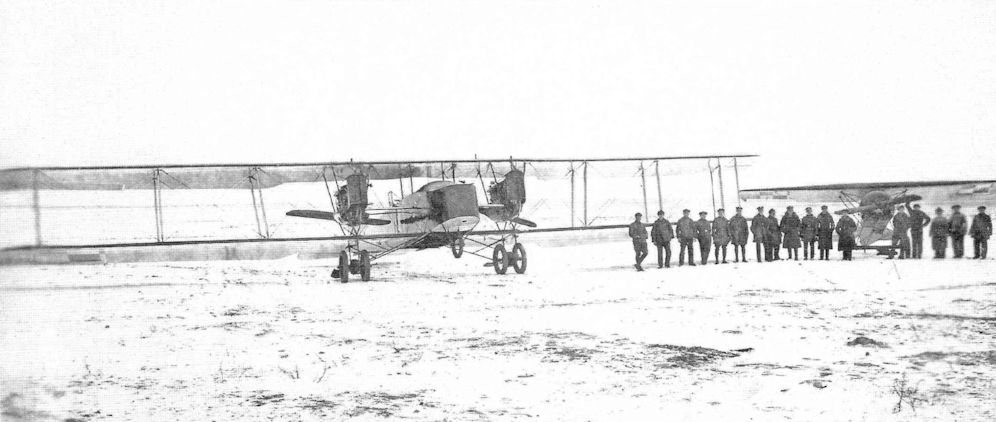
During a photo session held on 4 December 1925, a Fokker E.V 175/18 - still in use at the time for ground crew training - was parked next to Friedrichshafen G.III 506/17, likely to emphasize the bomber's impressive size. (The Polish Aviation Museum in Krakow)
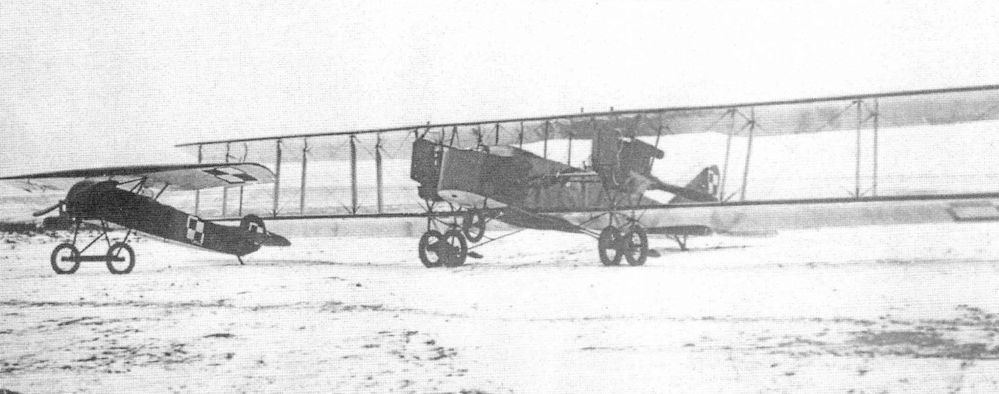
Another photograph of Friedrichshafen G.III 506/17 and Fokker E.V 175/18, taken at Lawica on 4 December 1925. (Fr. Robert Kulczynski SDB)
Chapter 4: The Friedrichshafen G.III
Founded on 17 June 1912, Flugzeugbau Friedrichshafen (FF) initially gained recognition for producing seaplanes for the Imperial German Navy. These aircraft quickly developed a reputation for their reliability and durability, essential qualities for maritime patrol missions. Building on early successes with orders from the Kaiserliche Marine, company director Theodor Kober and chief designer Karl Gehlen began developing a land-based twin-engine combat aircraft: the Friedrichshafen G.I (FF 36). Although only a single prototype was built and it was far from ideal, flight testing in early 1915 yielded promising results. Encouraged by these findings, the German Army aviation inspectorate (Idflieg) placed a production order for an improved version, designated the G.II (FF 38).
The Friedrichshafen G.II was a twin-engine biplane powered by two 200 hp Benz Bz.IV pusher engines. Thanks to these more powerful engines, it could carry up to 150 kg of bombs and was armed with two machine guns. A total of 36 aircraft were built, with several delivered to frontline units.
In July 1916, Kober and Gehlen began work on a more capable version: the Friedrichshafen G.III (FF 45). Their main objective was to increase the bomb load while building upon the proven airframe of the G.II. The wingspan was extended by 4.25 m and fuselage length by 1.73 m. The new aircraft was powered by two 260 hp Mercedes D.IVa engines. As before, the crew consisted of three men: an observer, a pilot, and a gunner. The design also introduced a small nosewheel beneath the forward observer's position to reduce the risk of nose-overs during landings - a frequent cause of bomber losses, especially during night operations.
Although the first production order for 24 aircraft (G.1030-1053/16) was placed in November 1916, Kober - a perfectionist - delayed the type test (Typenprufung) until he was fully satisfied with the aircraft's handling and performance. To improve controllability, ailerons were added to the lower wings. The prototype, G.1030/16, successfully completed trials in March 1917 and was formally approved for operational service on 17 April 1917. The first production aircraft reached frontline units by June 1917.
The Friedrichshafen G.III quickly earned the trust of aircrews. Unlike the Gotha G.IV and other bombers, it remained well-balanced both with and without its bomb load. This was especially important for night operations, when takeoffs and landings were particularly hazardous. The aircraft also featured a robust undercarriage, further enhancing safety during rough-field landings.
As German bomber strategy shifted from day to night raids due to increased Allied defenses, Idflieg prioritized stability, ease of handling, and reliability over speed or maneuverability. Official reports continued to praise the G.III for its solid flying characteristics.
In response to new operational requirements issued by Kogenluft in early 1918 - emphasizing reliability, increased bomb load, and improved flight characteristics - Friedrichshafen engineers began developing an upgraded version of the G.III. A key innovation was the introduction of a biplane tail, known as a Kastensteuer ("box tail"), designed to improve directional control when flying on one engine. Although the problem had been identified earlier, it became especially critical during night missions. In December 1917, Friedrichshafen's engineering department developed two versions of the box tail - one with a central fin and one without. After comparative flight trials concluded in March 1918, the finless configuration was selected for production.
Aircraft fitted with this tail assembly and a range of other improvements received the designation Friedrichshafen G.IIIa (FF 61). These enhancements included a redesigned fuel system and enlarged tanks, enabling flight durations of up to six hours. The standard useful load was increased to 1,500 kg, with a maximum permissible load of 2,100 kg. The landing gear struts were repositioned to allow clearance for larger bombs mounted under the fuselage. A Gotha-style tunnel was also added to improve defensive coverage from the rear. To further ease handling, Flettner servo-tabs were installed on the upper ailerons, reducing control forces and pilot fatigue.
At a bomber conference held by Idflieg on 3 April 1918, the manufacturers were instructed to incorporate the box tail into all G.III airframes then in production. These modifications were gradually implemented, and the first G.IIIa bombers began reaching frontline units in June 1918. By August, the new version had largely supplanted the G.III, with 95 G.IIIa aircraft in service compared to just 24 G.III bombers.
The Polish air service came into possession of two Friedrichshafen G.III bombers, serials 506/17 and 511/17. These had originally been ordered by Idflieg in February 1918. The former was a standard G.III, while the latter featured the box tail and other updates characteristic of the G.IIIa variant. Both were captured in October 1919 after landing in territory controlled by Polish forces. They had been part of a group of nine aircraft leased by the Ukrainian People's Republic from the German airline Deutsche LuftReederei GmbH for courier and diplomatic missions - transporting mail, high-priority cargo, and occasionally passengers.
In September 1920, Friedrichshafen G.IIIa 511/17 was assigned to 21. Eskadra Niszczycielska (21st Bombardment Squadron) and used in combat against Soviet forces. Its most notable mission was a daylight bombing raid on the railway station at Zhmerinka, which caused fires and the destruction of several dozen railcars. The other bomber, G.III 506/17, was later transferred to 3. Pulk Lotniczy (3rd Air Regiment) in Lawica, where it was used as a trainer until at least 28 March 1927 - possibly the last Friedrichshafen aircraft to remain in active service anywhere.
Friedrichshafen G.lIl 506/17
The aircraft was captured on 20 October 1919 after an emergency landing near Deliatyn, about 45 km south of Stanyslaviv (now Ivano-Frankivsk). It was one of nine aircraft leased - along with their crews - by the authorities of the Ukrainian People's Republic from the German airline Deutsche Luft-Reederei GmbH. Upon landing, it was secured and prepared for transport by soldiers of 5. EL. In the following days, it was sent by road to III RPL in Lviv, where repairs began. Work continued for at least four months; however, it was never completed. In April 1920, the aircraft was transferred to Stacja Lotnicza Lawica. Likely as a result of the end of the Polish-Soviet War, it was placed in the airship hangar in Poznan in mid-October 1920 and assigned a new serial number, 354/17.
In July 1922, the bomber underwent a maintenance check and minor repairs. However, it was not returned to active service and remained in storage for the next three years. It was not until late fall 1925 that a full overhaul was carried out, and the bomber was finally returned to flying condition. The functional check flight took place on 4 January 1926, after which the aircraft entered service with 3. Pulk Lotniczy in Lawica. It was used for training at least until March 1927.
Friedrichshafen G.IIIa 511/17
The aircraft was captured following an emergency landing near Uhrynkivtsi, about 50 km north of Chernivtsi. It was one of nine aircraft leased - along with their crews - by the authorities of the Ukrainian People's Republic from the German airline Deutsche Luft-Reederei GmbH. Upon landing, it was secured and prepared for transport by soldiers of 5. EL. On 17 October 1919, it was sent by road to III RPL in Lviv, where repairs began. Although the work continued for at least four months, it was never completed. On 24 April 1920, the aircraft was transferred to Stacja Lotnicza Lawica. It was not restored to flying condition until August 1920, when the leading units of the Red Army were just 160 km from Warsaw.
The fully operational Friedrichshafen G.IIIa 511/17 was assigned to 21. EN. It arrived at the unit on 21 September 1920, as it was beginning to relocate from Deblin to Lviv. In the following weeks, the aircraft took part in the final phase of the Polish-Soviet War. Unfortunately, existing sources allow the reconstruction of only one of its missions:
- 11 October 1920 - Crew: mjr pil. Ludomil Rayski, por. obs. Czeslaw Filipowicz, and kpr. mech. Adam Smigielski. Summary: bombing mission against the railway station in Zhmerinka. A total of 400 kg of bombs were dropped, causing fires and destroying several dozen railcars used to transport Soviet troops.
After the armistice was announced on 12 November 1920, the aircraft was handed over to III RPL. A document prepared two months later noted that the engines had logged 24 hours of operation. In February 1921, the bomber was temporarily placed under the supervision of 6. EW before being returned to III RPL. In early November 1921, it was transported by rail from Lviv to Lawica, where it was scrapped before the end of the year.
Friedrichshafen G.III (D.72)
The aircraft had the German registration D.72 and carried the markings of the Free City of Danzig. It was presumably one of the machines whose existence was being concealed from the Inter-Allied Aviation Control Commission. It had been intended for acquisition by the Ochotnicza Eskadra Lotnicza Aeroklubu Polskiego w Poznaniu (Volunteer Air Squadron of the Polish Aero Club in Poznan). In late August 1920, it flew to the Polish naval air station in Puck (formerly Seeflugstation Putzig), where it underwent an inspection by German mechanics hired specifically for that purpose. On 2 September 1920, it performed a delivery flight to Lawica. It is likely that previously undetected malfunctions emerged either during the flight or upon landing, ultimately leading to the decision not to proceed with the purchase.
At the same time, representatives of the Ministry of Military Affairs had also attempted to acquire the aircraft. The agreed price was 100,000 German marks, payable upon receipt in Warsaw in airworthy condition. The delivery flight was to be carried out by ppor.pil. Ludwik Idzikowski and por. obs. Czeslaw Filipowicz, who described the situation in a report dated 9 September 1920:
I report that we were met in Danzig by por. Souillac, who informed us that the Friedrichshafen was no longer in Puck. The machine was permitted to depart for Danzig by a commission composed of him and por. Willmann, as they had no further instructions regarding the acquisition of this machine for the Polish government. Meanwhile, in Danzig, a private buyer apparently appeared who purchased the aeroplane. In Puck, the station commander, kpt. mar. Kaczynski, informed us that a few days ago, a certain engineer from the Volunteer Squadron arrived with a few Germans. He had authorization to purchase aeroplanes for the mentioned squadron, and after two days of work on the machine by the Germans, the engineer, along with a German pilot and mechanics, departed for Danzig, leaving behind the following receipt: Aircraft Fdh. D.72 IIIa for the Volunteer Squadron in Poznan received. September 2, 1920.'
Friedrichshafen G.IlI Aircraft in Poland
German Serial Number Manufacturer & Model Polish Serial Number Engine Type (Serial Number)
506/17 Friedrichshafen G.III 354/17 2 x Mercedes D.IVa (36684, 38326, 36429, 30215)
511/17 Friedrichshafen G.IIIa - 2 x Mercedes D.IVa (29650,36637, 38166, 27688, 27659,38335)
D.72 Friedrichshafen G.III - 2 x Mercedes D.IVa (no data)
Founded on 17 June 1912, Flugzeugbau Friedrichshafen (FF) initially gained recognition for producing seaplanes for the Imperial German Navy. These aircraft quickly developed a reputation for their reliability and durability, essential qualities for maritime patrol missions. Building on early successes with orders from the Kaiserliche Marine, company director Theodor Kober and chief designer Karl Gehlen began developing a land-based twin-engine combat aircraft: the Friedrichshafen G.I (FF 36). Although only a single prototype was built and it was far from ideal, flight testing in early 1915 yielded promising results. Encouraged by these findings, the German Army aviation inspectorate (Idflieg) placed a production order for an improved version, designated the G.II (FF 38).
The Friedrichshafen G.II was a twin-engine biplane powered by two 200 hp Benz Bz.IV pusher engines. Thanks to these more powerful engines, it could carry up to 150 kg of bombs and was armed with two machine guns. A total of 36 aircraft were built, with several delivered to frontline units.
In July 1916, Kober and Gehlen began work on a more capable version: the Friedrichshafen G.III (FF 45). Their main objective was to increase the bomb load while building upon the proven airframe of the G.II. The wingspan was extended by 4.25 m and fuselage length by 1.73 m. The new aircraft was powered by two 260 hp Mercedes D.IVa engines. As before, the crew consisted of three men: an observer, a pilot, and a gunner. The design also introduced a small nosewheel beneath the forward observer's position to reduce the risk of nose-overs during landings - a frequent cause of bomber losses, especially during night operations.
Although the first production order for 24 aircraft (G.1030-1053/16) was placed in November 1916, Kober - a perfectionist - delayed the type test (Typenprufung) until he was fully satisfied with the aircraft's handling and performance. To improve controllability, ailerons were added to the lower wings. The prototype, G.1030/16, successfully completed trials in March 1917 and was formally approved for operational service on 17 April 1917. The first production aircraft reached frontline units by June 1917.
The Friedrichshafen G.III quickly earned the trust of aircrews. Unlike the Gotha G.IV and other bombers, it remained well-balanced both with and without its bomb load. This was especially important for night operations, when takeoffs and landings were particularly hazardous. The aircraft also featured a robust undercarriage, further enhancing safety during rough-field landings.
As German bomber strategy shifted from day to night raids due to increased Allied defenses, Idflieg prioritized stability, ease of handling, and reliability over speed or maneuverability. Official reports continued to praise the G.III for its solid flying characteristics.
In response to new operational requirements issued by Kogenluft in early 1918 - emphasizing reliability, increased bomb load, and improved flight characteristics - Friedrichshafen engineers began developing an upgraded version of the G.III. A key innovation was the introduction of a biplane tail, known as a Kastensteuer ("box tail"), designed to improve directional control when flying on one engine. Although the problem had been identified earlier, it became especially critical during night missions. In December 1917, Friedrichshafen's engineering department developed two versions of the box tail - one with a central fin and one without. After comparative flight trials concluded in March 1918, the finless configuration was selected for production.
Aircraft fitted with this tail assembly and a range of other improvements received the designation Friedrichshafen G.IIIa (FF 61). These enhancements included a redesigned fuel system and enlarged tanks, enabling flight durations of up to six hours. The standard useful load was increased to 1,500 kg, with a maximum permissible load of 2,100 kg. The landing gear struts were repositioned to allow clearance for larger bombs mounted under the fuselage. A Gotha-style tunnel was also added to improve defensive coverage from the rear. To further ease handling, Flettner servo-tabs were installed on the upper ailerons, reducing control forces and pilot fatigue.
At a bomber conference held by Idflieg on 3 April 1918, the manufacturers were instructed to incorporate the box tail into all G.III airframes then in production. These modifications were gradually implemented, and the first G.IIIa bombers began reaching frontline units in June 1918. By August, the new version had largely supplanted the G.III, with 95 G.IIIa aircraft in service compared to just 24 G.III bombers.
The Polish air service came into possession of two Friedrichshafen G.III bombers, serials 506/17 and 511/17. These had originally been ordered by Idflieg in February 1918. The former was a standard G.III, while the latter featured the box tail and other updates characteristic of the G.IIIa variant. Both were captured in October 1919 after landing in territory controlled by Polish forces. They had been part of a group of nine aircraft leased by the Ukrainian People's Republic from the German airline Deutsche LuftReederei GmbH for courier and diplomatic missions - transporting mail, high-priority cargo, and occasionally passengers.
In September 1920, Friedrichshafen G.IIIa 511/17 was assigned to 21. Eskadra Niszczycielska (21st Bombardment Squadron) and used in combat against Soviet forces. Its most notable mission was a daylight bombing raid on the railway station at Zhmerinka, which caused fires and the destruction of several dozen railcars. The other bomber, G.III 506/17, was later transferred to 3. Pulk Lotniczy (3rd Air Regiment) in Lawica, where it was used as a trainer until at least 28 March 1927 - possibly the last Friedrichshafen aircraft to remain in active service anywhere.
Friedrichshafen G.lIl 506/17
The aircraft was captured on 20 October 1919 after an emergency landing near Deliatyn, about 45 km south of Stanyslaviv (now Ivano-Frankivsk). It was one of nine aircraft leased - along with their crews - by the authorities of the Ukrainian People's Republic from the German airline Deutsche Luft-Reederei GmbH. Upon landing, it was secured and prepared for transport by soldiers of 5. EL. In the following days, it was sent by road to III RPL in Lviv, where repairs began. Work continued for at least four months; however, it was never completed. In April 1920, the aircraft was transferred to Stacja Lotnicza Lawica. Likely as a result of the end of the Polish-Soviet War, it was placed in the airship hangar in Poznan in mid-October 1920 and assigned a new serial number, 354/17.
In July 1922, the bomber underwent a maintenance check and minor repairs. However, it was not returned to active service and remained in storage for the next three years. It was not until late fall 1925 that a full overhaul was carried out, and the bomber was finally returned to flying condition. The functional check flight took place on 4 January 1926, after which the aircraft entered service with 3. Pulk Lotniczy in Lawica. It was used for training at least until March 1927.
Friedrichshafen G.IIIa 511/17
The aircraft was captured following an emergency landing near Uhrynkivtsi, about 50 km north of Chernivtsi. It was one of nine aircraft leased - along with their crews - by the authorities of the Ukrainian People's Republic from the German airline Deutsche Luft-Reederei GmbH. Upon landing, it was secured and prepared for transport by soldiers of 5. EL. On 17 October 1919, it was sent by road to III RPL in Lviv, where repairs began. Although the work continued for at least four months, it was never completed. On 24 April 1920, the aircraft was transferred to Stacja Lotnicza Lawica. It was not restored to flying condition until August 1920, when the leading units of the Red Army were just 160 km from Warsaw.
The fully operational Friedrichshafen G.IIIa 511/17 was assigned to 21. EN. It arrived at the unit on 21 September 1920, as it was beginning to relocate from Deblin to Lviv. In the following weeks, the aircraft took part in the final phase of the Polish-Soviet War. Unfortunately, existing sources allow the reconstruction of only one of its missions:
- 11 October 1920 - Crew: mjr pil. Ludomil Rayski, por. obs. Czeslaw Filipowicz, and kpr. mech. Adam Smigielski. Summary: bombing mission against the railway station in Zhmerinka. A total of 400 kg of bombs were dropped, causing fires and destroying several dozen railcars used to transport Soviet troops.
After the armistice was announced on 12 November 1920, the aircraft was handed over to III RPL. A document prepared two months later noted that the engines had logged 24 hours of operation. In February 1921, the bomber was temporarily placed under the supervision of 6. EW before being returned to III RPL. In early November 1921, it was transported by rail from Lviv to Lawica, where it was scrapped before the end of the year.
Friedrichshafen G.III (D.72)
The aircraft had the German registration D.72 and carried the markings of the Free City of Danzig. It was presumably one of the machines whose existence was being concealed from the Inter-Allied Aviation Control Commission. It had been intended for acquisition by the Ochotnicza Eskadra Lotnicza Aeroklubu Polskiego w Poznaniu (Volunteer Air Squadron of the Polish Aero Club in Poznan). In late August 1920, it flew to the Polish naval air station in Puck (formerly Seeflugstation Putzig), where it underwent an inspection by German mechanics hired specifically for that purpose. On 2 September 1920, it performed a delivery flight to Lawica. It is likely that previously undetected malfunctions emerged either during the flight or upon landing, ultimately leading to the decision not to proceed with the purchase.
At the same time, representatives of the Ministry of Military Affairs had also attempted to acquire the aircraft. The agreed price was 100,000 German marks, payable upon receipt in Warsaw in airworthy condition. The delivery flight was to be carried out by ppor.pil. Ludwik Idzikowski and por. obs. Czeslaw Filipowicz, who described the situation in a report dated 9 September 1920:
I report that we were met in Danzig by por. Souillac, who informed us that the Friedrichshafen was no longer in Puck. The machine was permitted to depart for Danzig by a commission composed of him and por. Willmann, as they had no further instructions regarding the acquisition of this machine for the Polish government. Meanwhile, in Danzig, a private buyer apparently appeared who purchased the aeroplane. In Puck, the station commander, kpt. mar. Kaczynski, informed us that a few days ago, a certain engineer from the Volunteer Squadron arrived with a few Germans. He had authorization to purchase aeroplanes for the mentioned squadron, and after two days of work on the machine by the Germans, the engineer, along with a German pilot and mechanics, departed for Danzig, leaving behind the following receipt: Aircraft Fdh. D.72 IIIa for the Volunteer Squadron in Poznan received. September 2, 1920.'
Friedrichshafen G.IlI Aircraft in Poland
German Serial Number Manufacturer & Model Polish Serial Number Engine Type (Serial Number)
506/17 Friedrichshafen G.III 354/17 2 x Mercedes D.IVa (36684, 38326, 36429, 30215)
511/17 Friedrichshafen G.IIIa - 2 x Mercedes D.IVa (29650,36637, 38166, 27688, 27659,38335)
D.72 Friedrichshafen G.III - 2 x Mercedes D.IVa (no data)
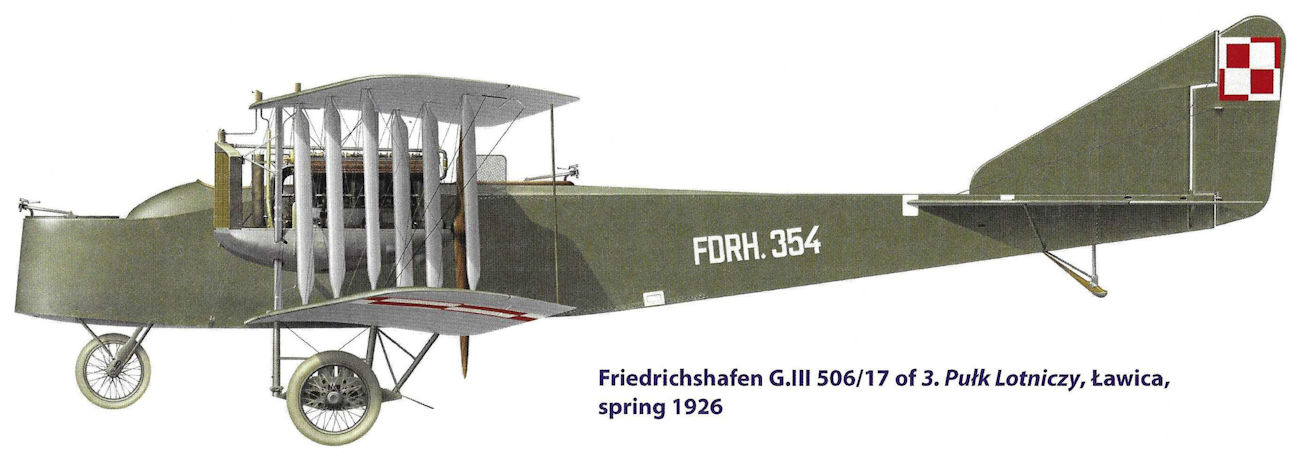
Friedrichshafen G.III 506/17 of 3. Pulk Lotniczy, Lawica, spring 1926
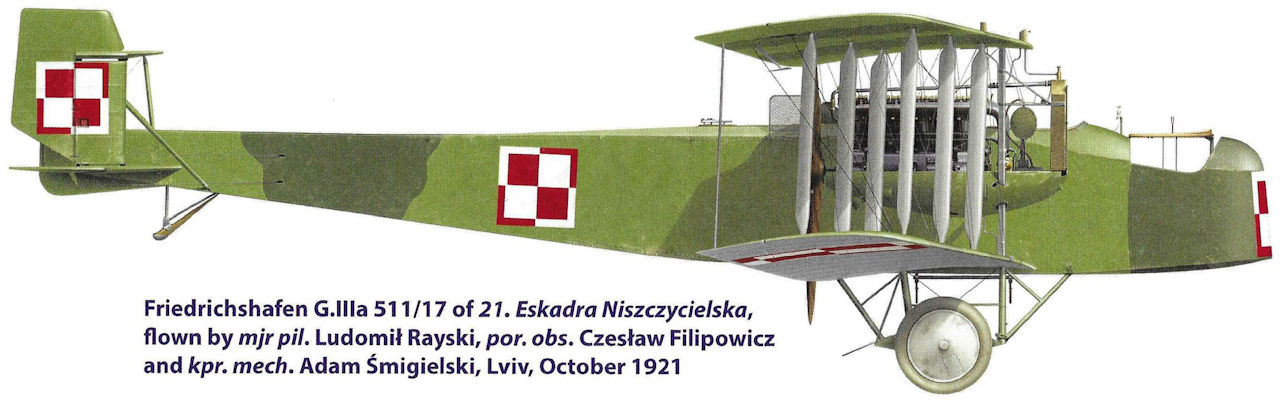
Friedrichshafen G.IIIa 511/17 of 21. Eskadra Niszczycielska, flown by mjr pil. Ludomil Rayski, por. obs. Czeslaw Filipowicz and kpr. mech. Adam Smigielski, Lviv, October 1921
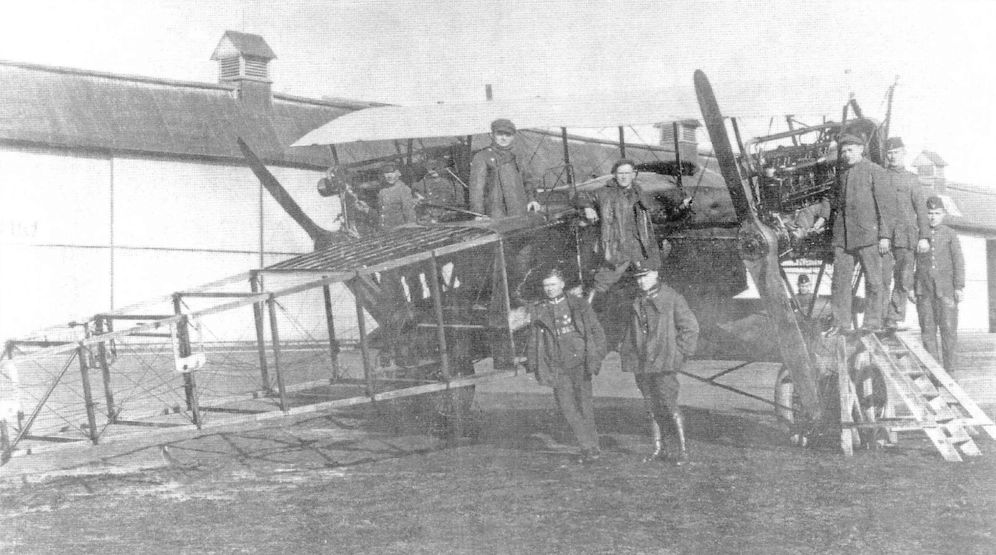
Friedrichshafen G.III 506/17 was captured on 20 October 1919 after making an emergency landing near Deliatyn. Despite initial repair efforts, the aircraft remained grounded for nearly six years. It was not until the fall of 1925 that a full overhaul was completed and the bomber was finally returned to flying condition. This photo, taken at Lawica in late 1925, shows soldiers and civilian personnel of 3. Pulk Lotniczy carrying out major repair work on the aircraft. The forward fuselage was skinned with plywood, while the rear section featured lighter, more easily replaced fabric covering. (The Greater Poland Military Museum in Poznan)
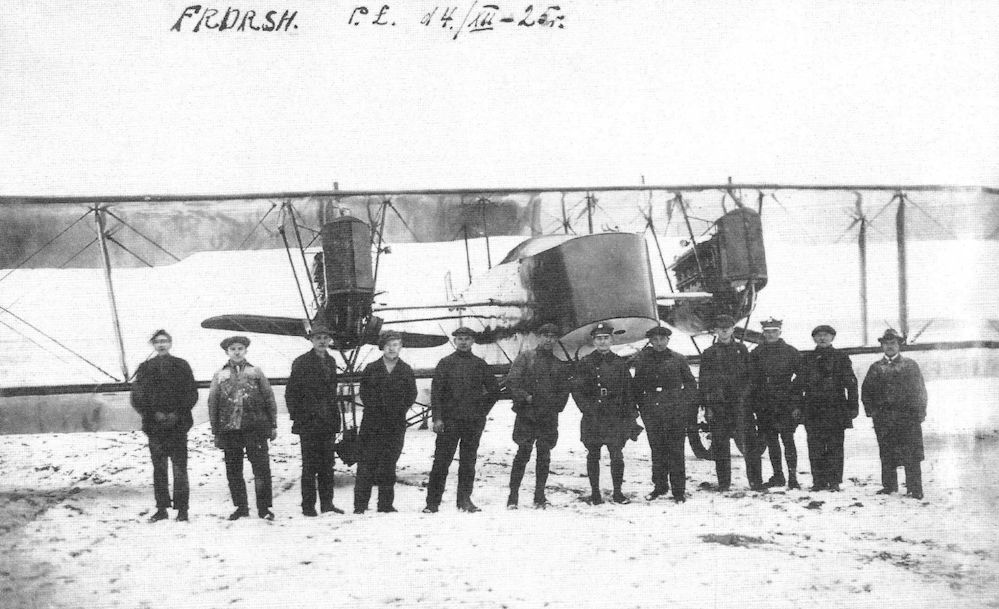
The overhaul of Friedrichshafen G.III 506/17 was completed in early December 1925. The result was widely regarded as a success by the personnel involved. The aircraft appeared factory-new, an impression enhanced by the high-gloss paint finish. Particularly notable in the photo are the Daimler radiators, equipped with adjustable shutters for regulate cooling. (The Polish Aviation Museum in Krakow)
During a photo session held on 4 December 1925, a Fokker E.V 175/18 - still in use at the time for ground crew training - was parked next to Friedrichshafen G.III 506/17, likely to emphasize the bomber's impressive size. (The Polish Aviation Museum in Krakow)
Another photograph of Friedrichshafen G.III 506/17 and Fokker E.V 175/18, taken at Lawica on 4 December 1925. (Fr. Robert Kulczynski SDB)
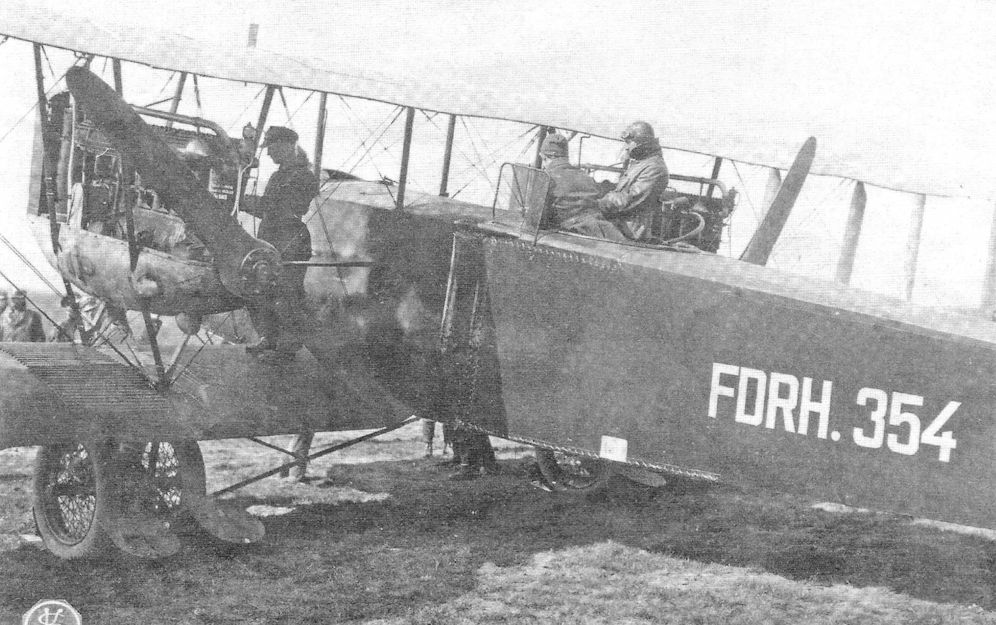
The crew of Friedrichshafen G.III 506/17 and ground personnel preparing the aircraft for flight. Lawica, spring 1926. After the overhaul, a large marking - FDRH.354 - was painted on both sides of the fuselage. Additional stenciled markings were applied to the engine (likely reading: Poznan Lawica remont d. 10.3.25 No. 183 - "Poznan Lawica overhaul, 10 March 1925, No. 183") and to the plywood-covered section of the fuselage (Linja lotu -"Flight line"). (Fr. Robert Kulczynski SDB)
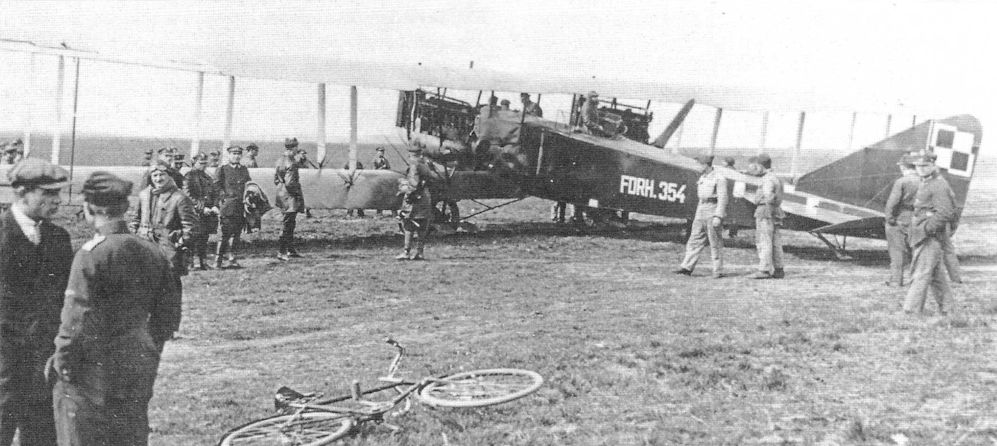
A follow-up view showing continued preparations for flight, including the start-up of the left engine on Friedrichshafen G.III 506/17. Aircraft of this type were considerably easier to fly and safer than other G-type bombers - a factor that likely contributed to the decision to restore this example and use it for training purposes. (Fr. Robert Kulczynski SDB)
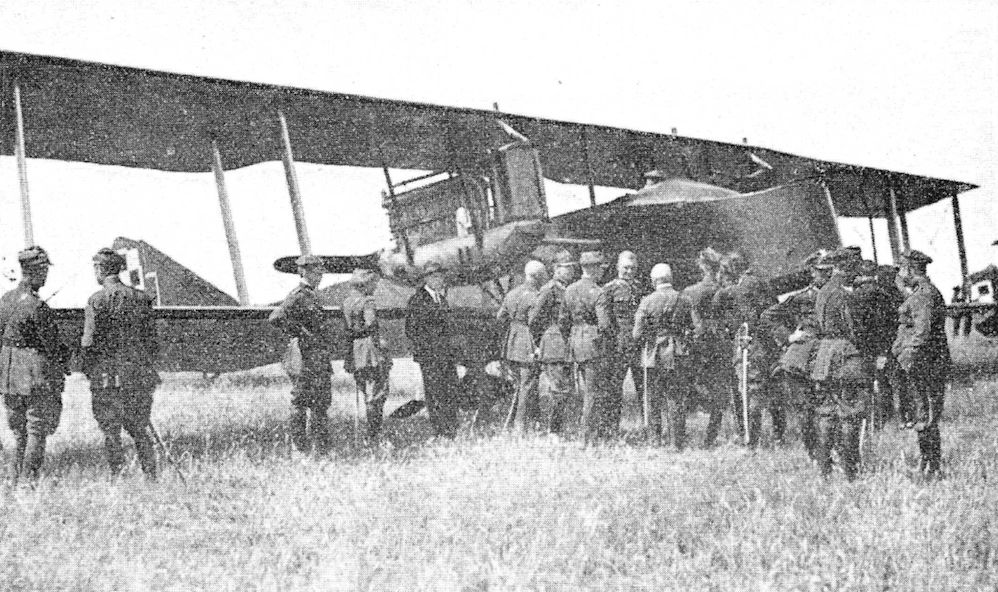
Students of Wyzsza Szkola Wojenna (Higher War School) during a study visit to Lawica in the spring or summer of 1926. Friedrichshafen G.III 506/17 remained in service with 3. Pulk Lotniczy and was used as a trainer until at least 28 March 1927 - quite possibly the last Friedrichshafen bomber still in operational use anywhere. (The Polish Aviation Museum in Krakow)
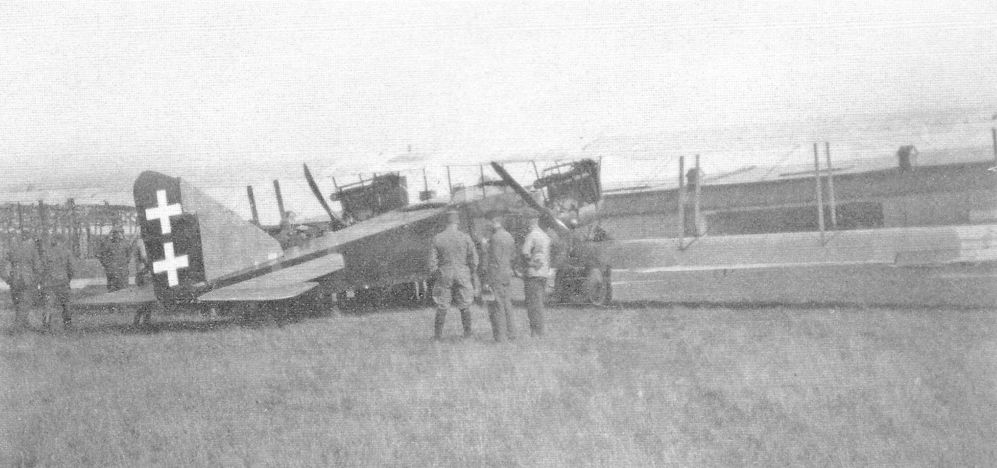
Unaware of one another's efforts, both Ochotnicza Eskadra Lotnicza Aeroklubu Polskiego w Poznaniu (Volunteer Air Squadron of the Polish Aero Club in Poznan) and representatives of the Ministry of Military Affairs attempted to acquire Friedrichshafen G.III (D.72). The ministry offered a price of 100,000 German marks, payable upon receipt in Warsaw in airworthy condition. In the end, however, the aircraft was delivered to Lawica. (Jerzy Butkiewicz)
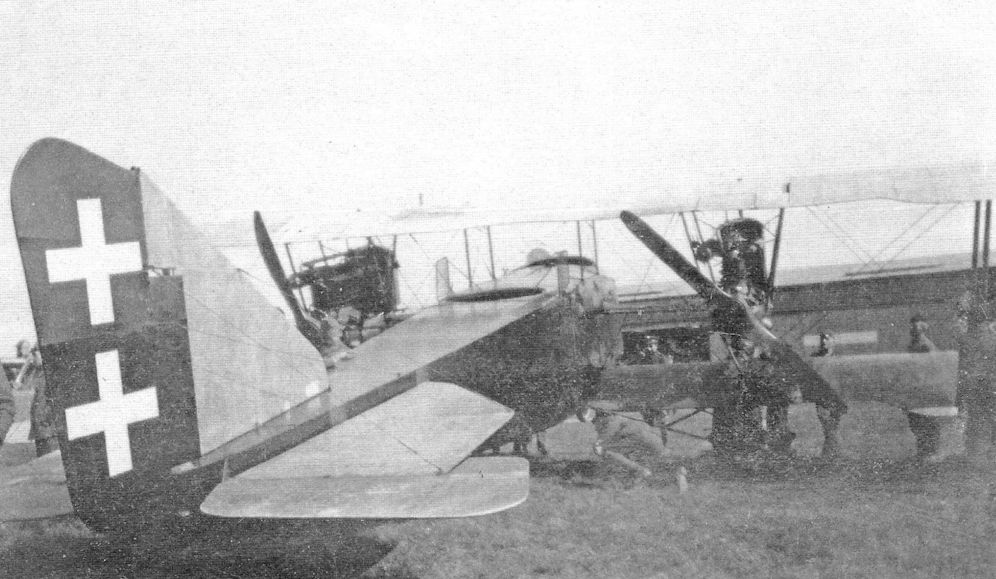
Friedrichshafen G.III (D.72) carried the markings of the Free City of Danzig - two white crosses, one above the other, on a red background, painted on the rudder. It was presumably one of the aircraft whose existence was being concealed from the Inter-Allied Aviation Control Commission. In late August 1920, it flew to the Polish naval air station in Puck, where hired German mechanics carried out an inspection. Following the technical check, it was transferred to Lawica, where this photograph was taken on 2 September 1920, shortly after the completion of its delivery flight. (Jerzy Butkiewicz)
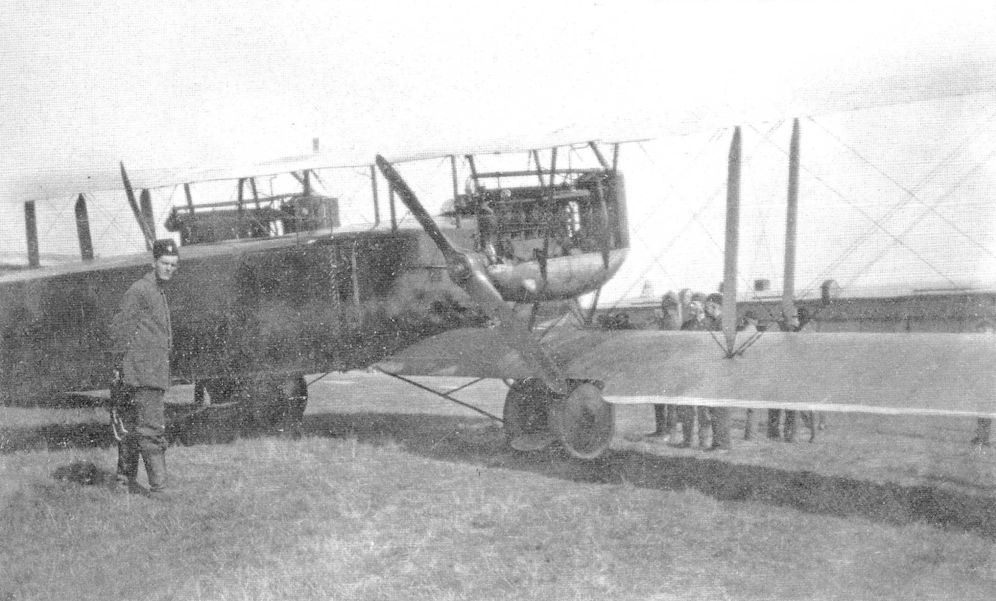
Another photograph of Friedrichshafen G.III (D.72), taken shortly after its landing at Lawica. It is likely that previously undetected malfunctions emerged either during the flight or upon arrival, ultimately leading to the decision not to proceed with the purchase. (Arkadiusz Kalinski)
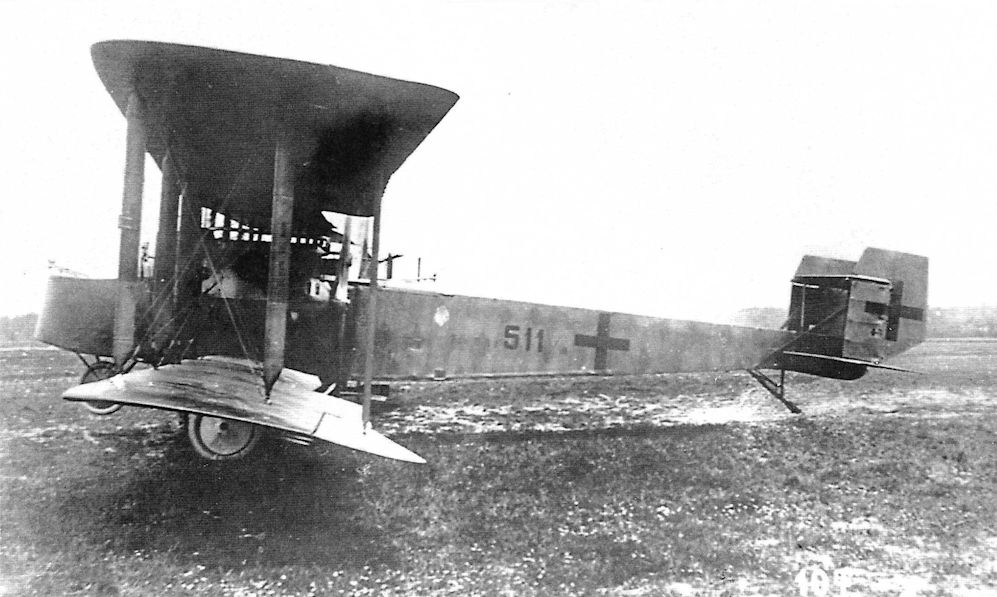
This image lend scale and substance to Friedrichshafen's G IIIa. Operationally deployed for the first time during the spring of 1918, the G IIIa used the same engines as the G III, differing only in the adoption of a biplane tail unit. Production of the 345 G III and G IIIa aircraft was shared between the parent company, Hanseatische and Daimler.
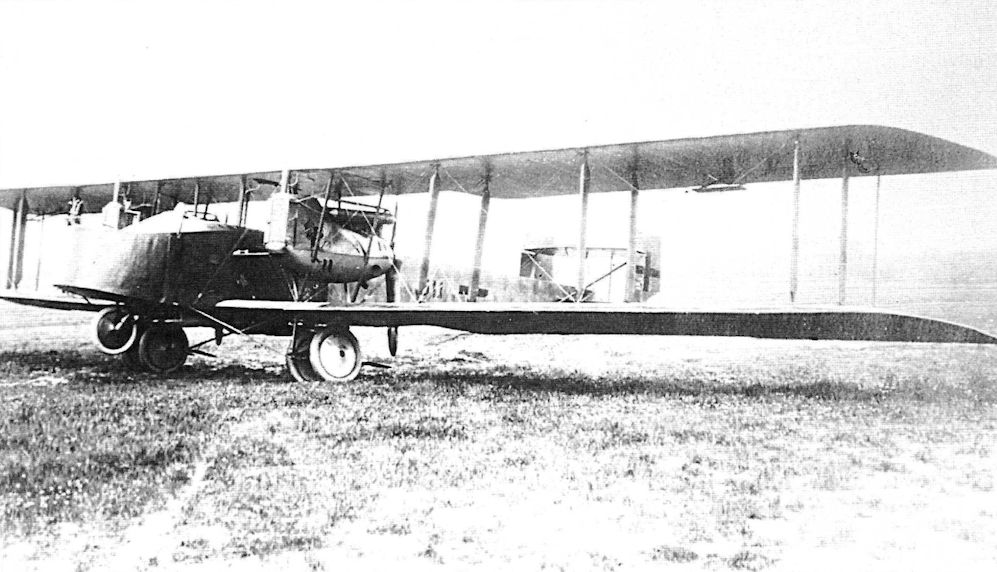
Friedrichshafen G.IIIa 511/17 was part of a production batch ordered from Flugzeugbau Friedrichshafen GmbH in February 1918. Although initially built to the standard G.III specification, it was upgraded during assembly with several features typical of the G.IIIa model, including the box tail (Kastensteuer) and Flettner servo-tabs. Both photographs were taken before the Armistice, while the aircraft was still operated by the German air service. (Jack Herris)
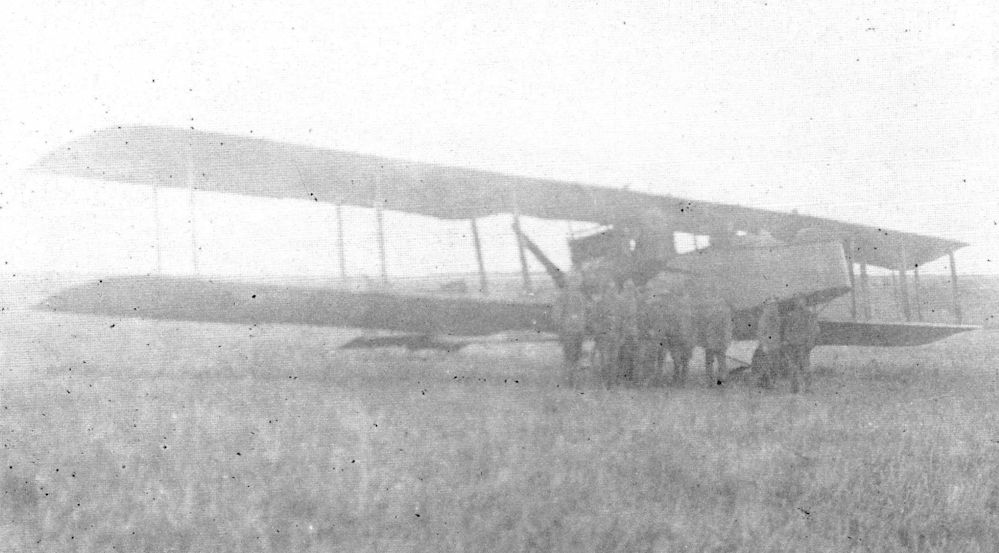
A unique photograph taken shortly after an emergency landing near Uhrynkivtsi and the arrival of soldiers from 5. Eskadra Lotnicza. Friedrichshafen G.IIIa 511/17 was one of nine aircraft leased - along with their crews - by the authorities of the Ukrainian People's Republic from the German airline Deutsche Luft-Reederei GmbH. These aircraft were used for courier and diplomatic missions, including the transport of mail, high-priority cargo, and occasionally passengers. Notably, the modified cockpit allowed for the transport of up to six people. (Tomasz J. Kopanski)
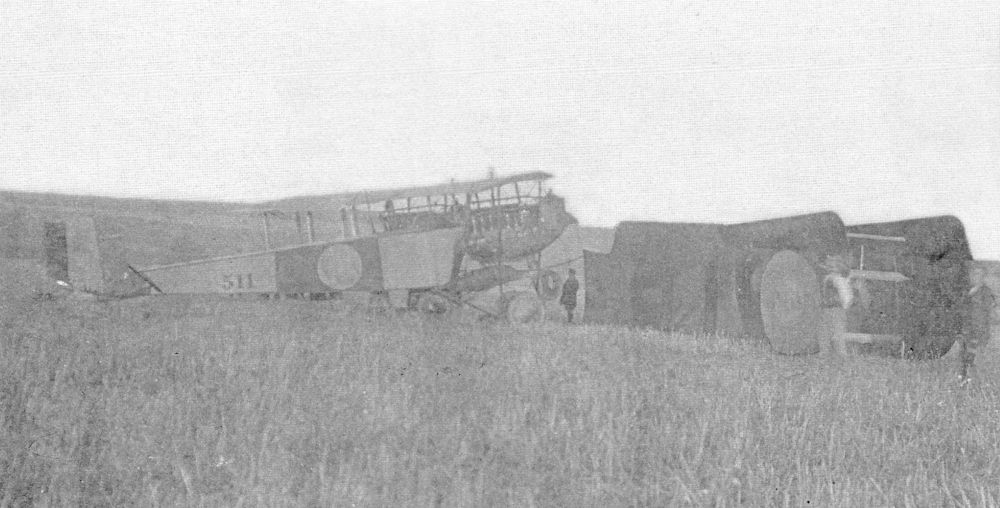
Friedrichshafen G.IIIa 511/17 being disassembled by personnel of 5. Eskadra Lotnicza at the site of its emergency landing. Its prior service with the Ukrainian People's Republic is evidenced by yellow-and-blue roundels and matching stripes on the tail fin. To prevent misidentification and accidental fire over German territory, the original DLR lettering was retained on the wings. (Tomasz J. Kopanski)
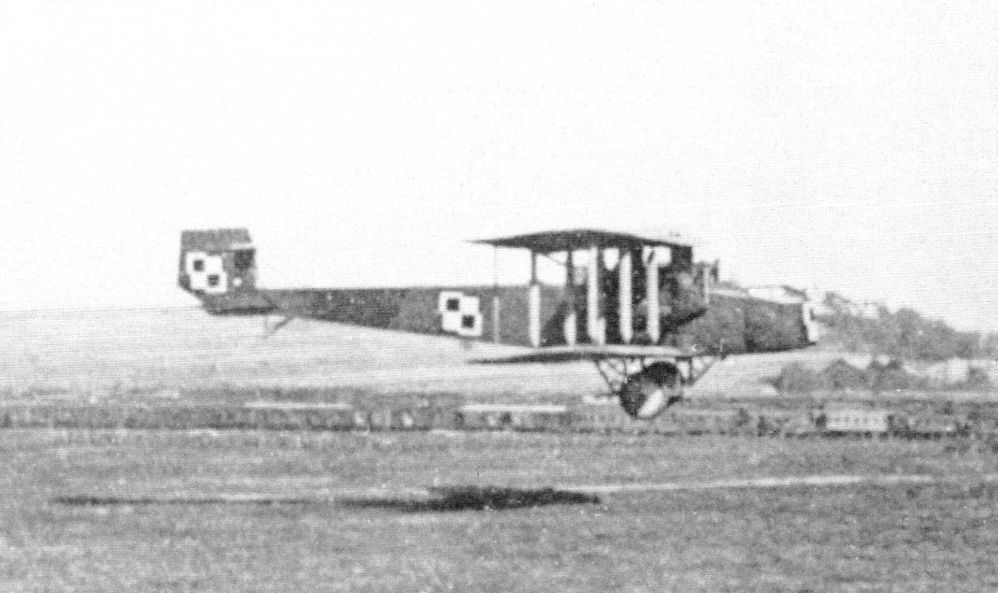
Friedrichshafen G.IIIa 511/17 on final approach to land in Lviv, late September 1920. By that time, the aircraft was no longer equipped with its auxiliary wheel. With no surviving records, it remains unclear whether the wheel was intentionally removed or lost due to damage. (The Polish Aviation Museum in Krakow)
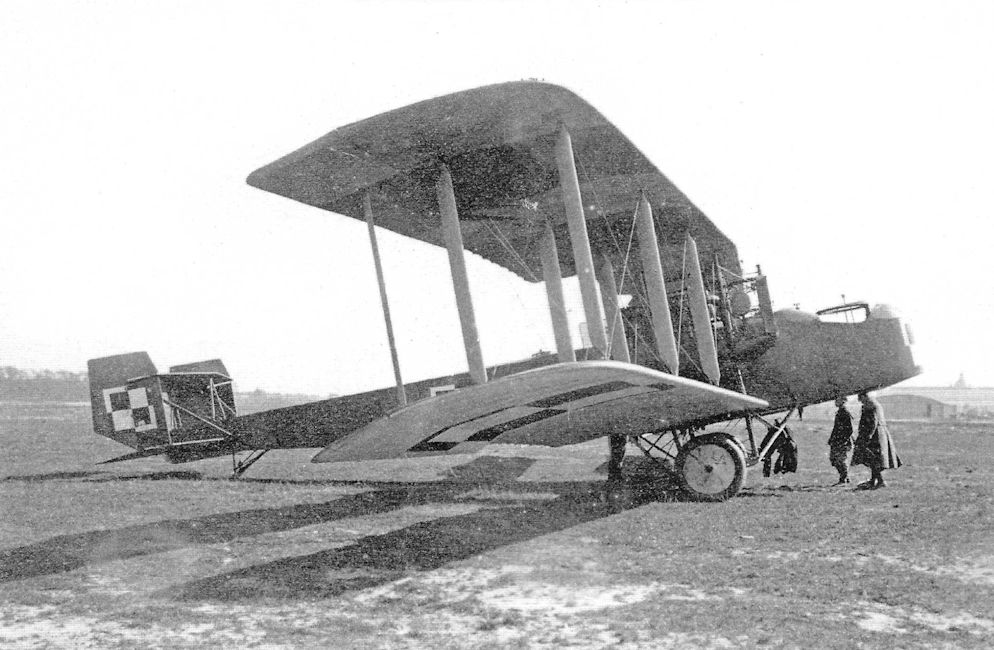
Friedrichshafen G.IIIa 511/17 in Lviv, during the final phase of the Polish-Soviet War. On 11 October 1920, it took part in a bombing mission against the railway station in Zhmerinka. The crew - mjr pil. Ludomił Rayski, por. obs. Czeslaw Filipowicz, and kpr. mech. Adam Smigielski - dropped 400 kg of bombs, starting fires and destroying several dozen railcars transporting Soviet troops. This is another photo that clearly shows the camouflage pattern applied to the underside of the upper wing. (Fr. Robert Kulczynski SDB)
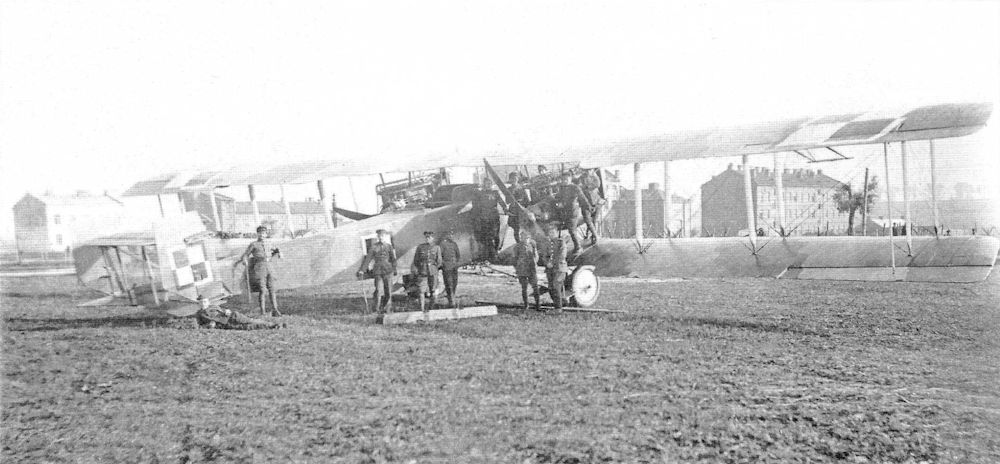
During repairs, Friedrichshafen G.IIIa 511/17 received a new camouflage scheme consisting of irregular stripes in two colors, along with Polish checkerboard markings. A notable detail is the warning inscription - Bacznosc smiglo ("Caution: Propeller") - painted on the propeller guard at the rear gunner's position.The photograph was taken on 21 September 1920 in Deblin, as 21. Eskadra Niszczycielska was redeploying from Lawica to Lviv. (The Cultural Center in Leczna)
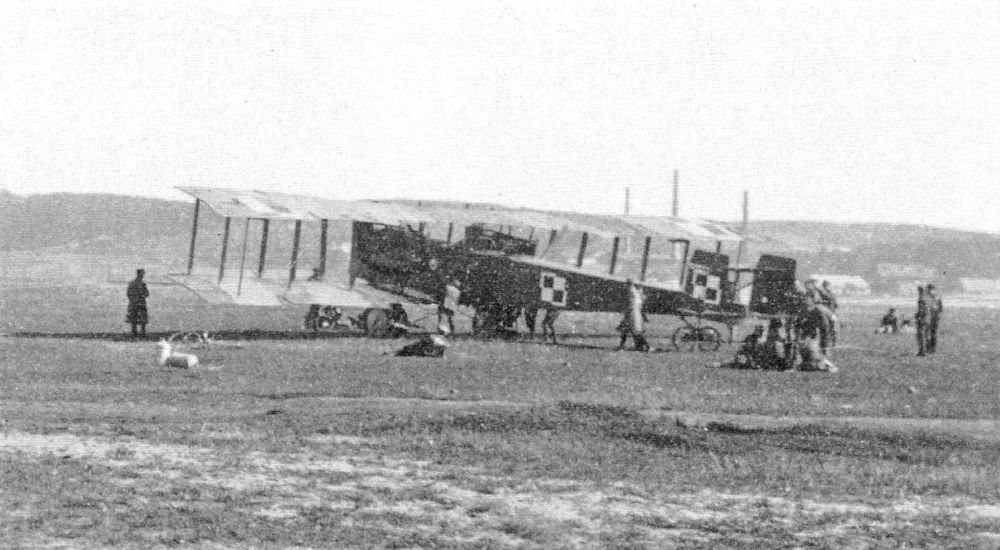
Friedrichshafen G.IIIa 511/17 during preparations for another flight. The tail skid rests on a two-wheeled cart used for ground handling. The photo was taken in Lviv in mid-October 1920. (The Polish Aviation Museum in Krakow)
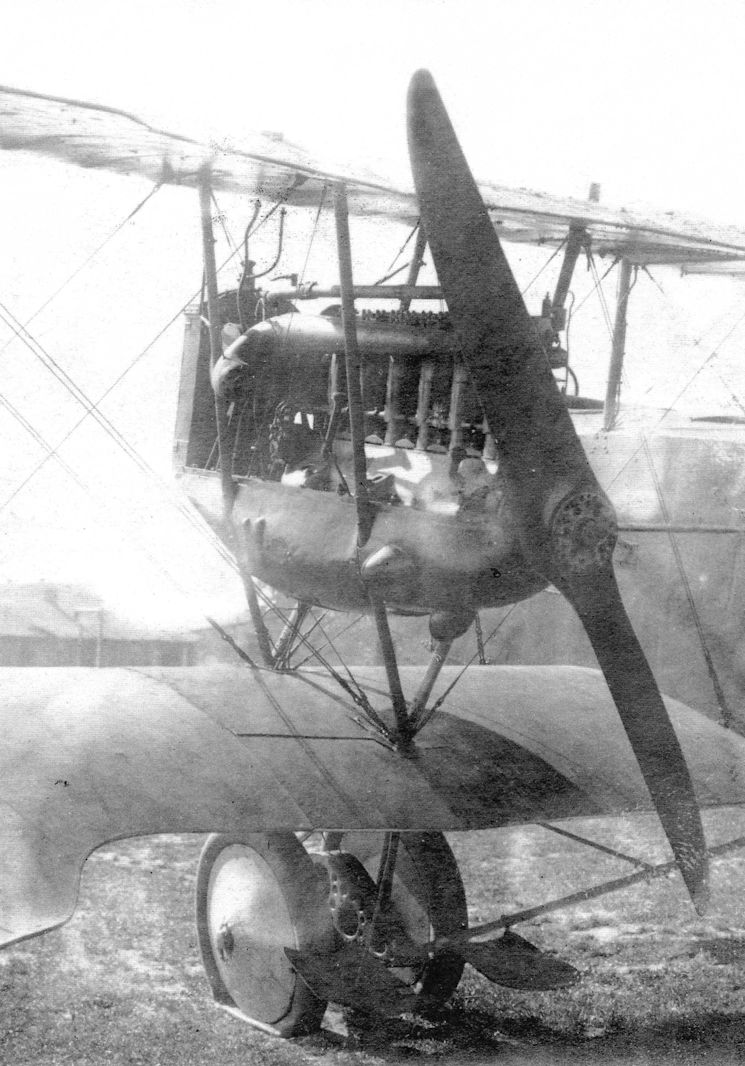
Close-up of the port engine nacelle and undercarriage bogie. While in service with the Polish air service, Friedrichshafen G.IIIa 511/17 was fitted with Mercedes D.IVa engines bearing serial numbers 27659, 27688, 29650, 36637, 38166, and 38335. Unlike Friedrichshafen G.III 506/17, it was equipped with flat - profile radiators lacking adjustable shutters. (The Polish Aviation Museum in Krakow)
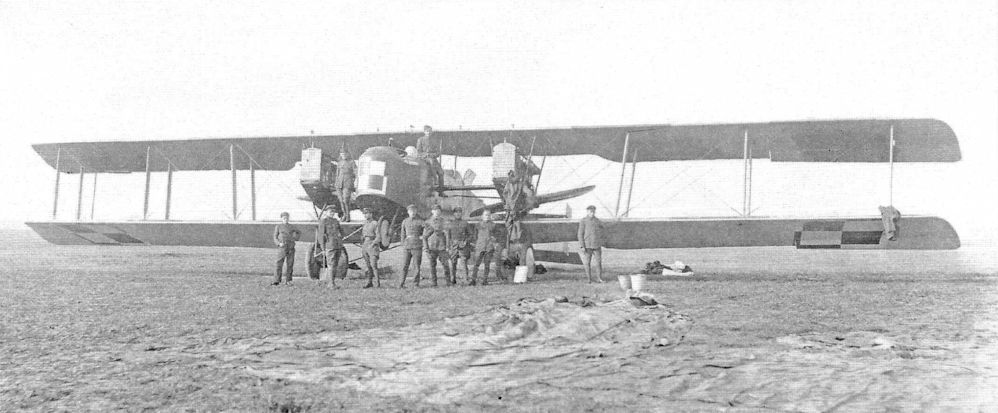
Personnel of 2. Eskadra Wywiadowcza in front of Friedrichshafen G.IIIa 511/17. This photograph leaves little doubt that the aircraft's camouflage - made up of irregular stripes - extended to the underside of the upper wing, which was uncommon among aircraft in Polish service. Also unusual was the placement of a checkerboard marking on the nose. The photo was taken in Deblin on 21 September 1920. (The Cultural Center in Leczna)
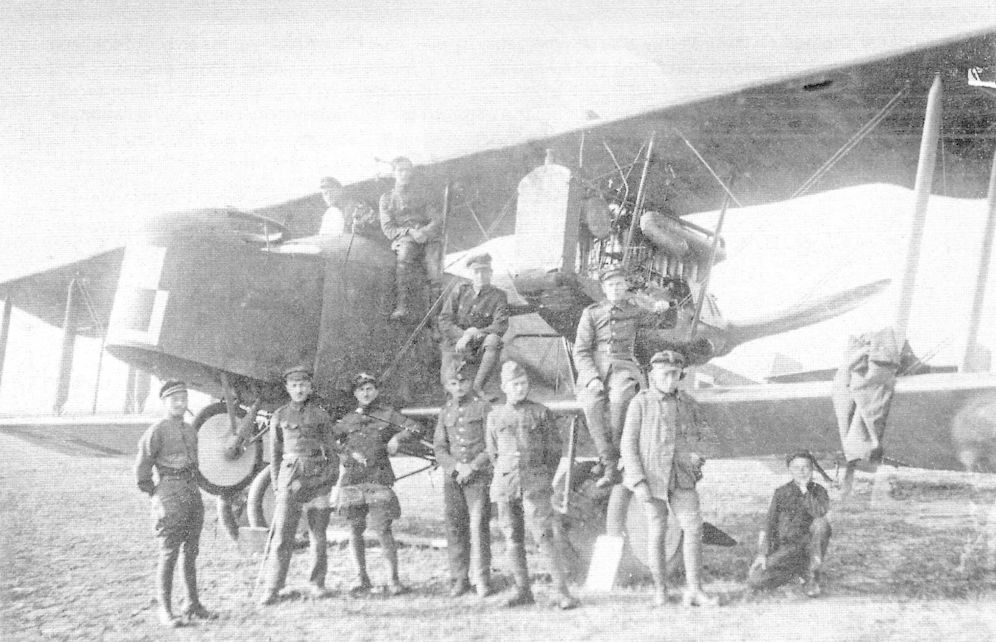
During its service with Deutsche Luft-Reederei GmbH, Friedrichshafen G.IIIa 511/17 underwent a modification to the observer's cockpit. The machine gun ring was removed, and the forward section of the fuselage was raised and faired over, creating a partially enclosed compartment. During an overhaul at Lawica, the cockpit was refitted with an observer's ring salvaged from a Halberstadt Cl.II. The aircraft also retained its auxiliary wheel, designed to prevent the nose from striking the ground during landings. (Fr. Robert Kulczynski SDB)
Chapter 5: The Gotha G.IV
By late 1916, it had become clear to the German High Command that the strategic bombing campaign against Britain using airships had failed to produce the desired results. Zeppelins proved too costly and vulnerable, prompting a change in tactics. The Germans decided to continue their attacks on London and other British cities using heavy bombers instead. To implement this new strategy, the Army required aircraft with sufficient range and payload. One of the manufacturers considered capable of meeting these requirements was Gothaer Waggonfabrik AG. Just a few years earlier, the company had primarily produced trams, but with the outbreak of the war, it had established a well-functioning aviation department that quickly became an important supplier to the German military.
In May 1916, Gothaer Waggonfabrik signed a contract for 25 Gotha G.III bombers. Although these aircraft had impressive payload and range, they lacked the refinement needed for the upcoming strategic bombing campaign. On 16 August 1916, Idflieg placed an order for 52 improved bombers - the Gotha G.IV - making it the first Gotha model to be ordered in large numbers.
The G.IV was essentially an improved version of the G.III. It was a twin-engine biplane with a mixed-construction airframe and a plywood-covered fuselage. Powered by two 260 hp Mercedes D.IVa engines, the bomber had a crew of three: an observer, a pilot, and a gunner. The aircraft could reach speeds of up to 140 km/h and had a range of 700 km. It could carry up to 500 kg of bombs, mounted on racks beneath the nose and the center section of the wing. For better maneuverability, it featured additional ailerons on the lower wings, connected by actuating struts to those on the upper wing. One key innovation was the introduction of the Gotha tunnel - a cut-out section in the rear fuselage that allowed the gunner to fire downward at attacking aircraft.
Frontline testing of the G.IV began in November 1916. It soon became clear that, even with a full fuel load, the aircraft could not reach London and return. To address this, a second gravity fuel tank was added on the upper wing, increasing operational range. The aircraft received positive reviews but also had notable shortcomings - chiefly its stability. While it handled well when fully loaded, it became tail-heavy after dropping bombs and consuming fuel. Landings in windy conditions were especially hazardous. The Gotha G.IV made its combat debut over Britain on 25 May 1917. Initially, raids were conducted in daylight, but mounting losses forced a switch to night operations beginning on the night of 3-4 September 1917.
By the end of August 1918, a total of 272 Gotha G.IV bombers had been delivered. The earliest production aircraft came from the Gothaer Waggonfabrik factory. In December 1916, Idflieg signed a contract with Luft-Verkehrs-Gesellschaft mbH (LVG) for the licensed production of 50 aircraft. In August 1917, the order was expanded to include an additional 50. Moreover, the LVG factory delivered 40 G.IV bombers intended for the Austro-Hungarian air service.
Licensed production was also undertaken by Siemens-Schuckertwerke GmbH (SSW). The first batch of 40 Gothas (1055/16 - 1094/16) was ordered in December 1916 and delivered to frontline and training units between July 1917 and February 1918. In May 1917, Idflieg placed an order for another 40 aircraft (200/17 - 239/17), which were assigned to training units; deliveries took place between December 1917 and August 1918. Some of these aircraft were later used for experimental purposes.
The Polish air service came into possession of one Gotha G.III bomber, which was handed over by the Allies in early 1921 as part of war reparations. Since it arrived damaged and incomplete, no attempt was made to return it to flying condition. The Poles also captured four Gotha G.IV bombers. Two were seized in early January 1919 after German crews landed in areas controlled by Polish troops. Only one was considered fit for further use: Gotha G.IV (SSW) 213/17. It was later assigned to 21. Eskadra Niszczycielska (21st Bombardment Squadron), which, operating out of Lviv, took part in combat against the Red Army. Its missions primarily consisted of daylight bombing runs against railway stations, Soviet armored trains, and cavalry positions. These attacks proved surprisingly effective and offered valuable support to Polish troops. On a typical mission, the aircraft carried six or seven 50-kg bombs and a Schwarzlose M.07/12 machine gun.
The second bomber captured during the uprising was badly damaged during a failed takeoff attempt, as its German crew tried to escape after mistakenly landing in Polish-controlled territory. Since repairs were not possible, its engines were salvaged and later installed in other aircraft. In December 1919, Polish forces also recovered an Austro-Hungarian Gotha G.IV (LVG) 08.21 near Przemysl, but the extent of the damage made it suitable only for scrapping. The fourth Gotha G.IV was delivered to Poland in January 1921 as part of war reparations. In July 1922, it was overhauled by the personnel from 3. Pulk Lotniczy (3rd Air Regiment) and subsequently disassembled. Parts of the aircraft survived as museum exhibits until World War II, when they were completely destroyed.
One more Gotha G.IV could have entered Polish service. Like the aircraft with serial number 213/17, it took part in the 6 January 1919 supply operation for German troops preparing to defend Fliegerstation Posen. Just before landing, the crew realized the airfield had been seized by Polish insurgents and turned west. After flying approximately 100 km, the aircraft suffered engine trouble and was forced to make an emergency landing in no man's land near Sokola Dabrowa (then Falkenwalde). Lacking clear information on the positions of friendly forces, the crew set the bomber on fire and began their return to Frankfurt (Oder).
Gotha G.IIl 391/16
The aircraft was handed over by the Allies asas part of war reparations. It arrived in Poland by sea and was stored at the Lawica depots from January 1921. Due to its overall poor state, it was not returned to flying condition. The Polish acceptance commission reported: it has two Mercedes 260 hp engines, No. 28330 and 28430. Missing: interplane struts, bracing wire, slides, horizontal stabilizer, rudder, Cellon windshield, seat cushions, side fuel tank, pressure gauge, propellers, tailfin, elevator, pilot's seat, observer's seatbelt, compass, fuel pump, gravity fuel tank, starter, and oil level gauge. The upper wing lower ailerons, and control cables are damaged. The engines are missing two magnetos and two contact breakers. The landing gear is damaged.
Gotha G.IV (SSW) 213/17
The aircraft was captured on 6 January 1919 after an emergency landing in Lewice, about 65 km west of Poznan, near the estate of Baron Albert von Haza-Radlitz. It belonged to a German bomber unit stationed in Frankfurt (Oder). During a mission that ended with a landing in territory controlled by Polish forces, it was carrying supplies for soldiers preparing to defend Fliegerstation Posen. Just before touchdown, the crew realized that the Poles had taken control of the station and immediately turned back. However, the aircraft suffered an engine failure shortly thereafter, preventing it from continuing its mission. The commanding officer of the Polish insurgent battalion, Count Stanislaw Lacki, recalled:
On 6 January 1919, at 2:30 p.m., an aeroplane flew over Posadowo. Judging by its low altitude, I thought it had suffered a malfunction, so I followed it by car, took two wagons with soldiers from Lwowek, six mounted men, and arrived shortly after it landed. [...] Baron Haza-Radlitz reached the aeroplane at the time of its landing, took the machine gun, grenades, and several thousand rounds of ammunition. When this was was confirmed in writing by the non-commissioned officer piloting the aeroplane, I sent 12 soldiers by wagon and four on horseback to Lewice, located about a kilometer from the site, with orders to arrest Baron Haza-Radlitz. He allowed himself to be arrested, even though his palace was guarded by 20 soldiers.
The three-man crew was taken prisoner and subsequently transported, along with Albert von Haza-Radlitz, to the citadel in Poznan, where a temporary prison held three German airmen who had been captured earlier. On the night of 12-13 January, prisoner Kuhn attacked the Polish sentry guarding the group. The surprised soldier managed to fire a single shot at the attacker. The other prisoners then joined the fray. Shortly after, two more sentries arrived and opened fire. As a result, all six airmen and the baron who had assisted them were killed. Because the details of the incident were initially unclear, the Polish soldiers were brought to justice. They were charged with using excessive force, exceeding the limits of self-defense, and even murder. Ultimately, based on the evidence, the military court concluded that their actions were justified and they were found not guilty. It was determined that:
The Polish soldiers performed only a sad but necessary duty. The victims of this regrettable incident, as soldiers, should have known the danger they were exposing themselves to by actively resisting the guards.Attacking the sentries is an act that categorically requires the use of deadly force.
The aircraft was initially transported by road to the airship hangar in Poznan. It was later moved to the workshops at Lawica, where repairs began on 26 May 1919. At that time, it was assigned the serial number 100/17. Its first flight took place in early July 1919, with kpr. pil. Adam Ziemer and ppor. obs. Stefan Korcz as crew. The bomber remained in flying condition at least until 22 September 1919. It returned to the workshops between October 1919 and late February 1920, likely for additional maintenance.
On 20 April 1920, the bomber joined the newly formed 21. EN in Lawica. On 13 May, the unit arrived in Rakhny-Lisovi, about 50 km south of Vinnytsia, and was placed under the command of III DL. Soon after, Gotha G.IV (SSW) 213/17 took part in combat against Soviet forces. Surviving records provide details on eight of its combat missions:
- 20 May 1920 - Crew: por. pil. Ludomil Rayski and por. obs. Czeslaw Filipowicz. Summary: bombing mission against two armored trains at the railway station in Kryzhopil. As a result of the attack, they retreated to Rudnytsia, about 15 km to the southeast.
- 24 May 1920 - Crew: por. pil. Ludomil Rayski and por. obs. Czeslaw Filipowicz. Summary: bombing mission against armored trains on the Kryzhopil-Popeliukhy railway line and support for friendly troops advancing in the Zhabokrych-Kryklyvets' area. According to reports from the time, other aircraft from III DL also participated in this mission:
On 24 May 1920, at 6:00 a.m., a formation of nine aircraft under the command of kpt. Bastyr carried out multiple bombing attacks on enemy armored trains, landing in Vapniarka to rearm and refuel. A total of 800 kg of bombs were dropped, several of which hit the railway tracks but missed the trains due to strong winds. The enemy's armored trains were forced to move back and forth continuously along the track to avoid air attacks.
- 27 May 1920 - Takeoff: 5:00. Crew: por. pil. Ludomil Rayski and por. obs. Czeslaw Filipowicz. Summary: bombing mission against armored trains at the railway station in Rudnytsia.
- 27 May 1920 - Crew: por. pil. Ludomil Rayski and por. obs. Czeslaw Filipowicz. Takeoff: 7:45, landing: 9:25. Summary: bombing mission against the railway station in Rudnytsia. Six 50-kg bombs were dropped in the target area. At the time of the attack, a freight train consisting of a locomotive and 20 cars was stationed there, while another train was heading toward Popeliukhy. This mission was part of a full-day operation conducted by III DL. After the operation, the Chief of the Air Service of the 6th Army reported:
On 27 May at 5:00 a.m., eleven aircraft, including the Gotha, under the command of kpt. Bastyr, began bombing the Malevannaya station [Rudnytsia - author's note]. Three railway tracks were damaged. The intensive bombing of Malevannaya station and the Kryzhopil-Popeliukhy railway line continued until 11:30 a.m. A freight train and a passenger train stationed at Malevannaya sustained partial damage. From 11:30 a.m. to 7:00 p.m., two aircraft continuously attacked enemy armored trains and retreating infantry with bombs and machinegun fire. The bombing destroyed a boxcar from an armored train, along with several freight and passenger cars at Malevannaya station. Horses belonging to supply columns retreating from Popeliukhy to Malevannaya,from Dmytrashkivka to Studena, and from Khrestyshche to Pishchanka were killed. A detailed reconnaissance behind enemy lines was carried out. A total of 40 combat missions were flown, including six formation flights under kpt. Bastyr's command. Altogether, 2,350 kg of bombs were dropped: 1,950 kg on armored trains and Malevannaya station, and 400 kg on infantry retreating from Dmytrashkivka toward Studena. The vigorous action of III Dywizjon, under the courageous and committed leadership of kpt. Bastyr, helped the units of the 12. Dywizja Piechoty (12th Infantry Division) to overcome enemy resistance and capture two armored trains, Bela Kun' and 'Krasny Krestyanin'. III Dywizjon Lotniczy demonstrated exceptional combat effectiveness in this operation. Particular commendation is due to kpt. Bastyr, por. Kubala, por. Bolestaw Lepszy (who sustained a head wound), por. Hendricks, and ppor. Bilazewski. Casualties: one officer wounded; four aircraft lightly damaged by enemy fire.
- 28 May 1920 - Crew: por. pil. Ludomil Rayski and por. obs. Czeslaw Filipowicz. Summary: bombing mission against enemy positions.
- 29 May 1920 - Takeoff: 6:00. Crew: por. pil. Ludomil Rayski and por. obs. Czeslaw Filipowicz. Summary: bombing mission against armored trains. Due to a misidentification of the target, the crew dropped bombs on the Polish armored train "General Iwaszkiewicz," but no damage was inflicted. The aircraft then attacked the railway station in Rudnytsia, which had already been captured by friendly forces. The bomb explosions resulted in the deaths of two officers, four enlisted men, and three horses. The incident occurred because the Polish positions had not been marked with white air recognition panels.
- 1 June 1920 - Takeoff: 5:00, landing: 7:00. Crew: por. pil. Ludomil Rayski and por. obs. Czeslaw Filipowicz. Summary: bombing mission against the railway station in Rudnytsia, which had been recaptured by enemy forces. The observer dropped a single bomb, which exploded in the target area. During this mission, the bomber was escorted by Fokker D.VII 10379/18 from 15. EM, piloted by ppor. pil. Edward Lewandowski.
- 8 June 1920 - Takeoff: 7:40. Crew: por. pil. Ludomil Rayski and por. obs. Czeslaw Filipowicz. Summary: bombing mission against an armored train operating near the village of Kryklyvets'. Seven 50-kg bombs were dropped on the target.
On 10 June 1920, the aircraft was transferred to III RPL in Lviv and, beginning on 24 July, was temporarily assigned to 6. EW. During this period, it flew at least one combat mission:
-2 August 1920 - Crew: pilot and observer. Summary: bombing mission against cavalry units in the Brody area.
In the following weeks, the aircraft remained grounded due to a lack of trained pilots (por. pil. Ludwik Idzikowski had traveled to Poznan, while por.pil. Ludomil Rayski was in Italy purchasing new aircraft for the Polish air service). It was not until 31 August that an unknown crew conducted a training flight. However, the aircraft crashed during landing. It was soon transferred to III RPL and later sent to Lawica. After repairs were completed, it was used as a transport aircraft by the French Military Mission in Poland.
Gotha G.IV 606/16
The aircraft was handed over by the Allies as part of war reparations. It arrived in Poland by sea and was stored at the Lawica depots from January 1921. The Polish acceptance commission reported: it has two 260 hp engines, No.29594 and 28193. The fuselage is damaged. Missing: interplane struts, bracing wire, horizontal stabilizer, rudder, seat cushions, pilot's seatbelt, Cellon windshield, side fuel tank, propellers, tailfin, elevator, pilot's seat, observer's seatbelt, compass,fuel pump, starter, oil pressure gauge, and oil level gauge. The lower and upper wings are damaged. The engines are missing three magnetos, one contact breaker, and 33 spark plugs.
In July 1922,the aircraft was overhauled by the personnel of 3. Pulk Lotniczy in Lawica but was not returned to active service. Nearly five years later, in March 1927, the complete engine nacelles were donated to the Polish Airmen's Association, while a large section of the fuselage was placed on display at the military museum in Poznan. It was eventually destroyed during World War II.
Gotha G.IV (LVG) 08.21
The aircraft was captured on the night of 4-5 December 1919 after an emergency landing near Fredropol, about 10 km southwest of Przemysl. During World War I, it had served in the Austro-Hungarian air service (serial number 08.21). The details of its capture were recorded in a report by the commander of a Polish Military Police station, sierz. Piotr Bucko:
Last night, a German or Austrian twin-engine heavy aircraft with the markings LVG G.IV No. 821 landed in the nearby fields of the Fredropol estate. The crew, speaking German, attempted to set the aircraft on fire but fled after being startled by local peasants. Additionaly, they were apprehended by a patrol and are now being held at headquarters in Przemysl. The partially burned aircraft appears intact, though it has been slightly plundered. Some of the stolen items have been recovered. A guard has been posted at the site. I request that the aircraft be transported to Hureczko as soon as possible.
News of the bomber's landing near Przemysl prompted the Ministry of Military Affairs to issue the following order to the commander of 21. EN:
Send an experienced crew to Przemysl, preferably por. pil. Ludwik Idzikowski and por. obs. Filipowicz, to retrieve the heavy bomber, most likely Gotha LVG G.IV No. 821, abandoned by Austrian aviators in the fields south of Przemysl. After assessing its technical condition, ferry it by air to Hureczko and place it under the care of the local station. Depending on the situation, then transfer it either by air to III RPL in Lewandowka or by rail to Lawica.
However, the aircraft's damage turned out to be far more extensive than initial reports suggested. As restoring it to flying condition was deemed impossible, it was scrapped.
Gotha G.IV (serial number unknown)
The aircraft was captured on 2 January 1919 after an emergency landing near Rudniki, about 35 km west of Poznan. It belonged to a German bomber unit stationed in Frankfurt (Oder). During a mission that ended with a landing in territory controlled by Polish forces, it was carrying supplies for soldiers preparing to defend Fliegerstation Posen. At first, the crew did not realize they had landed in a Polish-inhabited area, as the local residents spoke fluent German. When the airmen became aware of the situation, they attempted to escape. However, the aircraft crashed during takeoff. The damage was so severe that it could not be repaired. Only the two Mercedes D.IVa engines remained in good condition. They were later overhauled and installed in Rumpler C.VII aircraft. In 1968, Kazimierz Drazkiewicz, a Polish insurgent, recalled:
On 2 January 1919, around 1:00 p.m., a German aircraft (biplane) with two officers landed in the fields of the Rudniki estate. One of them got out, while the other remained inside. The first to arrive at the scene was a German named Schlecht, who, together with the officer, went to Vollmer, the estate manager. At that time, a crowd gathered [...]. Among the people was Stanislaw Uryzaj, who, after returning from the front, was resting at home with a Browning pistol in his possession. He went to his house for the gun, quickly returned, and was the first to approach the officer speaking with Vollmer, asking him where they had come from. The German officer replied - from Posen [the German name for Poznan] - and when Uryzaj pointed out that there were Poles in Posen, he responded that the Poles still held them. Uryzaj did not like this answer and demanded the German hand over his weapon. The German officer was surprised by the request [...], and seeing the large crowd and hearing hostile remarks towards the Germans, he surrendered his Mauser artillery rifle and two grenades. The second officer, still inside the aircraft, seeing what was happening - as the residents of Rudniki had taken an offensive position - attempted to flee in the plane. His efforts were unsuccessful due to a nearby ditch and alder trees beside it, which made takeoff difficult. The propeller struck a tree, causing significant damage, which prevented the aircraft from getting off the ground. After exiting the cockpit, both Germans were arrested [...]. The matter of the aircraft was [...] reported to Poznan, from where a specialized team arrived to disassemble the aircraft, loaded it onto railway platforms, and transported it to the Lawica Air Station [...].
The Air Service Inspectorate (Inspektorat Wojsk Lotniczych), unsure of the aircraft's fate, sought help from Father Mieczyslaw Chudzinski, the parish priest in nearby Opalenica:
By order of the Air Service Inspectorate, we inquire whether it is true that an aircraft is at the parish. If our suspicions are correct, please inform us whether we should send mechanics to disassemble it and transfer it to the Lawica Air Station.
Father Chudzinski provided the military authorities with a detailed response:
In reply to the inquiry from 10 April regarding the aeroplane, I hereby kindly inform you that an aeroplane indeed was at the local parish in January of this year, which, due to a malfunction, crashed in Rudniki, near Opalenica. This aeroplane belonged to the Heimatschutz in Frankfurt on the Oder. Since I was informed that the aeroplane could still be repaired, especially as the engine was not damaged, I asked a soldier, Primke, from Opalenica, who had been a German airman, to remove and hide the engine, which was done. At the end of January, I requested the local military command to send the aeroplane, along with the engine, to Poznan, which was also carried out.
Gotha G.III/G.IV Aircraft in Poland
German (Austro-Hungarian) Serial Number Manufacturer & Model Polish Serial Number Engine Type (Serial Number)
391/16 G.III - 2 x Mercedes D.IVa (28330, 28430)
213/17 G.IV (SSW) 100/17 2 x Mercedes D.IVa (36617, 28149)
606/16 G.IV - 2 x Mercedes D.IVa (29594, 28193)
(08.21) G.IV (LVG) - 2 x Hiero N (no data)
- G.IV - 2 x Mercedes D.IVa (no data)
By late 1916, it had become clear to the German High Command that the strategic bombing campaign against Britain using airships had failed to produce the desired results. Zeppelins proved too costly and vulnerable, prompting a change in tactics. The Germans decided to continue their attacks on London and other British cities using heavy bombers instead. To implement this new strategy, the Army required aircraft with sufficient range and payload. One of the manufacturers considered capable of meeting these requirements was Gothaer Waggonfabrik AG. Just a few years earlier, the company had primarily produced trams, but with the outbreak of the war, it had established a well-functioning aviation department that quickly became an important supplier to the German military.
In May 1916, Gothaer Waggonfabrik signed a contract for 25 Gotha G.III bombers. Although these aircraft had impressive payload and range, they lacked the refinement needed for the upcoming strategic bombing campaign. On 16 August 1916, Idflieg placed an order for 52 improved bombers - the Gotha G.IV - making it the first Gotha model to be ordered in large numbers.
The G.IV was essentially an improved version of the G.III. It was a twin-engine biplane with a mixed-construction airframe and a plywood-covered fuselage. Powered by two 260 hp Mercedes D.IVa engines, the bomber had a crew of three: an observer, a pilot, and a gunner. The aircraft could reach speeds of up to 140 km/h and had a range of 700 km. It could carry up to 500 kg of bombs, mounted on racks beneath the nose and the center section of the wing. For better maneuverability, it featured additional ailerons on the lower wings, connected by actuating struts to those on the upper wing. One key innovation was the introduction of the Gotha tunnel - a cut-out section in the rear fuselage that allowed the gunner to fire downward at attacking aircraft.
Frontline testing of the G.IV began in November 1916. It soon became clear that, even with a full fuel load, the aircraft could not reach London and return. To address this, a second gravity fuel tank was added on the upper wing, increasing operational range. The aircraft received positive reviews but also had notable shortcomings - chiefly its stability. While it handled well when fully loaded, it became tail-heavy after dropping bombs and consuming fuel. Landings in windy conditions were especially hazardous. The Gotha G.IV made its combat debut over Britain on 25 May 1917. Initially, raids were conducted in daylight, but mounting losses forced a switch to night operations beginning on the night of 3-4 September 1917.
By the end of August 1918, a total of 272 Gotha G.IV bombers had been delivered. The earliest production aircraft came from the Gothaer Waggonfabrik factory. In December 1916, Idflieg signed a contract with Luft-Verkehrs-Gesellschaft mbH (LVG) for the licensed production of 50 aircraft. In August 1917, the order was expanded to include an additional 50. Moreover, the LVG factory delivered 40 G.IV bombers intended for the Austro-Hungarian air service.
Licensed production was also undertaken by Siemens-Schuckertwerke GmbH (SSW). The first batch of 40 Gothas (1055/16 - 1094/16) was ordered in December 1916 and delivered to frontline and training units between July 1917 and February 1918. In May 1917, Idflieg placed an order for another 40 aircraft (200/17 - 239/17), which were assigned to training units; deliveries took place between December 1917 and August 1918. Some of these aircraft were later used for experimental purposes.
The Polish air service came into possession of one Gotha G.III bomber, which was handed over by the Allies in early 1921 as part of war reparations. Since it arrived damaged and incomplete, no attempt was made to return it to flying condition. The Poles also captured four Gotha G.IV bombers. Two were seized in early January 1919 after German crews landed in areas controlled by Polish troops. Only one was considered fit for further use: Gotha G.IV (SSW) 213/17. It was later assigned to 21. Eskadra Niszczycielska (21st Bombardment Squadron), which, operating out of Lviv, took part in combat against the Red Army. Its missions primarily consisted of daylight bombing runs against railway stations, Soviet armored trains, and cavalry positions. These attacks proved surprisingly effective and offered valuable support to Polish troops. On a typical mission, the aircraft carried six or seven 50-kg bombs and a Schwarzlose M.07/12 machine gun.
The second bomber captured during the uprising was badly damaged during a failed takeoff attempt, as its German crew tried to escape after mistakenly landing in Polish-controlled territory. Since repairs were not possible, its engines were salvaged and later installed in other aircraft. In December 1919, Polish forces also recovered an Austro-Hungarian Gotha G.IV (LVG) 08.21 near Przemysl, but the extent of the damage made it suitable only for scrapping. The fourth Gotha G.IV was delivered to Poland in January 1921 as part of war reparations. In July 1922, it was overhauled by the personnel from 3. Pulk Lotniczy (3rd Air Regiment) and subsequently disassembled. Parts of the aircraft survived as museum exhibits until World War II, when they were completely destroyed.
One more Gotha G.IV could have entered Polish service. Like the aircraft with serial number 213/17, it took part in the 6 January 1919 supply operation for German troops preparing to defend Fliegerstation Posen. Just before landing, the crew realized the airfield had been seized by Polish insurgents and turned west. After flying approximately 100 km, the aircraft suffered engine trouble and was forced to make an emergency landing in no man's land near Sokola Dabrowa (then Falkenwalde). Lacking clear information on the positions of friendly forces, the crew set the bomber on fire and began their return to Frankfurt (Oder).
Gotha G.IIl 391/16
The aircraft was handed over by the Allies asas part of war reparations. It arrived in Poland by sea and was stored at the Lawica depots from January 1921. Due to its overall poor state, it was not returned to flying condition. The Polish acceptance commission reported: it has two Mercedes 260 hp engines, No. 28330 and 28430. Missing: interplane struts, bracing wire, slides, horizontal stabilizer, rudder, Cellon windshield, seat cushions, side fuel tank, pressure gauge, propellers, tailfin, elevator, pilot's seat, observer's seatbelt, compass, fuel pump, gravity fuel tank, starter, and oil level gauge. The upper wing lower ailerons, and control cables are damaged. The engines are missing two magnetos and two contact breakers. The landing gear is damaged.
Gotha G.IV (SSW) 213/17
The aircraft was captured on 6 January 1919 after an emergency landing in Lewice, about 65 km west of Poznan, near the estate of Baron Albert von Haza-Radlitz. It belonged to a German bomber unit stationed in Frankfurt (Oder). During a mission that ended with a landing in territory controlled by Polish forces, it was carrying supplies for soldiers preparing to defend Fliegerstation Posen. Just before touchdown, the crew realized that the Poles had taken control of the station and immediately turned back. However, the aircraft suffered an engine failure shortly thereafter, preventing it from continuing its mission. The commanding officer of the Polish insurgent battalion, Count Stanislaw Lacki, recalled:
On 6 January 1919, at 2:30 p.m., an aeroplane flew over Posadowo. Judging by its low altitude, I thought it had suffered a malfunction, so I followed it by car, took two wagons with soldiers from Lwowek, six mounted men, and arrived shortly after it landed. [...] Baron Haza-Radlitz reached the aeroplane at the time of its landing, took the machine gun, grenades, and several thousand rounds of ammunition. When this was was confirmed in writing by the non-commissioned officer piloting the aeroplane, I sent 12 soldiers by wagon and four on horseback to Lewice, located about a kilometer from the site, with orders to arrest Baron Haza-Radlitz. He allowed himself to be arrested, even though his palace was guarded by 20 soldiers.
The three-man crew was taken prisoner and subsequently transported, along with Albert von Haza-Radlitz, to the citadel in Poznan, where a temporary prison held three German airmen who had been captured earlier. On the night of 12-13 January, prisoner Kuhn attacked the Polish sentry guarding the group. The surprised soldier managed to fire a single shot at the attacker. The other prisoners then joined the fray. Shortly after, two more sentries arrived and opened fire. As a result, all six airmen and the baron who had assisted them were killed. Because the details of the incident were initially unclear, the Polish soldiers were brought to justice. They were charged with using excessive force, exceeding the limits of self-defense, and even murder. Ultimately, based on the evidence, the military court concluded that their actions were justified and they were found not guilty. It was determined that:
The Polish soldiers performed only a sad but necessary duty. The victims of this regrettable incident, as soldiers, should have known the danger they were exposing themselves to by actively resisting the guards.Attacking the sentries is an act that categorically requires the use of deadly force.
The aircraft was initially transported by road to the airship hangar in Poznan. It was later moved to the workshops at Lawica, where repairs began on 26 May 1919. At that time, it was assigned the serial number 100/17. Its first flight took place in early July 1919, with kpr. pil. Adam Ziemer and ppor. obs. Stefan Korcz as crew. The bomber remained in flying condition at least until 22 September 1919. It returned to the workshops between October 1919 and late February 1920, likely for additional maintenance.
On 20 April 1920, the bomber joined the newly formed 21. EN in Lawica. On 13 May, the unit arrived in Rakhny-Lisovi, about 50 km south of Vinnytsia, and was placed under the command of III DL. Soon after, Gotha G.IV (SSW) 213/17 took part in combat against Soviet forces. Surviving records provide details on eight of its combat missions:
- 20 May 1920 - Crew: por. pil. Ludomil Rayski and por. obs. Czeslaw Filipowicz. Summary: bombing mission against two armored trains at the railway station in Kryzhopil. As a result of the attack, they retreated to Rudnytsia, about 15 km to the southeast.
- 24 May 1920 - Crew: por. pil. Ludomil Rayski and por. obs. Czeslaw Filipowicz. Summary: bombing mission against armored trains on the Kryzhopil-Popeliukhy railway line and support for friendly troops advancing in the Zhabokrych-Kryklyvets' area. According to reports from the time, other aircraft from III DL also participated in this mission:
On 24 May 1920, at 6:00 a.m., a formation of nine aircraft under the command of kpt. Bastyr carried out multiple bombing attacks on enemy armored trains, landing in Vapniarka to rearm and refuel. A total of 800 kg of bombs were dropped, several of which hit the railway tracks but missed the trains due to strong winds. The enemy's armored trains were forced to move back and forth continuously along the track to avoid air attacks.
- 27 May 1920 - Takeoff: 5:00. Crew: por. pil. Ludomil Rayski and por. obs. Czeslaw Filipowicz. Summary: bombing mission against armored trains at the railway station in Rudnytsia.
- 27 May 1920 - Crew: por. pil. Ludomil Rayski and por. obs. Czeslaw Filipowicz. Takeoff: 7:45, landing: 9:25. Summary: bombing mission against the railway station in Rudnytsia. Six 50-kg bombs were dropped in the target area. At the time of the attack, a freight train consisting of a locomotive and 20 cars was stationed there, while another train was heading toward Popeliukhy. This mission was part of a full-day operation conducted by III DL. After the operation, the Chief of the Air Service of the 6th Army reported:
On 27 May at 5:00 a.m., eleven aircraft, including the Gotha, under the command of kpt. Bastyr, began bombing the Malevannaya station [Rudnytsia - author's note]. Three railway tracks were damaged. The intensive bombing of Malevannaya station and the Kryzhopil-Popeliukhy railway line continued until 11:30 a.m. A freight train and a passenger train stationed at Malevannaya sustained partial damage. From 11:30 a.m. to 7:00 p.m., two aircraft continuously attacked enemy armored trains and retreating infantry with bombs and machinegun fire. The bombing destroyed a boxcar from an armored train, along with several freight and passenger cars at Malevannaya station. Horses belonging to supply columns retreating from Popeliukhy to Malevannaya,from Dmytrashkivka to Studena, and from Khrestyshche to Pishchanka were killed. A detailed reconnaissance behind enemy lines was carried out. A total of 40 combat missions were flown, including six formation flights under kpt. Bastyr's command. Altogether, 2,350 kg of bombs were dropped: 1,950 kg on armored trains and Malevannaya station, and 400 kg on infantry retreating from Dmytrashkivka toward Studena. The vigorous action of III Dywizjon, under the courageous and committed leadership of kpt. Bastyr, helped the units of the 12. Dywizja Piechoty (12th Infantry Division) to overcome enemy resistance and capture two armored trains, Bela Kun' and 'Krasny Krestyanin'. III Dywizjon Lotniczy demonstrated exceptional combat effectiveness in this operation. Particular commendation is due to kpt. Bastyr, por. Kubala, por. Bolestaw Lepszy (who sustained a head wound), por. Hendricks, and ppor. Bilazewski. Casualties: one officer wounded; four aircraft lightly damaged by enemy fire.
- 28 May 1920 - Crew: por. pil. Ludomil Rayski and por. obs. Czeslaw Filipowicz. Summary: bombing mission against enemy positions.
- 29 May 1920 - Takeoff: 6:00. Crew: por. pil. Ludomil Rayski and por. obs. Czeslaw Filipowicz. Summary: bombing mission against armored trains. Due to a misidentification of the target, the crew dropped bombs on the Polish armored train "General Iwaszkiewicz," but no damage was inflicted. The aircraft then attacked the railway station in Rudnytsia, which had already been captured by friendly forces. The bomb explosions resulted in the deaths of two officers, four enlisted men, and three horses. The incident occurred because the Polish positions had not been marked with white air recognition panels.
- 1 June 1920 - Takeoff: 5:00, landing: 7:00. Crew: por. pil. Ludomil Rayski and por. obs. Czeslaw Filipowicz. Summary: bombing mission against the railway station in Rudnytsia, which had been recaptured by enemy forces. The observer dropped a single bomb, which exploded in the target area. During this mission, the bomber was escorted by Fokker D.VII 10379/18 from 15. EM, piloted by ppor. pil. Edward Lewandowski.
- 8 June 1920 - Takeoff: 7:40. Crew: por. pil. Ludomil Rayski and por. obs. Czeslaw Filipowicz. Summary: bombing mission against an armored train operating near the village of Kryklyvets'. Seven 50-kg bombs were dropped on the target.
On 10 June 1920, the aircraft was transferred to III RPL in Lviv and, beginning on 24 July, was temporarily assigned to 6. EW. During this period, it flew at least one combat mission:
-2 August 1920 - Crew: pilot and observer. Summary: bombing mission against cavalry units in the Brody area.
In the following weeks, the aircraft remained grounded due to a lack of trained pilots (por. pil. Ludwik Idzikowski had traveled to Poznan, while por.pil. Ludomil Rayski was in Italy purchasing new aircraft for the Polish air service). It was not until 31 August that an unknown crew conducted a training flight. However, the aircraft crashed during landing. It was soon transferred to III RPL and later sent to Lawica. After repairs were completed, it was used as a transport aircraft by the French Military Mission in Poland.
Gotha G.IV 606/16
The aircraft was handed over by the Allies as part of war reparations. It arrived in Poland by sea and was stored at the Lawica depots from January 1921. The Polish acceptance commission reported: it has two 260 hp engines, No.29594 and 28193. The fuselage is damaged. Missing: interplane struts, bracing wire, horizontal stabilizer, rudder, seat cushions, pilot's seatbelt, Cellon windshield, side fuel tank, propellers, tailfin, elevator, pilot's seat, observer's seatbelt, compass,fuel pump, starter, oil pressure gauge, and oil level gauge. The lower and upper wings are damaged. The engines are missing three magnetos, one contact breaker, and 33 spark plugs.
In July 1922,the aircraft was overhauled by the personnel of 3. Pulk Lotniczy in Lawica but was not returned to active service. Nearly five years later, in March 1927, the complete engine nacelles were donated to the Polish Airmen's Association, while a large section of the fuselage was placed on display at the military museum in Poznan. It was eventually destroyed during World War II.
Gotha G.IV (LVG) 08.21
The aircraft was captured on the night of 4-5 December 1919 after an emergency landing near Fredropol, about 10 km southwest of Przemysl. During World War I, it had served in the Austro-Hungarian air service (serial number 08.21). The details of its capture were recorded in a report by the commander of a Polish Military Police station, sierz. Piotr Bucko:
Last night, a German or Austrian twin-engine heavy aircraft with the markings LVG G.IV No. 821 landed in the nearby fields of the Fredropol estate. The crew, speaking German, attempted to set the aircraft on fire but fled after being startled by local peasants. Additionaly, they were apprehended by a patrol and are now being held at headquarters in Przemysl. The partially burned aircraft appears intact, though it has been slightly plundered. Some of the stolen items have been recovered. A guard has been posted at the site. I request that the aircraft be transported to Hureczko as soon as possible.
News of the bomber's landing near Przemysl prompted the Ministry of Military Affairs to issue the following order to the commander of 21. EN:
Send an experienced crew to Przemysl, preferably por. pil. Ludwik Idzikowski and por. obs. Filipowicz, to retrieve the heavy bomber, most likely Gotha LVG G.IV No. 821, abandoned by Austrian aviators in the fields south of Przemysl. After assessing its technical condition, ferry it by air to Hureczko and place it under the care of the local station. Depending on the situation, then transfer it either by air to III RPL in Lewandowka or by rail to Lawica.
However, the aircraft's damage turned out to be far more extensive than initial reports suggested. As restoring it to flying condition was deemed impossible, it was scrapped.
Gotha G.IV (serial number unknown)
The aircraft was captured on 2 January 1919 after an emergency landing near Rudniki, about 35 km west of Poznan. It belonged to a German bomber unit stationed in Frankfurt (Oder). During a mission that ended with a landing in territory controlled by Polish forces, it was carrying supplies for soldiers preparing to defend Fliegerstation Posen. At first, the crew did not realize they had landed in a Polish-inhabited area, as the local residents spoke fluent German. When the airmen became aware of the situation, they attempted to escape. However, the aircraft crashed during takeoff. The damage was so severe that it could not be repaired. Only the two Mercedes D.IVa engines remained in good condition. They were later overhauled and installed in Rumpler C.VII aircraft. In 1968, Kazimierz Drazkiewicz, a Polish insurgent, recalled:
On 2 January 1919, around 1:00 p.m., a German aircraft (biplane) with two officers landed in the fields of the Rudniki estate. One of them got out, while the other remained inside. The first to arrive at the scene was a German named Schlecht, who, together with the officer, went to Vollmer, the estate manager. At that time, a crowd gathered [...]. Among the people was Stanislaw Uryzaj, who, after returning from the front, was resting at home with a Browning pistol in his possession. He went to his house for the gun, quickly returned, and was the first to approach the officer speaking with Vollmer, asking him where they had come from. The German officer replied - from Posen [the German name for Poznan] - and when Uryzaj pointed out that there were Poles in Posen, he responded that the Poles still held them. Uryzaj did not like this answer and demanded the German hand over his weapon. The German officer was surprised by the request [...], and seeing the large crowd and hearing hostile remarks towards the Germans, he surrendered his Mauser artillery rifle and two grenades. The second officer, still inside the aircraft, seeing what was happening - as the residents of Rudniki had taken an offensive position - attempted to flee in the plane. His efforts were unsuccessful due to a nearby ditch and alder trees beside it, which made takeoff difficult. The propeller struck a tree, causing significant damage, which prevented the aircraft from getting off the ground. After exiting the cockpit, both Germans were arrested [...]. The matter of the aircraft was [...] reported to Poznan, from where a specialized team arrived to disassemble the aircraft, loaded it onto railway platforms, and transported it to the Lawica Air Station [...].
The Air Service Inspectorate (Inspektorat Wojsk Lotniczych), unsure of the aircraft's fate, sought help from Father Mieczyslaw Chudzinski, the parish priest in nearby Opalenica:
By order of the Air Service Inspectorate, we inquire whether it is true that an aircraft is at the parish. If our suspicions are correct, please inform us whether we should send mechanics to disassemble it and transfer it to the Lawica Air Station.
Father Chudzinski provided the military authorities with a detailed response:
In reply to the inquiry from 10 April regarding the aeroplane, I hereby kindly inform you that an aeroplane indeed was at the local parish in January of this year, which, due to a malfunction, crashed in Rudniki, near Opalenica. This aeroplane belonged to the Heimatschutz in Frankfurt on the Oder. Since I was informed that the aeroplane could still be repaired, especially as the engine was not damaged, I asked a soldier, Primke, from Opalenica, who had been a German airman, to remove and hide the engine, which was done. At the end of January, I requested the local military command to send the aeroplane, along with the engine, to Poznan, which was also carried out.
Gotha G.III/G.IV Aircraft in Poland
German (Austro-Hungarian) Serial Number Manufacturer & Model Polish Serial Number Engine Type (Serial Number)
391/16 G.III - 2 x Mercedes D.IVa (28330, 28430)
213/17 G.IV (SSW) 100/17 2 x Mercedes D.IVa (36617, 28149)
606/16 G.IV - 2 x Mercedes D.IVa (29594, 28193)
(08.21) G.IV (LVG) - 2 x Hiero N (no data)
- G.IV - 2 x Mercedes D.IVa (no data)
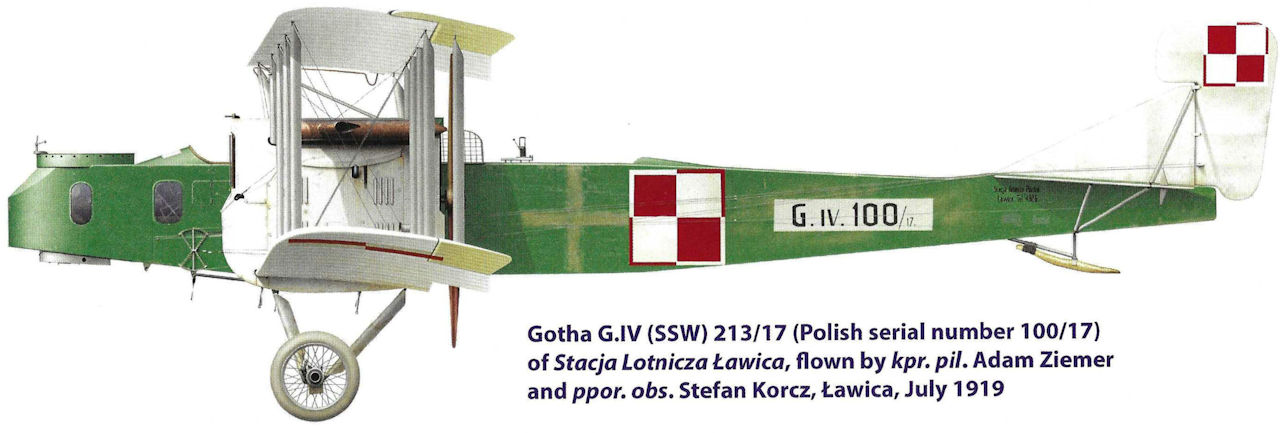
Gotha G.IV (SSW) 213/17 (Polish serial number 100/17) of Stacja Lotnicza Lawica, flown by kpr. pil. Adam Ziemer and ppor. obs. Stefan Korcz, Lawica, July 1919
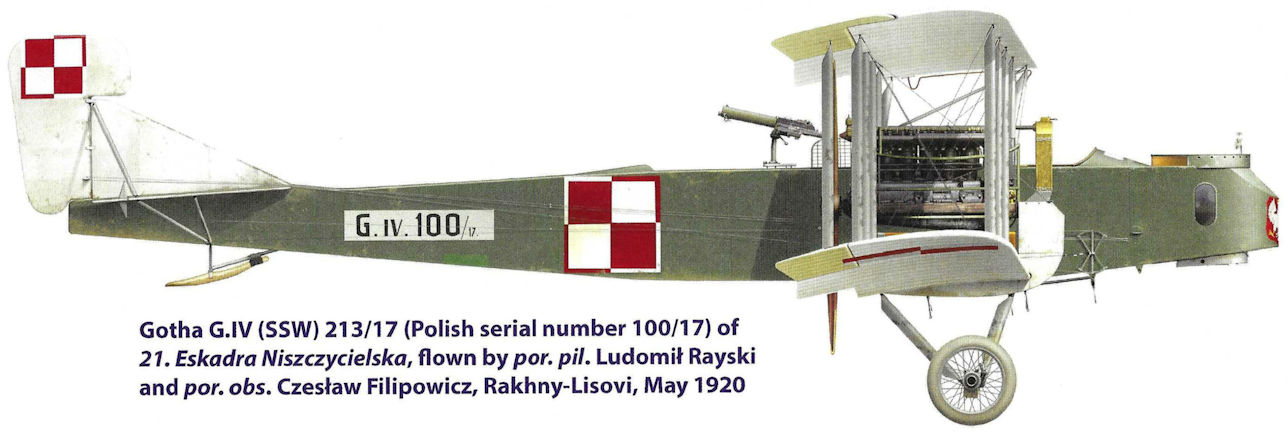
Gotha G.IV (SSW) 213/17 (Polish serial number 100/17) of 21. Eskadra Niszczycielska, flown by por. pil. Ludomil Rayski and por. obs. Czeslaw Filipowicz, Rakhny-Lisovi, May 1920
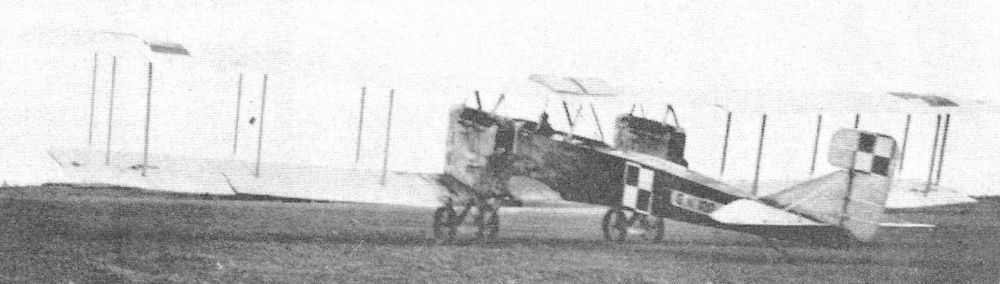
In October 1920, Gotha G.IV (SSW) 213/17 entered service as a transport aircraft. Over the following months, it was used by the French Military Mission in Poland, which consisted of several hundred officers and specialists sent to assist the Polish government in building its armed forces. Members of the mission provided guidance on military planning, equipment selection, and the organization of the General Staff and the Ministry of Military Affairs. They also supported the development of regulations and legal frameworks related to national defense. (Harry Woodman, "Les bombardiers Gotha," Le Fanatique de l'Aviation, no. 89 (1977), 19.)
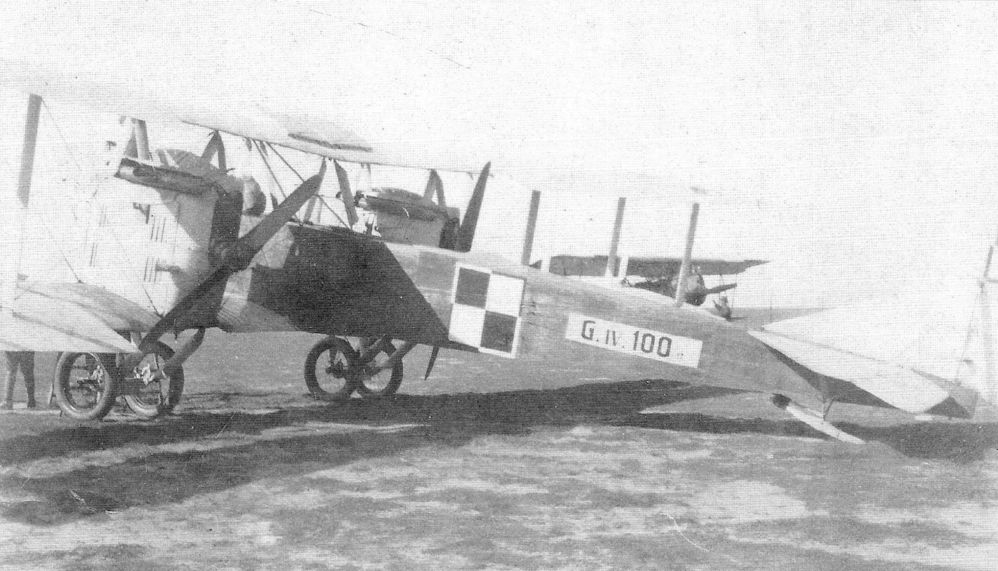
Although the only operational Polish Gotha G.IV was frequently photographed, this remains the only known image showing details of the port side of the rear fuselage. Despite its average quality, a stencil reading Stacja Lotnicza Poznan Lawica. Tel. 4326. can be seen just below the leading edge of the horizontal stabilizer. Markings of this kind - listing the unit's name and telephone number - were a practice adopted from the German air service. In the event of an accident, they enabled quick identification and facilitated contact with the assigned unit. To the left of the checkerboard, traces of the removed Balkenkreuz marking are visible. (The Polish Aviation Museum in Krakow)
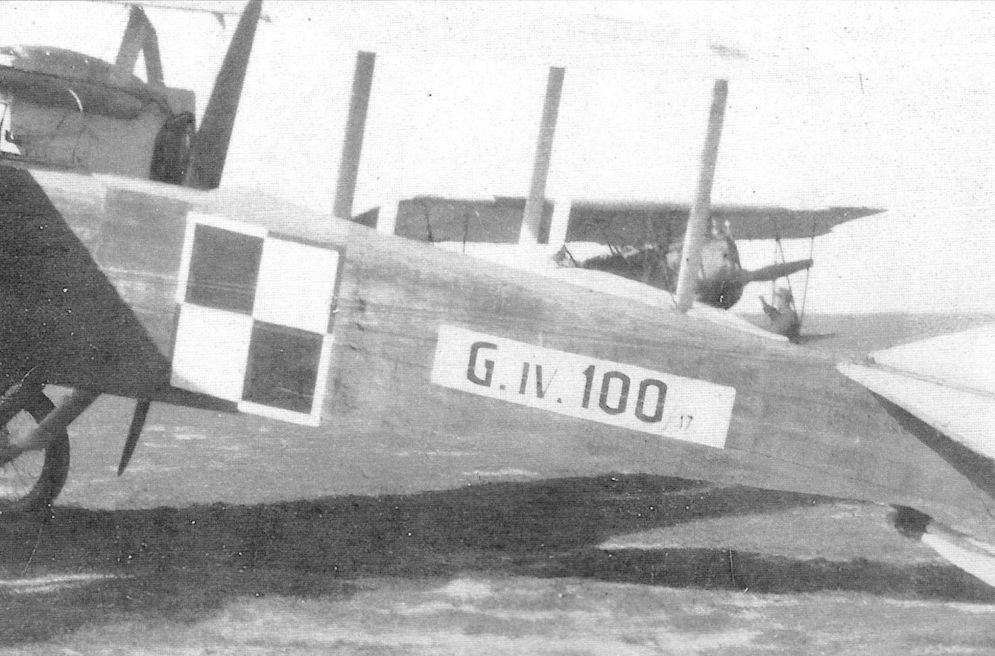
In contrast to the previous image, this photograph was likely intended to provide a wider view of the entire aircraft. Unfortunately, many of the fine details visible earlier are now lost - probably due to poor lighting conditions or the limitations of the photographic techniques available at the time. In the background on the right is Fokker D.VII (OAW) 8430/18. (The Polish Aviation Museum in Krakow)
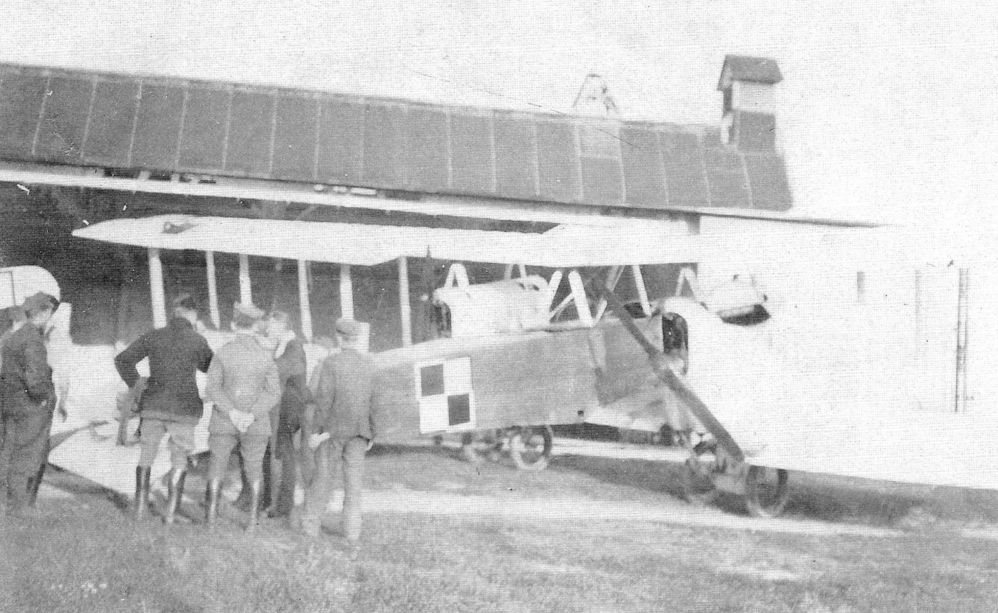
Gotha G.IV (SSW) 213/17 being prepared for another flight. Like the two previous images, these photographs were likely taken in early July 1919 at Lawica. At the time, the aircraft operated far from the front lines and was used exclusively for training, flying without armament. To the right of the checkerboard, traces of an overpainted Balkenkreuz marking are visible. (The Polish Aviation Museum in Krakow)
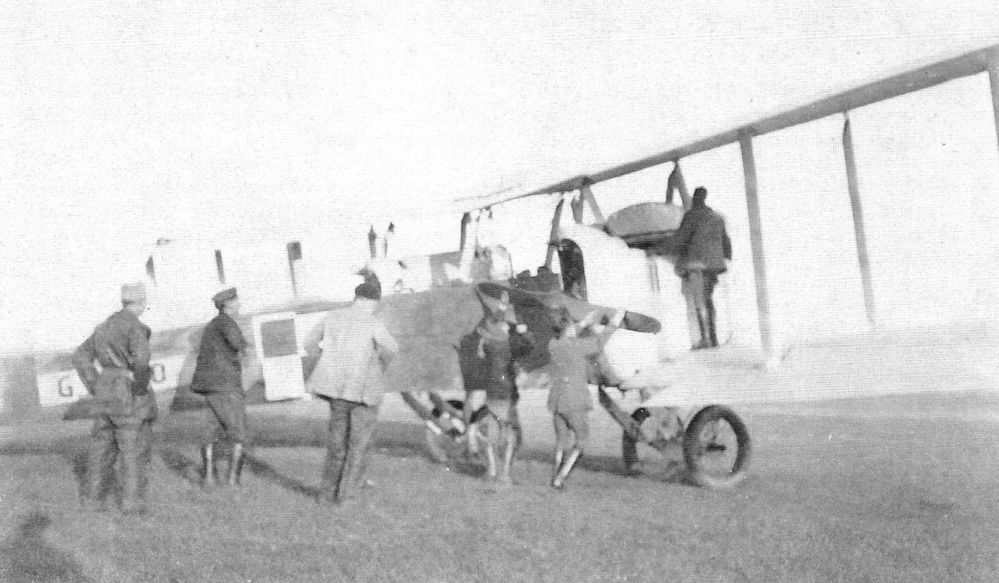
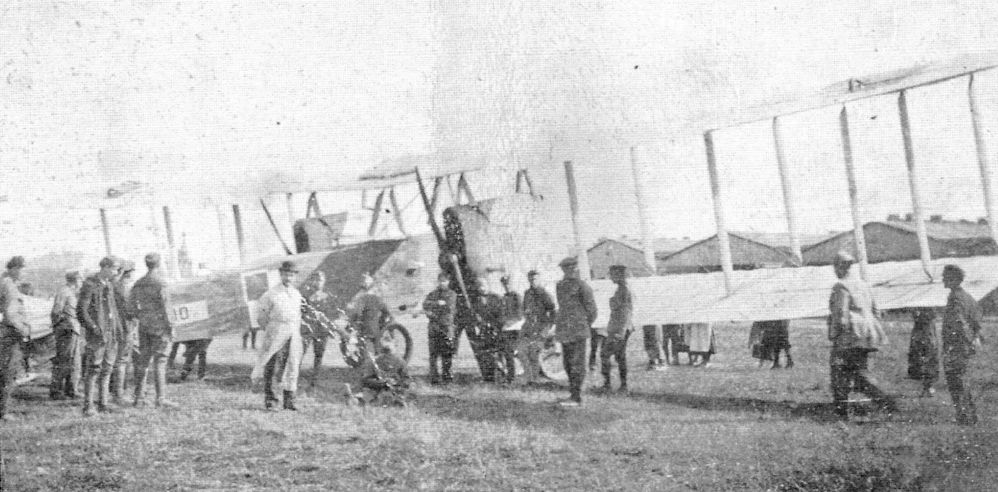
On 20 April 1920, Gotha G.IV (SSW) 213/17 was assigned to 21. Eskadra Niszczycielska in Lawica. Nearly a month later, the unit was relocated to Rakhny-Lisovi, a village located about 50 km south of Vinnytsia. Until early June, the aircraft carried out bombing missions against Soviet forces. This photo was taken in Warsaw during a refueling stop en route to eastern Podolia. (Piotr Dabrowiecki)
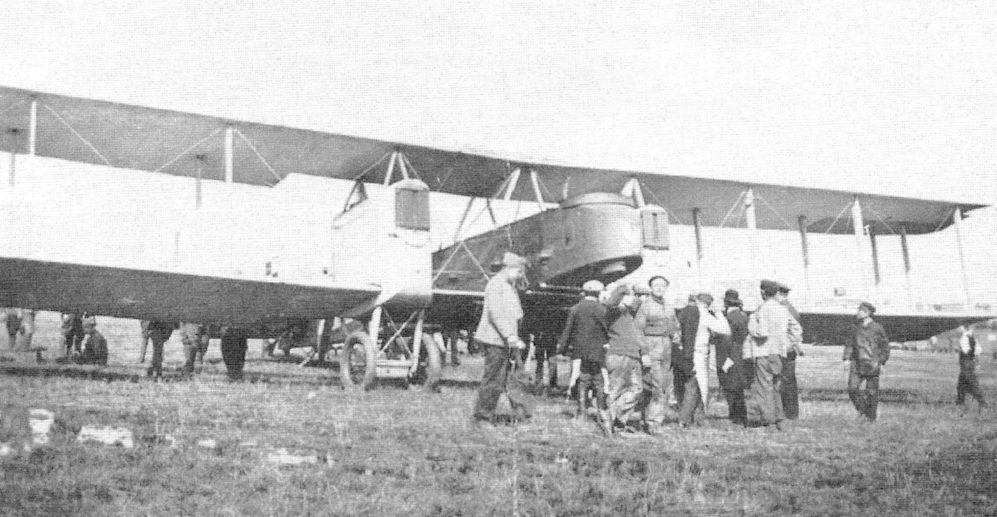
Another photograph of Gotha G.IV (SSW) 213/17 taken during its stop in Warsaw on the way to eastern Podolia, late May 1920. Owing to the aircraft's size and its twin engines, a crowd of onlookers - including several civilians - gathered around for a closer look. By that time, the nose bore a freshly painted white eagle on a red background - the national coat of arms of Poland. (Piotr Dabrowiecki)
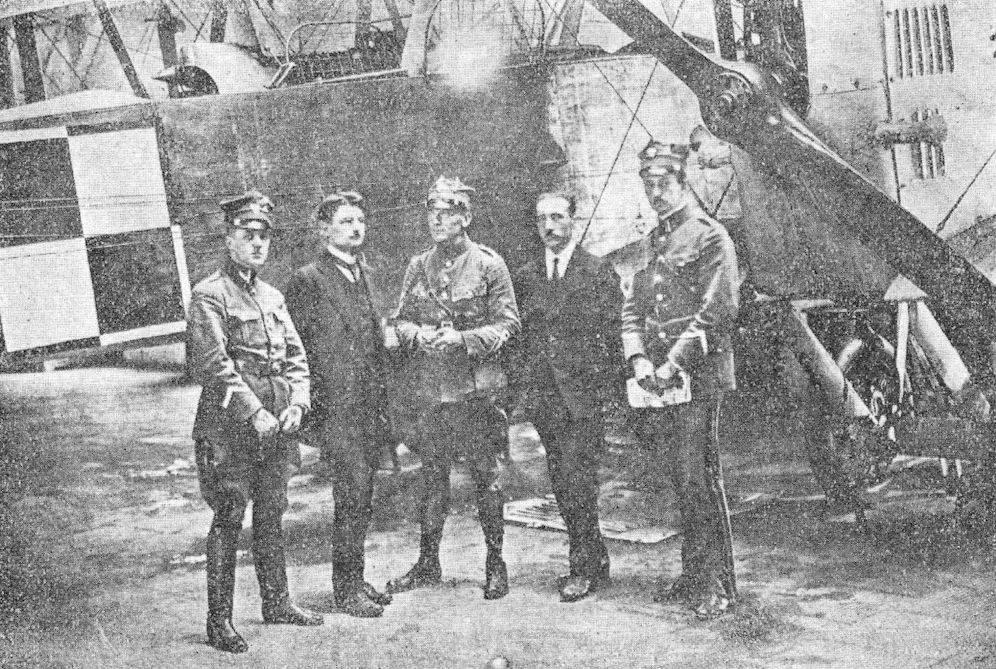
Journalists from the Warsaw weekly Tygodnik Ilustrowany during a visit to Stacja Lotnicza Lawica in late July 1919. Third from the left is the station's commanding officer, pplk pil. Tadeusz Grochowalski. Serving as the backdrop for this commemorative photograph is Gotha G.IV (SSW) 213/17. (Franciszek Szychlinski, "Lawica Stacja Lotnicza pod Poznaniem," Polska Flota Napowietrzna, no. 3 (1919): 89.)
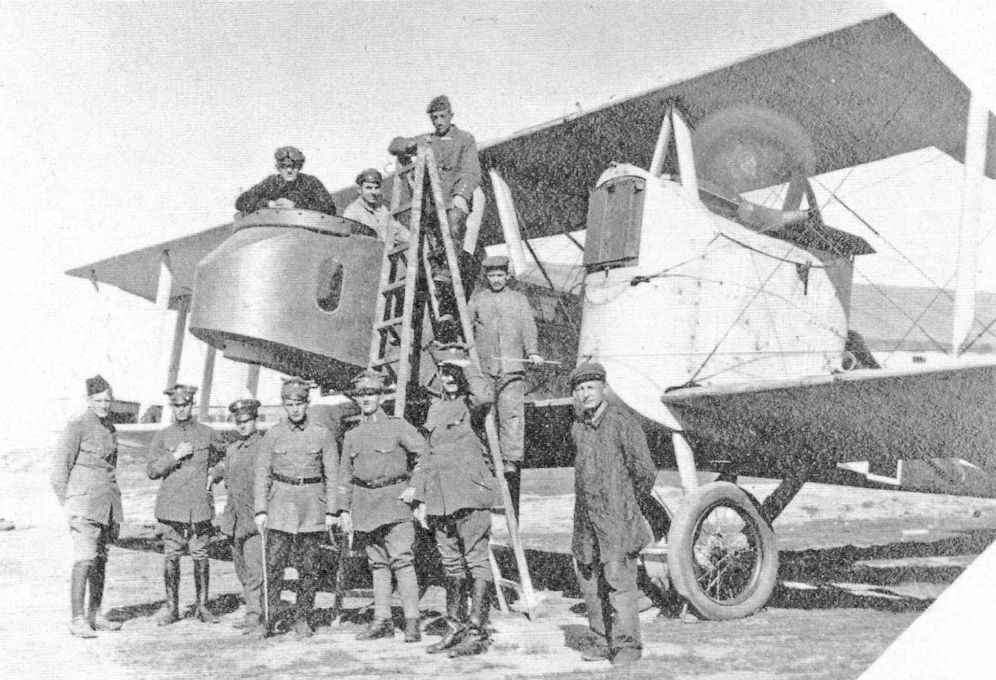
Keeping a Gotha bomber in flying condition sometimes required tools not typically associated with aviation such as a tall ladder. Among those seen in the photograph are kpr.pil. Adam Ziemer (first from the left), ppor. pil. Jozef Szyfter (sixth from the left), and Adam Haber-Wlynski, seated in the observer's cockpit. Lawica, summer 1919. The image clearly shows the distinctive arrangement of cowling louvers typical of aircraft built by Siemens-Schuckertwerke GmbH. (Jacek Kulas)
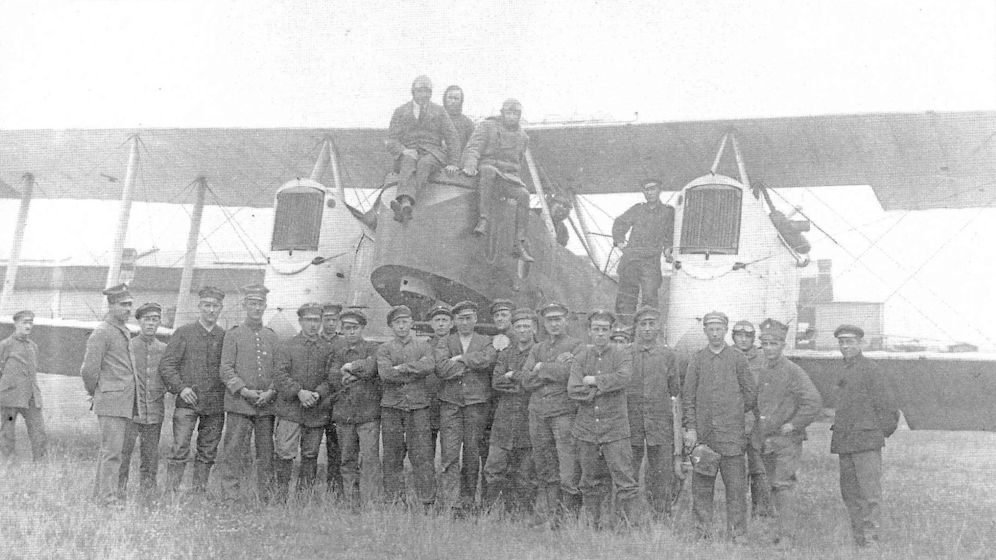
Personnel of Stacja Lotnicza Lawica with Gotha G.IV (SSW) 213/17, early August 1919. Seated in the nose section of the fuselage are civilian flight instructor Adam Haber-Wlynski (left) and ppor. obs. Stefan Korcz (right), with kpr. pil. Adam Ziemer standing in the observer's cockpit. (The Polish Aviation Museum in Krakow)
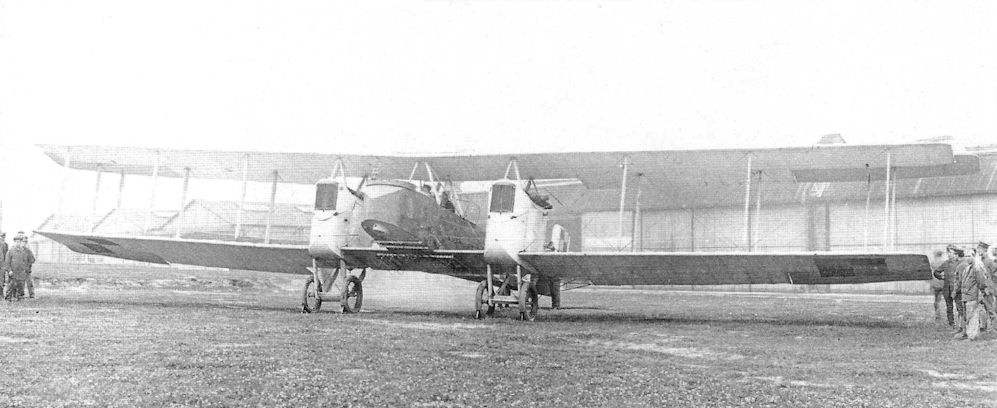
Gotha G.IV (SSW) 213/17 during startup of the starboard engine. The photograph was taken in early August 1919 at Lawica. The undersides of all ailerons were likely left in the natural color of the fabric, which contrasted noticeably with the white-painted surfaces of the wings. Interestingly, all checkerboards on the wings lacked outlines, unlike those on the fuselage and rudder. The reason for this inconsistency remains unclear. (The Polish Aviation Museum in Krakow)
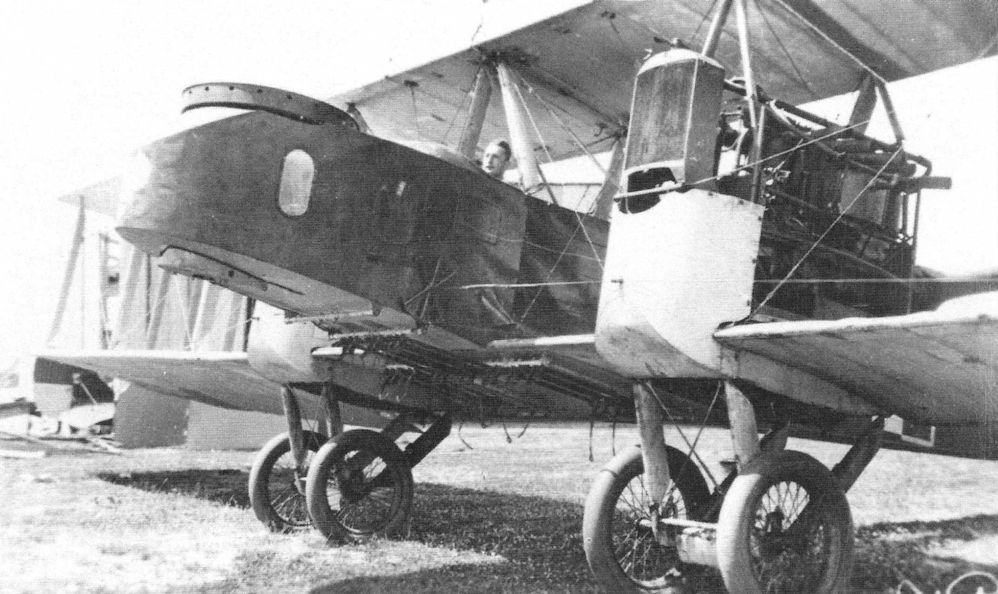
American volunteer kpt. pil. Edward C. Corsi, serving with 7. Eskadra Mysliwska, poses for a souvenir photo in the cockpit of Gotha G.IV (SSW) 213/17. The photograph was taken in Lviv between 12 and 31 August 1920. The unit had been reformed in late 1919 by American volunteers and was officially named the Kosciuszko Squadron, in honor of Tadeusz Kosciuszko - the Polish-American hero of the late 18th century. During the Battle of Lviv in the summer of 1920, it supported ground operations by flying reconnaissance and low-level attack missions against Soviet cavalry. (The Polish Aviation Museum in Krakow)
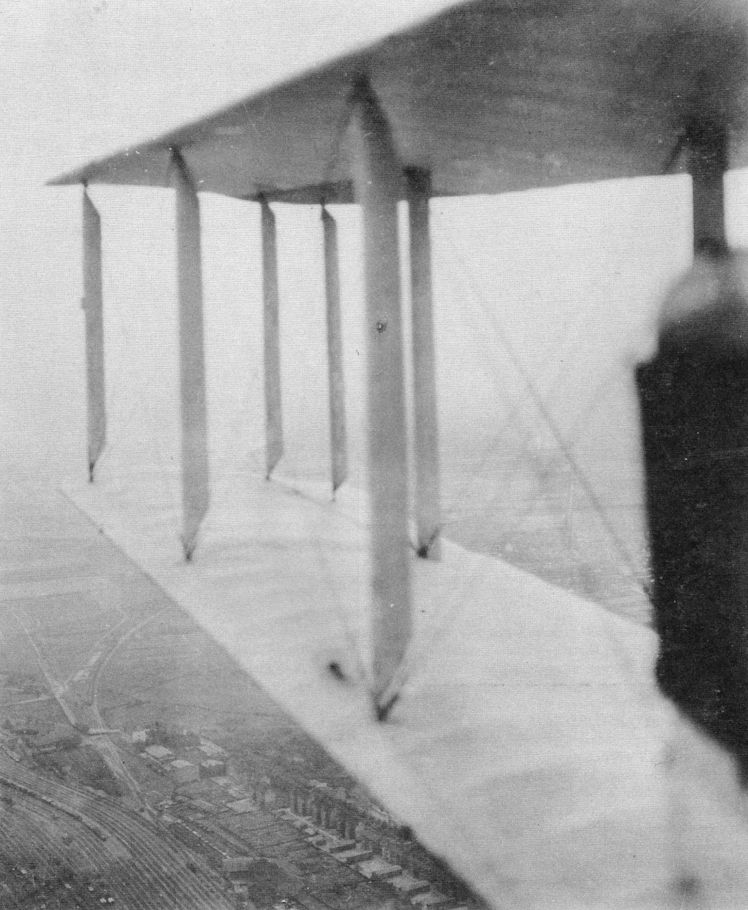
Wings and part of the engine nacelle of Gotha G.IV (SSW) 213/17, photographed during a flight over Poznan on 21 July 1919. In that period, the aircraft was piloted solely by kpr. pil. Adam Ziemer, a German aviator who had been accepted into the Polish air service as an instructor. During World War I, this particular Gotha had been used in tests of Flettner servo-tabs. (The Museum of the Greater Poland Uprising in Lusowo)
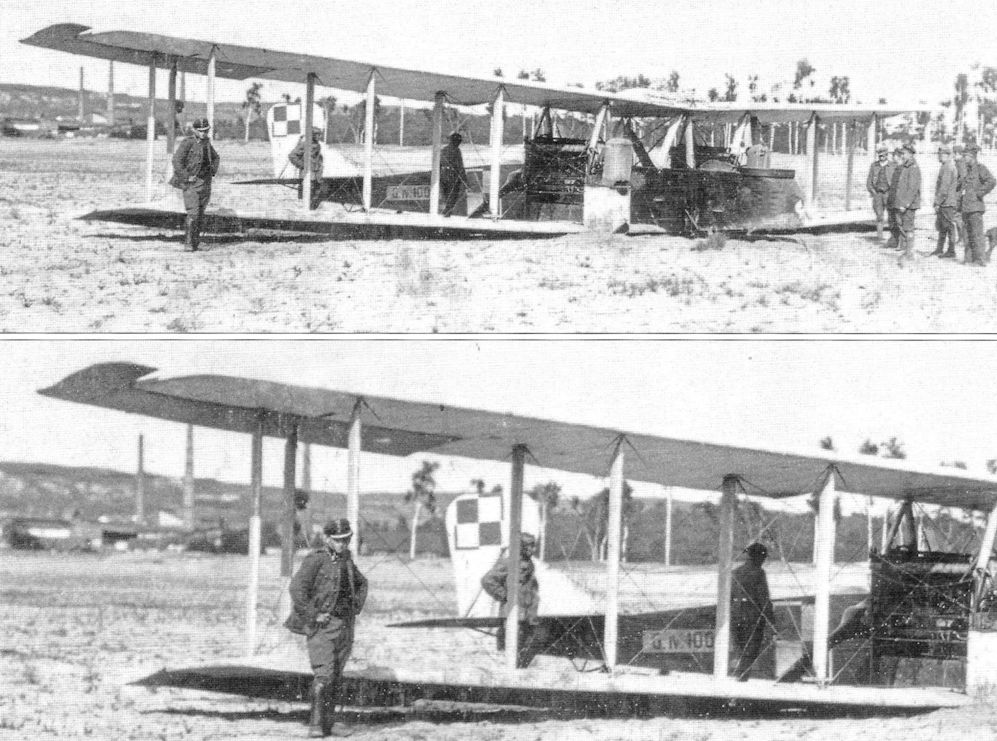
Gotha G.IV (SSW) 213/17 following its landing accident on 31 August 1920. The photograph clearly shows the placement of checkerboards on the rudder and fuselage, as well as a rectangular field bearing the aircraft type and Polish serial number 100/17. In earlier English-language publications, this type of fuselage marking - specifically the military numbers assigned by Stacja Lotnicza Lawica - often caused confusion, as they were mistakenly interpreted as German serials that did not correspond to any known production batches. (Tomasz J. Kopanski)
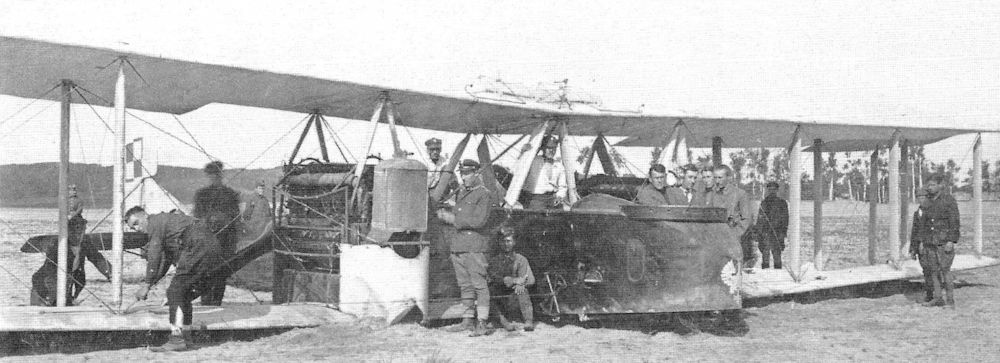
This high-quality photograph shows Gotha G.IV (SSW) 213/17 after its landing accident on 31 August 1920. Although the surviving documents do not clarify the exact circumstances of the incident, it was most likely caused by pilot error, as the crew had no prior experience flying large G-type bombers. The image captures numerous details of the aircraft's forward fuselage and engine nacelle, including the national coat of arms of Poland, carefully painted on the nose. Also visible is a distinctive feature of Gotha G.IV bombers built under license by Siemens-Schuckertwerke GmbH: a single window on the starboard side of the fuselage. (The Polish Aviation Museum in Krakow)
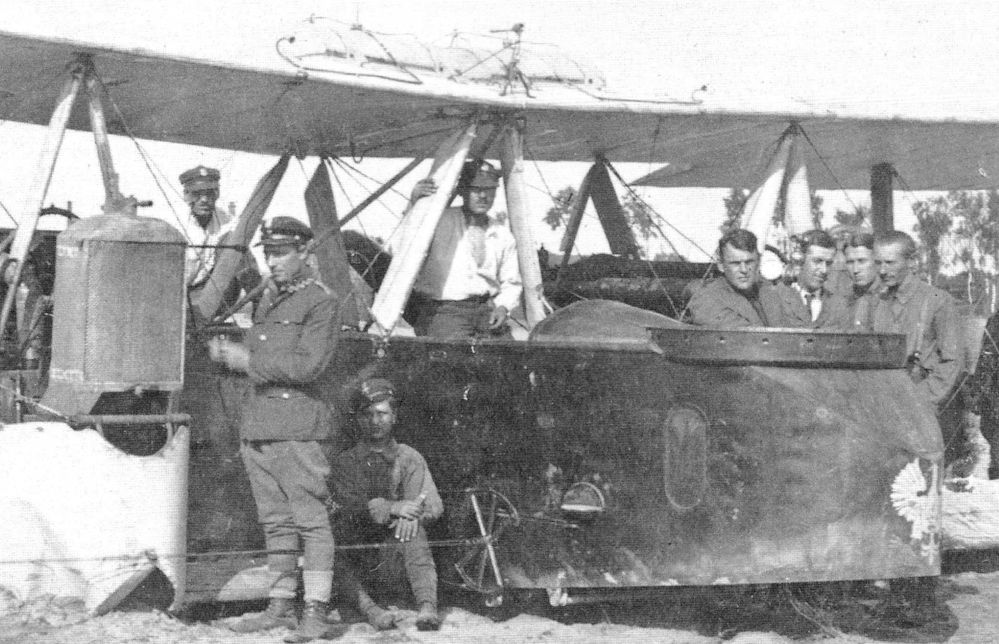
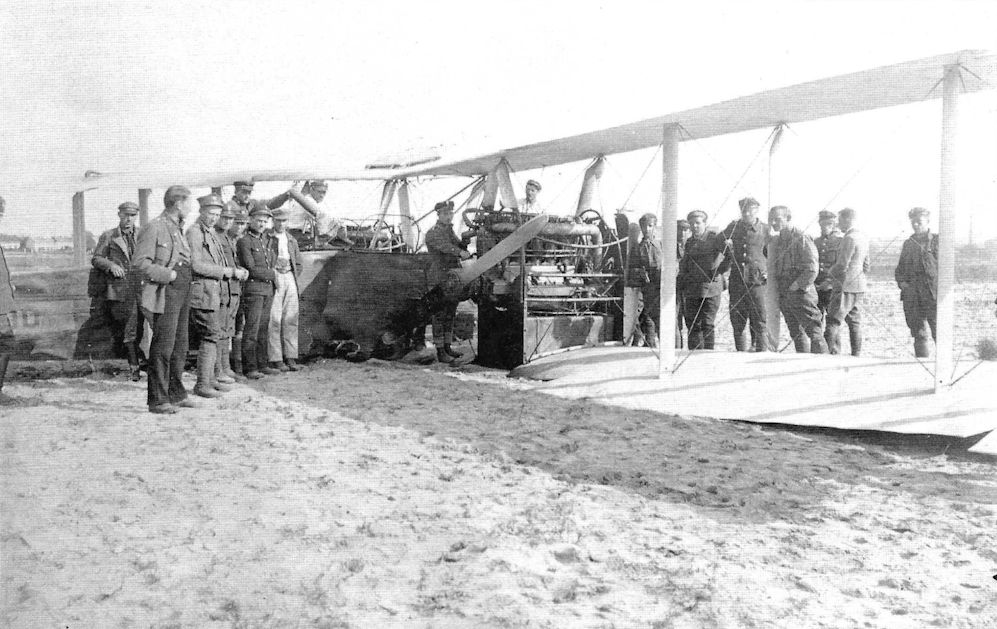
During the summer of 1920, Gotha G.IV (SSW) 213/17 was flown without the cowlings on its engine nacelles - a configuration likely intended to prevent overheating during bombing missions on hot days, while also reducing weight and improving performance. The rear gunner's position was fitted with a Schwarzlose M.07/12 machine gun, a type captured from Austro-Hungarian Army depots. (The Polish Aviation Museum in Krakow)
A rare view inside the maintenance hangar of Stacja Lotnicza Lawica, August 1919. At the far end of a row of aircraft stands Gotha G.IV (SSW) 213/17, accompanied by Hannover Cl.IIIa 13214/17, Halberstadt Cl.IIa (Bay) 2869/18, and Albatros D.III (OAW) 5034/17. (Wojciech Sankowski)
A rare view inside the maintenance hangar of Stacja Lotnicza Lawica, August 1919. At the far end of a row of aircraft stands Gotha G.IV (SSW) 213/17, accompanied by Hannover Cl.IIIa 13214/17, Halberstadt Cl.IIa (Bay) 2869/18, and Albatros D.III (OAW) 5034/17. (Wojciech Sankowski)
A rare view inside the maintenance hangar of Stacja Lotnicza Lawica, August 1919. At the far end of a row of aircraft stands Gotha G.IV (SSW) 213/17, accompanied by Hannover Cl.IIIa 13214/17, Halberstadt Cl.IIa (Bay) 2869/18, and Albatros D.III (OAW) 5034/17. (Wojciech Sankowski)
Interior of the storage building at Lawica, August 1919. Among the various aircraft types is Albatros J.I 628/18 - the only one in the photo to display a Polish checkerboard insignia. A sign reading Palenie tytoniu wzbronione ("Smoking prohibited") is visible on a roof beam, highlighting the fire hazard posed by wooden structures, plywood, and fabric used in aircraft construction. (Tomasz J. Kopanski)
Aircraft of 12. Eskadra Wywiadowcza lined up in front of the hangars in Lida. From left to right: Rumpler C.VII (542/17), Albatros C.XV (“249"), and Albatros C.XV ("412"). The photo was taken in October 1920, shortly before the transfer of Albatros C.XV (“249") - along with kpt. pil. Waclaw Iwaszkiewicz - to the Air Squadron of Central Lithuania, the air arm of a short-lived quasi-state centered in Vilnius and formed from 16. Eskadra Wywiadowcza. (Marcin Bednarek)
Albatros C.XV ("249") and Breguet 14B2 (10.36), photographed in early December 1920 in Vilnius. At the time, both aircraft were serving with the Air Squadron of Central Lithuania. The unit was disbanded in March 1921 and subsequently relocated to Krakow, where it resumed its previous designation as 16. Eskadra Wywiadowcza. (The Polish Aviation Museum in Krakow)